Categories








































25 Common Interview Questions for Customer Service Representatives at T-Mobile

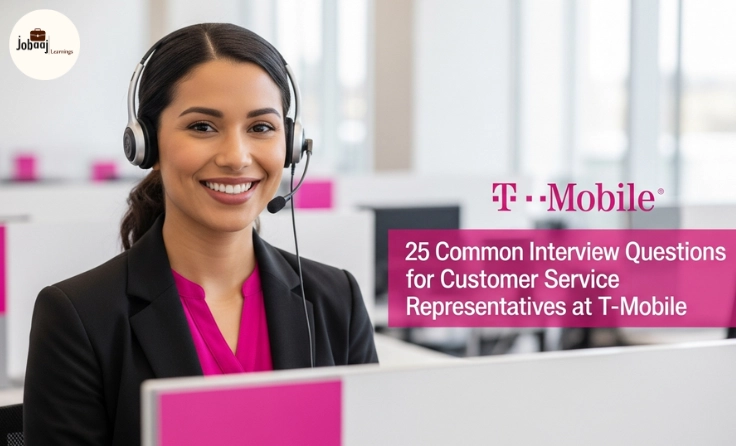
Landing a job at T-Mobile as a customer service representative is an exciting opportunity. Whether you're just starting out in the customer service field or are an experienced professional looking for a new challenge, T-Mobile offers a dynamic environment where you can grow and develop your skills. But before you get there, you have to navigate the interview process—and it’s one that’s likely to come with its own set of challenges.
As you prepare for your interview, you might feel a mix of anticipation and nerves. It's only natural. After all, interviews can be a bit intimidating, especially when you’re not sure what to expect. But here’s the good news: being prepared is the key to easing those nerves. In this article, we’ll walk through 25 common interview questions that T-Mobile often asks when hiring customer service representatives. Whether it’s your first time interviewing or you’re a seasoned pro, this guide will help you prepare in a way that feels both natural and confident.
1. Tell us about yourself.
This question may seem simple, but it’s often the first one on the list. While it’s a broad question, it gives you an opportunity to shape the narrative. You’ll want to introduce yourself in a way that highlights your relevant experience and skills. Share a brief background of your professional journey and what excites you about the customer service role at T-Mobile.
When answering, try to connect your previous experiences to the job you’re applying for. Maybe you’ve worked in retail or hospitality before and developed strong communication skills. Whatever the case, tailor your response to demonstrate how your background has prepared you for this role.
2. Why do you want to work for T-Mobile?
This question tests your knowledge of T-Mobile as a company and whether you’re genuinely interested in being part of their team. Do a little research ahead of time and mention things like their commitment to customer service, innovative products, or the company culture. By showing that you’ve taken the time to understand what makes T-Mobile unique, you’ll prove that you’re more than just looking for any job—you’re excited about this specific opportunity.
3. How do you handle difficult or upset customers?
Handling upset customers is an essential skill for any customer service role, especially in a company like T-Mobile, where customer satisfaction is a top priority. The key here is to show that you can remain calm, empathetic, and solution-oriented. Share an example from your past work where you de-escalated a situation, and explain how you were able to turn a negative experience into a positive one.
When answering, focus on your ability to listen, understand customer concerns, and work toward a solution that benefits both the customer and the company.
4. How do you prioritize your tasks in a busy environment?
Customer service roles can be fast-paced, especially at a high-volume company like T-Mobile. You’ll need to show that you’re organized and can handle multiple tasks efficiently. Talk about how you balance different responsibilities—whether it’s answering customer inquiries, handling paperwork, or dealing with technical issues—and how you stay focused without sacrificing the quality of your work.
This question is also an opportunity to show that you can adapt when things get busy. Time management and knowing when to delegate or ask for help are key aspects of this role.
5. What do you think makes great customer service?
T-Mobile prides itself on offering exceptional customer service, so it’s important that you understand what that means. Great customer service isn’t just about solving problems—it’s about creating positive experiences for customers. You might talk about things like active listening, personalized service, and ensuring that the customer feels valued and heard.
By highlighting these values, you show that you understand the bigger picture of customer service and can deliver it consistently.
6. How do you handle a situation where you don't know the answer to a customer's question?
No one knows everything, and this question is designed to see how you react when you don’t have all the answers. It’s important to show that you’re resourceful and willing to learn. Describe how you’d handle the situation by finding the correct answer, whether it’s consulting with a colleague, researching company resources, or directing the customer to appropriate support. It’s all about showing that you can handle uncertainty and still provide excellent service.
7. Can you give an example of a time you went above and beyond for a customer?
This question aims to highlight your commitment to customer satisfaction. Think back to a time when you did something extra to help a customer—whether it was resolving an issue or providing them with additional information or services. The interviewer wants to hear about a real-world example of how you went out of your way to ensure a customer was happy with your service.
8. How would you deal with a situation where a customer is dissatisfied with T-Mobile's policies?
T-Mobile has established policies that may not always meet the expectations of every customer. When asked this question, it’s important to show that you can explain policies clearly and empathize with customers while also upholding company standards. Your response should emphasize your ability to handle difficult conversations in a way that leaves the customer feeling heard, even if they don’t get what they initially wanted.
9. What would you do if you were unable to resolve a customer's issue during the first contact?
In customer service, not every issue can be resolved immediately. The interviewer is testing how you handle situations where follow-up is required. Show that you would keep the customer informed, set clear expectations about the next steps, and ensure they feel valued throughout the process. Highlight your willingness to escalate issues when necessary and follow through until the problem is resolved.
10. Describe a time when you had to handle multiple customer inquiries at the same time.
As a customer service rep, multitasking is inevitable. This question is aimed at assessing your ability to stay organized and manage your time efficiently. Give an example where you successfully balanced multiple tasks without sacrificing service quality. Explain how you prioritize and keep track of everything in a busy work environment.
11. How do you handle stress and stay motivated in a challenging environment?
Customer service can be demanding, and this question assesses how you cope with the challenges of the job. It’s important to emphasize your resilience and ability to maintain a positive attitude under pressure. You might talk about specific coping mechanisms like deep breathing, taking short breaks, or staying focused on solving the problem at hand.
12. How do you stay up to date with new product offerings or company updates?
In a fast-moving company like T-Mobile, staying informed is crucial. This question seeks to determine how you keep your knowledge up to date. Discuss how you’d keep yourself informed through training sessions, company newsletters, or researching updates on the company website. Being proactive in staying current shows that you’re dedicated to delivering top-notch service.
13. What do you do if a customer asks for a service or product that T-Mobile doesn’t offer?
This is an important test of your ability to handle customer expectations and problem-solve. You’ll need to show that you can tactfully explain why a certain product or service isn’t available while suggesting alternative solutions that meet the customer’s needs.
14. How do you manage customer expectations when the solution is outside your control?
When faced with circumstances that are beyond your control, it’s essential to manage the customer’s expectations effectively. Share an example of how you’ve dealt with situations where you couldn’t deliver the customer’s desired outcome but still maintained their satisfaction.
15. How would you explain a complex product or service to a customer with limited technical knowledge?
T-Mobile offers a variety of products and services, some of which may be complex. This question is designed to assess your ability to simplify technical details for a broader audience. Focus on how you would break down complicated information into easily understandable terms without overwhelming the customer.
16. Tell me about a time you handled a challenging customer complaint.
This question is your chance to showcase your problem-solving and conflict resolution skills. Provide an example where you turned a difficult customer complaint into a positive experience, focusing on how you listened, empathized, and worked toward a solution.
17. How would you go about upselling or cross-selling T-Mobile products to existing customers?
In customer service, it’s important to identify opportunities to enhance the customer’s experience while also driving business goals. Share your approach to upselling or cross-selling in a way that feels natural and customer-centric.
18. What motivates you to work in customer service?
This question helps the interviewer understand your passion for the role. Talk about what excites you about helping others, problem-solving, and creating positive customer experiences.
19. What skills do you have that make you a great fit for this customer service role?
Customer service roles require a mix of soft skills, such as empathy, patience, and strong communication. Highlight the skills that are most relevant to this job, and use specific examples to demonstrate how you’ve applied them in past roles.
20. How would you handle a situation where a customer insists on something that’s against company policy?
This question assesses your integrity and ability to uphold company policies while still offering excellent customer service. Discuss how you would respectfully explain the policy, offer alternatives, and ensure the customer feels valued despite not getting their request.
21. How do you deal with negative feedback or criticism from customers?
Dealing with criticism professionally is key in customer service. Talk about how you would accept feedback gracefully, learn from it, and use it to improve your performance.
22. How do you build rapport with customers quickly?
Building a strong rapport is essential for creating long-lasting customer relationships. Share your approach to establishing trust and personal connections with customers in a short amount of time.
23. What do you do when a customer is unhappy with a product or service but doesn’t want to return it?
In situations like this, it's important to focus on resolution and offering alternatives. Discuss how you would handle the situation and provide a solution that maintains the customer’s satisfaction.
24. How do you handle a situation where there is a language barrier or communication challenge with a customer?
Effective communication is vital in customer service. This question tests your ability to navigate language barriers or other communication difficulties. Share strategies you use, such as using simple language, visual aids, or involving other team members.
25. What would you do if a customer asks for something you’re not authorized to provide?
This question explores your ability to stay within boundaries while still offering exceptional service. Talk about how you would remain calm, explain the limitations respectfully, and direct the customer to someone who can help.
Conclusion
Preparing for an interview as a Customer Service Representative at T-Mobile is all about confidence and demonstrating that you have the skills to handle a wide range of customer scenarios. By practicing these 25 common interview questions, you’ll be able to showcase your expertise in problem-solving, communication, and customer satisfaction. Good luck with your interview preparation, and remember, the key is to remain authentic, calm, and ready to showcase your customer-first attitude.
Frequently asked questions
What should I expect during a T-Mobile customer service interview?
You can expect questions about your ability to handle customer complaints, how you manage stress, and your communication skills. Be ready to demonstrate examples of your customer service experience and how you’ve dealt with difficult situations.
How can I prepare for a customer service interview at T-Mobile?
Familiarize yourself with T-Mobile’s values, services, and customer-first approach. Practice answering common interview questions, and come prepared with examples that highlight your problem-solving and communication skills.
What qualities does T-Mobile look for in a customer service representative?
T-Mobile looks for individuals who are customer-focused, empathetic, patient, and excellent communicators. They also value team players who can work in a fast-paced environment.
What kind of training does T-Mobile provide for customer service reps?
T-Mobile offers extensive training to help customer service representatives become familiar with their systems, products, and customer service protocols. The training prepares you to handle customer issues efficiently and effectively.
How long is the interview process for a customer service role at T-Mobile?
The interview process typically includes an initial phone screen, followed by an in-person or virtual interview. The entire process can take anywhere from a week to a few weeks, depending on the position.
What is the work environment like for customer service representatives at T-Mobile?
T-Mobile’s customer service reps work in a fast-paced, team-oriented environment. Employees are expected to be adaptable, handle a variety of customer concerns, and deliver excellent service while working toward company goals.
Join 5,00,000+ Subscribers
Be a part of our ever growing community.