Categories








































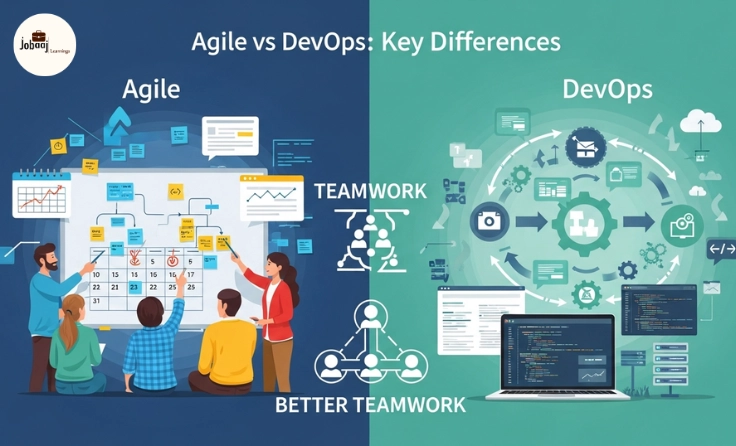
In the fast-paced world of software development, the need for flexibility, efficiency, and collaboration has never been more important. Agile and DevOps are two methodologies that have become synonymous with these attributes, but they each approach software development from different angles. As a team working in a modern tech environment, understanding these two frameworks, their differences, and how they can complement each other will help you foster better collaboration and build high-quality products.
Exploring a career in Web Development? Apply now!
What is Agile?
Agile is a project management and software development methodology that focuses on iterative development, continuous improvement, and close collaboration between teams. It emphasizes breaking down projects into smaller, manageable pieces called "sprints" (usually 1–4 weeks long). Agile promotes flexibility and values customer feedback to guide development.
Key Principles of Agile:
-
Iterative Development: Work is divided into small tasks and delivered in frequent cycles (sprints).
-
Customer Collaboration: Teams collaborate closely with customers and stakeholders to ensure the product meets their needs.
-
Continuous Improvement: Each sprint is an opportunity to refine processes and improve the product.
-
Team Autonomy: Agile promotes self-organizing teams that can make decisions and adapt to changes without relying on top-down directives.
Agile Methodologies:
-
Scrum: Scrum is one of the most popular agile frameworks, which focuses on managing iterative development through sprints. It includes roles like Product Owner, Scrum Master, and Development Team, and follows ceremonies like daily stand-ups, sprint reviews, and retrospectives.
-
Kanban: Kanban focuses on visualizing workflows and improving the efficiency of work by limiting work in progress (WIP) at any given time.
What is DevOps?
DevOps, short for "Development and Operations," is a culture and set of practices aimed at improving collaboration between development and operations teams. The goal of DevOps is to automate the processes between software development and IT operations to enable continuous delivery of high-quality software.
Key Principles of DevOps:
-
Collaboration: DevOps encourages greater collaboration between development, IT operations, and quality assurance teams.
-
Automation: DevOps aims to automate the software delivery pipeline to streamline processes and reduce human error.
-
Continuous Delivery: With DevOps, software is released frequently and in smaller increments, allowing for faster feedback and iteration.
-
Monitoring and Feedback: DevOps involves continuous monitoring of systems and software, ensuring performance issues are caught early.
DevOps Practices:
-
Continuous Integration (CI): This practice involves developers frequently integrating their code changes into a shared repository, where automated tests are run to catch bugs early.
-
Continuous Deployment (CD): Once code passes automated testing, it is automatically deployed to production. This allows for quick release cycles and faster time to market.
-
Infrastructure as Code (IaC): Infrastructure is managed through code and automation, allowing teams to provision and manage resources more efficiently.
Key Differences Between Agile and DevOps
Now that we've defined both Agile and DevOps, it's essential to understand their key differences. Both methodologies aim to improve the development process, but they focus on different aspects of software delivery.
|
Aspect |
Agile |
DevOps |
|
Focus |
Software development and iterative process improvement |
Collaboration between development and operations teams |
|
Scope |
Primarily focuses on development and delivering working software |
Focuses on both development and IT operations for end-to-end delivery |
|
Delivery Cycle |
Delivers software in short, iterative cycles (sprints) |
Delivers software continuously with automated pipelines |
|
Collaboration |
Developers, product owners, and stakeholders work together |
Developers and operations teams collaborate throughout the entire software lifecycle |
|
Automation |
Less emphasis on automation, more on iterative delivery |
Strong focus on automation, from code deployment to monitoring |
|
Goal |
To build software that meets customer needs and expectations |
To provide fast, reliable software delivery with minimal downtime |
|
Tools Used |
Scrum, Kanban, Jira, Trello, etc. |
Jenkins, Docker, Kubernetes, Terraform, AWS, etc. |
How Agile and DevOps Work Together
While Agile and DevOps have different focuses, they can complement each other when used together. Agile emphasizes iterative development, while DevOps focuses on automating and streamlining the software delivery process. By combining the two, organizations can improve both the speed and quality of their software development processes.
-
Agile sets the pace for development: Agile's iterative approach encourages rapid development cycles, ensuring that teams continuously deliver working software in short bursts (sprints).
-
DevOps ensures fast delivery: Once the software is developed through Agile, DevOps takes over by automating deployment, monitoring, and infrastructure management. This ensures that new features and updates are released quickly and reliably.
-
Collaboration across teams: Agile fosters collaboration within development teams, while DevOps extends this collaboration to IT operations and quality assurance teams, ensuring smooth transitions between the stages of development and deployment.
Benefits of Agile and DevOps for Teamwork
Both Agile and DevOps improve teamwork, but in different ways:
-
Agile encourages cross-functional collaboration: It brings together various stakeholders (developers, product owners, and customers) to work closely together, ensuring the product meets customer needs.
-
DevOps promotes collaboration between development and operations: By breaking down the silos between development and operations teams, DevOps improves communication and helps streamline workflows.
The integration of both Agile and DevOps enhances communication, boosts efficiency, and results in faster time-to-market for software. It empowers teams to be more agile, adaptable, and responsive to customer needs and business demands.
Conclusion
In conclusion, both Agile and DevOps are vital methodologies for improving collaboration and productivity in software development. While Agile focuses on iterative development and delivering value through short cycles, DevOps focuses on automating processes and ensuring a continuous flow of high-quality software. By understanding the differences and finding ways to integrate both, your team can achieve faster, more efficient, and more reliable software development and delivery.
Whether you're adopting Agile, DevOps, or both, the goal is to create a collaborative and efficient environment that enables teams to work together seamlessly. By doing so, your team will be empowered to produce better software faster, leading to greater success in the fast-evolving world of software development.
Dreaming of a Web Development Career? Start with Web Development Certificate with Jobaaj Learnings.
Frequently asked questions
What is the main difference between Agile and DevOps?
Agile focuses on iterative software development, while DevOps focuses on automating deployment and collaboration between development and operations teams.
Can Agile and DevOps work together?
Yes, Agile and DevOps can complement each other. Agile helps teams work in iterative cycles, while DevOps automates deployment, ensuring faster delivery and quality assurance.
Why is DevOps important for Agile teams?
DevOps helps Agile teams deliver software faster and more reliably by automating deployment processes and ensuring continuous integration and delivery.
What are some key DevOps tools used in the industry?
Common DevOps tools include Jenkins for continuous integration, Docker for containerization, Kubernetes for orchestration, and Terraform for infrastructure management.
How does DevOps improve collaboration between teams?
DevOps breaks down the barriers between development and operations teams, ensuring smooth communication and faster software delivery.
What is the role of automation in DevOps?
Automation in DevOps streamlines repetitive tasks like testing, deployment, and monitoring, reducing errors and speeding up the release cycle.

Join 5,00,000+ Subscribers
Be a part of our ever growing community.