Categories














/content/learnings/assets/header/ManagementConsulting.svg)
/content/learnings/assets/header/InvestmentBanking.svg)


























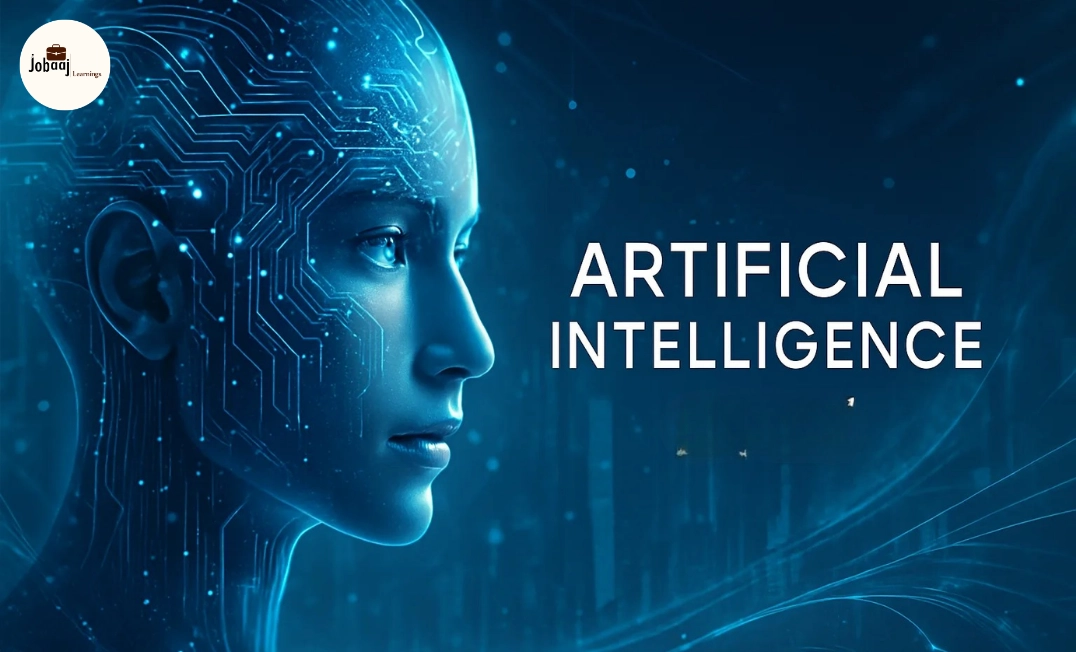
Artificial Intelligence (AI) is a powerful and transformative technology that is reshaping industries, economies, and everyday life. From self-driving cars to smart assistants like Siri and Alexa, AI is everywhere. However, the term "artificial intelligence" can seem overwhelming, especially since it covers a wide range of technologies, methods, and applications.
In this blog, we will break down the different types of AI each with its own unique capabilities and applications. Whether you're a beginner in the field or a seasoned tech enthusiast, understanding these distinctions will help you appreciate how AI is evolving and why it’s so crucial to the future.
1. Artificial Narrow Intelligence (ANI) – Weak AI
Artificial Narrow Intelligence (ANI), often referred to as Weak AI, is the most common form of AI we interact with today. ANI refers to AI systems that are designed to perform a specific task or set of tasks. These systems excel at one job but are limited to that particular function. For example, Siri, Google Assistant, and image recognition software all fall under ANI.
Key Characteristics of ANI:
-
Specialized: ANI can perform only the task it’s programmed for (e.g., playing chess, recognizing objects in images, etc.).
-
Task-oriented: ANI does not possess general intelligence or the ability to perform tasks outside of its designated function.
-
Common in Today’s World: Many of the AI systems we use daily, such as spam filters, recommendation systems, and voice assistants, are examples of ANI.
Despite its limitations, ANI powers the majority of AI applications today and is the foundation of smart technologies like self-driving cars, personalized recommendations, and automated customer support systems.
2. Artificial General Intelligence (AGI) – Strong AI
Artificial General Intelligence (AGI), also known as Strong AI, is the holy grail of AI development. AGI aims to create machines that possess the ability to perform any intellectual task that a human being can. This includes not just performing specialized tasks but also reasoning, learning, and adapting to new situations.
Unlike ANI, which is highly specialized, AGI would be capable of transferring knowledge and skills between domains. For instance, an AGI could solve problems in one field and then apply that knowledge to completely different areas, similar to how a human can learn new skills.
Key Characteristics of AGI:
-
Human-like Intelligence: AGI would be capable of understanding and learning a wide variety of tasks, similar to human cognitive abilities.
-
Adaptability: It can transfer knowledge across domains, unlike ANI, which is task-specific.
-
Not Yet Achieved: We have not yet developed true AGI, but it remains a long-term goal for researchers.
AGI could revolutionize industries by offering flexibility, autonomy, and problem-solving capabilities similar to those of humans. The potential applications of AGI are vast, including scientific research, medicine, and creative fields like art and writing.
3. Artificial Superintelligence (ASI)
Artificial Superintelligence (ASI) represents the next level of AI evolution. It refers to a form of AI that surpasses human intelligence in every aspect creativity, problem-solving, decision-making, and even emotional intelligence. ASI would have the ability to outthink the brightest human minds and perform tasks far beyond human capabilities.
While we are nowhere near achieving ASI, it is a popular subject of debate, especially in the context of AI’s ethical implications and its potential risks.
Key Characteristics of ASI:
-
Superhuman Intelligence: ASI would outperform the best human brains in every field.
-
Complete Autonomy: It could potentially make decisions on its own, without human intervention, with capabilities far beyond what humans can achieve.
-
Theoretical Concept: ASI is still theoretical, and experts debate whether it is achievable or even desirable.
ASI has the potential to transform society in unimaginable ways. While it promises advancements in fields like healthcare, space exploration, and technology, it also raises concerns about control, ethics, and safety.
4. Reactive Machines (Basic AI)
Reactive Machines are the simplest form of AI. These systems are designed to react to specific stimuli with a fixed set of responses. They do not have the ability to store past experiences or learn from them every situation is treated as a new one.
A classic example of a reactive machine is IBM's Deep Blue, the computer that defeated world chess champion Garry Kasparov in 1997. While Deep Blue excelled at playing chess, it could not apply its knowledge beyond that specific game.
Key Characteristics of Reactive Machines:
-
No Memory: Reactive machines don’t have memory or the ability to use past experiences to improve future actions.
-
Simple Responses: They respond to specific inputs with predetermined outputs.
-
Task-Specific: Reactive machines excel at one task, like playing chess or recognizing speech.
Although basic, reactive machines are foundational to understanding AI’s evolution. They are used in simple applications like factory robots or speech recognition systems.
5. Limited Memory AI
Limited Memory AI is a step forward from reactive machines. These AI systems can learn from historical data, storing some memories to improve their performance over time. They are typically used in systems that need to process a lot of data to make decisions based on past information.
Self-driving cars are a perfect example of Limited Memory AI. These cars use data from their sensors to make decisions about how to navigate and avoid obstacles, but they also store past experiences to improve driving performance.
Key Characteristics of Limited Memory AI:
-
Learns from Experience: It can use data from the past to improve decision-making.
-
Memory: It can store some information for short periods, such as sensor data or user interactions.
-
Used in Many Modern Systems: This type of AI is commonly used in autonomous vehicles, fraud detection, and predictive systems.
Limited Memory AI is crucial for systems that need to learn from real-time data. It’s already being used in industries like transportation, healthcare, and finance, and will continue to expand in 2026.
6. Theory of Mind AI
The Theory of Mind is an AI that aims to understand emotions, beliefs, and thoughts like humans do. It can recognize that other entities (like humans or animals) have their own intentions, feelings, and perspectives. This type of AI is still in its infancy and is mostly theoretical.
Key Characteristics of Theory of Mind AI:
-
Understanding Emotions: It can recognize and interpret human emotions and intentions.
-
Simulates Human Interaction: It can predict and respond to the behavior of humans or other AI systems based on mental states.
-
Still Under Development: Research into Theory of Mind AI is still ongoing, and practical applications are far from realization.
In the future, Theory of Mind AI could revolutionize human-computer interaction, leading to more empathic AI systems that understand and adapt to human emotions, paving the way for intelligent assistants and mental health applications.
7. Artificial Emotional Intelligence (AEI)
Artificial Emotional Intelligence (AEI) refers to AI systems designed to detect, understand, and respond to human emotions. AEI focuses on mimicking the emotional intelligence that humans use to navigate social interactions. These AI systems analyze facial expressions, voice tone, and physiological responses to gauge emotions, and adapt their behavior accordingly.
Key Characteristics of AEI:
-
Emotion Recognition: AI can recognize emotions like happiness, sadness, anger, and empathy.
-
Emotional Interaction: AEI allows machines to respond to humans in emotionally appropriate ways.
-
Used in Customer Service: AI systems with emotional intelligence can improve customer support and enhance user experiences.
With AEI, machines could create more natural, human-like interactions, leading to advancements in mental health applications, customer support, and personalized experiences.
8. Autonomous AI
Autonomous AI refers to AI systems that are capable of making decisions independently without human intervention. These systems use data, sensory input, and pre-programmed rules to take actions that align with specific goals, much like autonomous vehicles navigating without human drivers.
Key Characteristics of Autonomous AI:
-
Self-Sufficiency: Can perform tasks and make decisions on its own.
-
Real-World Applications: Used in self-driving cars, drones, and robotics.
-
Real-Time Decision Making: Requires quick, context-based decision-making with minimal human oversight.
In 2026, autonomous AI is crucial in industries like transportation, logistics, and manufacturing, enabling operations that require minimal human intervention and offer increased efficiency and safety.
9. Cognitive AI
Cognitive AI refers to systems that aim to mimic the human brain’s cognitive processes such as perception, reasoning, and learning. These systems are designed to not only process information but also understand and interpret data in a way that reflects human thought processes. Cognitive AI systems can understand complex scenarios, draw conclusions, and adapt their actions accordingly.
Key Characteristics of Cognitive AI:
-
Human-Like Learning: Simulates human-like reasoning and decision-making.
-
Complex Data Interpretation: Can analyze vast amounts of unstructured data.
-
Contextual Awareness: Understands the nuances of real-world situations and reacts accordingly.
Cognitive AI plays a vital role in industries such as healthcare, finance, and education, where complex decision-making, real-time analysis, and problem-solving are essential for success.
10. Swarm Intelligence AI
Swarm Intelligence is a branch of AI inspired by the collective behavior of social organisms such as ants, bees, and flocks of birds. This type of AI uses decentralized problem-solving to complete tasks collaboratively, often working in large groups without a central controller. Each "agent" in a swarm works autonomously but shares information with others to achieve a common goal.
Key Characteristics of Swarm Intelligence AI:
-
Decentralized Collaboration: Each agent performs tasks independently but cooperatively.
-
Self-Organization: The system adapts and organizes itself based on the actions of individual agents.
-
Efficiency: Used for optimization problems, such as route planning or resource allocation.
Swarm Intelligence is used in areas like robotics, network optimization, and logistics. It allows AI systems to be more flexible and adaptable, particularly when faced with large-scale, complex problems that benefit from collaborative solutions.
Conclusion
Artificial Intelligence is evolving rapidly, and the different types of AI ANI, AGI, ASI, Reactive Machines, Limited Memory AI, and Theory of Mind AI are just the beginning. Each type has its own unique capabilities, limitations, and potential applications. Whether it’s enhancing customer service, revolutionizing healthcare, or advancing autonomous systems, AI is set to transform the way we live and work.
As we approach 2026, the future of AI looks incredibly exciting, with each type of AI playing a crucial role in the next phase of technological evolution. Whether you’re a tech enthusiast, student, or professional, understanding the different types of AI and their implications is essential to staying ahead in this ever-changing landscape.
Curious about Generative AI? Apply Now and Explore the Future of AI with Jobaaj Learnings!
Frequently asked questions
What are the main types of Artificial Intelligence?
The main types of AI include Artificial Narrow Intelligence (ANI), Artificial General Intelligence (AGI), and Artificial Superintelligence (ASI). There are also Reactive Machines, Limited Memory AI, Autonomous AI, Cognitive AI, and Swarm Intelligence.
What is the difference between ANI and AGI?
ANI (Artificial Narrow Intelligence) is AI designed to perform specific tasks, while AGI (Artificial General Intelligence) is capable of performing any task that a human can, with learning and reasoning abilities that span multiple domains.
How does Cognitive AI differ from other types of AI?
Cognitive AI mimics human cognitive processes like reasoning and learning. It’s different from other types of AI because it can understand complex scenarios and adapt its actions based on context, similar to human thinking.
Is Swarm Intelligence used in real-world applications?
Yes, Swarm Intelligence is used in real-world applications like robotics, network optimization, and logistics. It helps solve complex problems by using decentralized collaboration among multiple agents working towards a common goal.
Why is Artificial Emotional Intelligence (AEI) important?
AEI is important because it allows machines to understand and respond to human emotions. It can be used to improve customer service, mental health applications, and personalized experiences, making AI more human-centric.

Join 5,00,000+ Subscribers
Be a part of our ever growing community.