Categories














/content/learnings/assets/header/ManagementConsulting.svg)
/content/learnings/assets/header/InvestmentBanking.svg)


























How to Decide Between Government Jobs and Private Sector Jobs After 12th

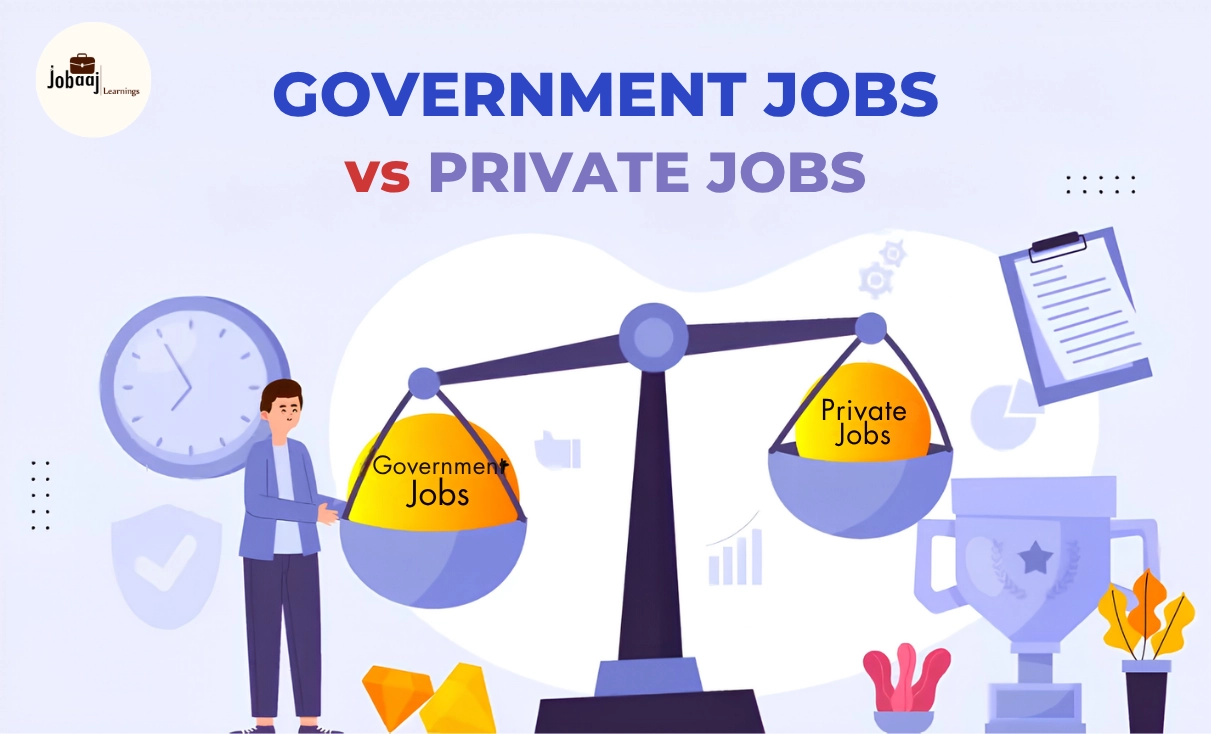
After finishing 12th, one of the biggest questions you'll face is this: Should I aim for a government job or go into the private sector? Both paths have real advantages - and real trade-offs.
The truth is, neither is universally better. The right choice depends on who you are, what you value, and what kind of life you want to build. This guide walks you through everything you need to know - clearly and honestly.
Understanding What Each Path Really Offers
Before choosing, it helps to understand what these two worlds actually look like - not just the myths, but the day-to-day reality that millions of working Indians experience.
Government jobs, especially in Central and State services, offer something that very few private jobs can match: long-term security. Once you're in, the system protects you with a pension, defined working hours, and a clear career ladder. Private sector jobs, by contrast, reward performance and agility - but come with less predictability.
Government Jobs
- Job security & pension (NPS/OPS)
- Fixed hours & work-life balance
- DA, HRA, TA allowances
- Prestige & social status
- Gradual but guaranteed increments
- Medical & housing benefits
- Transfers across India possible
Private Sector Jobs
- Higher starting salaries possible
- Fast-track career growth
- Skill-based advancement
- Flexible & dynamic environment
- Global exposure & opportunities
- Performance bonuses & ESOPs
- Innovation-driven culture
Salary Reality Check
Many students assume government jobs pay less. That's partially true at entry level - but it misses a bigger picture. A Group B government officer's total package, when you add up DA, HRA, medical, pension, and housing, can comfortably rival mid-level private roles.
In the private sector, your first job after 12th may start between ₹10,000 and ₹20,000 per month. With skill upgrades and promotions, high performers can jump dramatically. But so can the stress. Meanwhile, a government employee's salary grows slowly but steadily - and crucially, the real value of those benefits compounds over decades.
A government job's true salary isn't just the number on your payslip. Add pension, housing subsidy, job security premium, and guaranteed increments - and the math changes significantly by your 40s and 50s.
Key Factors to Help You Decide
There's no universal right answer - but these six questions will help you find your personal answer. Be honest with yourself as you read through each one.
1. How much do you value security?
If job security matters deeply to you - especially as a family's primary earner - government is the safer bet by a wide margin.
2. How ambitious is your growth timeline?
If you want to climb fast and reach high positions in 5–10 years based on merit alone, the private sector rewards that hunger.
3. Are you willing to prepare for years?
Government exams like SSC, UPSC, and Railways require 1–4 years of dedicated preparation. Honest self-assessment matters here.
4. What lifestyle do you want?
Fixed hours and slower pace suit some people perfectly. Others thrive in high-energy, fast-paced environments. Neither is wrong.
5. Do you want global exposure?
Private sector - especially in IT, finance, and MNCs - opens doors to international roles. Government careers mostly keep you within India.
Upcoming government exams 2026
6. What field are you passionate about?
Some fields like medicine, engineering, and law work well in both. Others like creative media, tech startups, lean heavily private.
Side-by-Side: What Wins Where
Here's a quick comparison across the factors that matter most to students making this decision after 12th. Use this as a reference, not a verdict - your personal priorities determine the weight of each row.
|
Factor |
Government |
Private Sector |
|
Job Security |
Strong |
Moderate (varies by company) |
|
Starting Salary |
Lower to moderate |
Often Higher |
|
Long-Term Benefits |
Excellent |
Depends on employer |
|
Work-Life Balance |
Generally Better |
Varies widely |
|
Career Growth Speed |
Slow, structured |
Fast, merit-based |
|
Skill Development |
Limited, role-specific |
Broad exposure |
|
Social Prestige |
High in society |
Depends on company/role |
|
Flexibility |
Low |
High |
|
Entry Route |
Competitive exams (1–4 yrs) |
Faster entry |
|
Pension After Retirement |
Yes (NPS/OPS) |
No guaranteed pension |
The Exam Reality
One thing many students underestimate is how competitive and time-consuming government exam preparation truly is. SSC CGL, IBPS, Railway Group D, and UPSC are not short-term goals - they're multi-year commitments with lakhs of applicants for a handful of seats.
This doesn't mean you shouldn't try. It means you should plan honestly. Many toppers also worked part-time or pursued a degree alongside their preparation. The key is to not leave your entire early career window in limbo while waiting for results.
If you're targeting a government job, start early, be consistent, and have a backup plan. A private job while preparing isn't a compromise - it's smart. It keeps your skills sharp and your finances stable while you chase your goal.
Popular Careers in Each Category After 12th
You don't need a degree to start in many government and private roles. Here's a look at what's accessible after Class 12, depending on which stream you're from.
Government Options
- Railway Group D / NTPC
- SSC CHSL (clerical roles)
- Indian Army / Navy / Air Force
- BSF, CRPF, CISF (paramilitary)
- India Post (GDS, MTS)
- State police constable roles
- LIC, GIC assistant posts
Private Options
- BPO / Customer support
- Retail & sales executive
- Banking (private sector entry)
- Data entry & back-office
- Digital marketing associate
- Hospitality & travel industry
- ITI + technical manufacturing
The smartest students don't just pick one door and stand there hoping it opens. They walk toward multiple opportunities simultaneously - staying prepared, staying employed, and staying flexible.
Still Unsure? That's Completely Normal
Career decisions at 17–18 are genuinely hard. Take your time, talk to people already in both paths, and remember - the goal isn't to make the "perfect" choice. It's to make an informed one.
Frequently asked questions
What are the benefits of government jobs after 12th?
Government jobs after 12th offer job stability, fixed work hours, pension benefits, and social recognition. They are ideal for students seeking long-term security and steady growth rather than high initial salaries.
Can private sector jobs offer faster growth after 12th?
Private sector jobs after 12th provide faster career growth, higher starting salaries, performance-based incentives, and skill development opportunities, making them suitable for ambitious students looking for dynamic work environments.
Which job type offers better work-life balance?
Government jobs after 12th generally offer structured schedules and predictable workloads, while private sector jobs can have longer hours and variable demands depending on the industry and company culture.
Are there skill requirements for private sector jobs after 12th?
Yes, private sector jobs after 12th often require specific technical or soft skills such as IT, digital marketing, finance, or sales, along with continuous learning to stay competitive in the industry.
How do I choose between government and private jobs after 12th?
Choosing between government and private jobs after 12th depends on your priorities like stability, salary, growth, and work-life balance. Consider your goals, risk tolerance, and the career trajectory of each option before deciding.
Join 5,00,000+ Subscribers
Be a part of our ever growing community.