Categories







































How to Determine Product-Market Fit: Complete In-Depth Guide for Startups (2026)

Building a product often feels like the biggest challenge, but in reality, the harder part is making sure that the product actually matters to people. Many startups fail not because they lacked effort or skill, but because they created something that the market did not truly need or value. On the other hand, when a product aligns perfectly with user needs, everything begins to shift. Users start returning without reminders, they talk about the product with others, and growth starts happening more naturally.
Exploring a career in Product Management? Apply Now!
This turning point is known as product-market fit. It is not just a milestone but a strong signal that your product is solving a meaningful problem for the right audience. Understanding how to determine product-market fit helps you avoid wasted effort and focus on building something that has real demand and long-term potential.
What is Product-Market Fit?
Product-market fit refers to the stage where a product successfully satisfies a strong market demand. It is not just about building something functional, but about building something people genuinely want to use and continue using over time. A product reaches this stage when it clearly solves a problem that users care about, and the value it provides is strong enough to retain them.
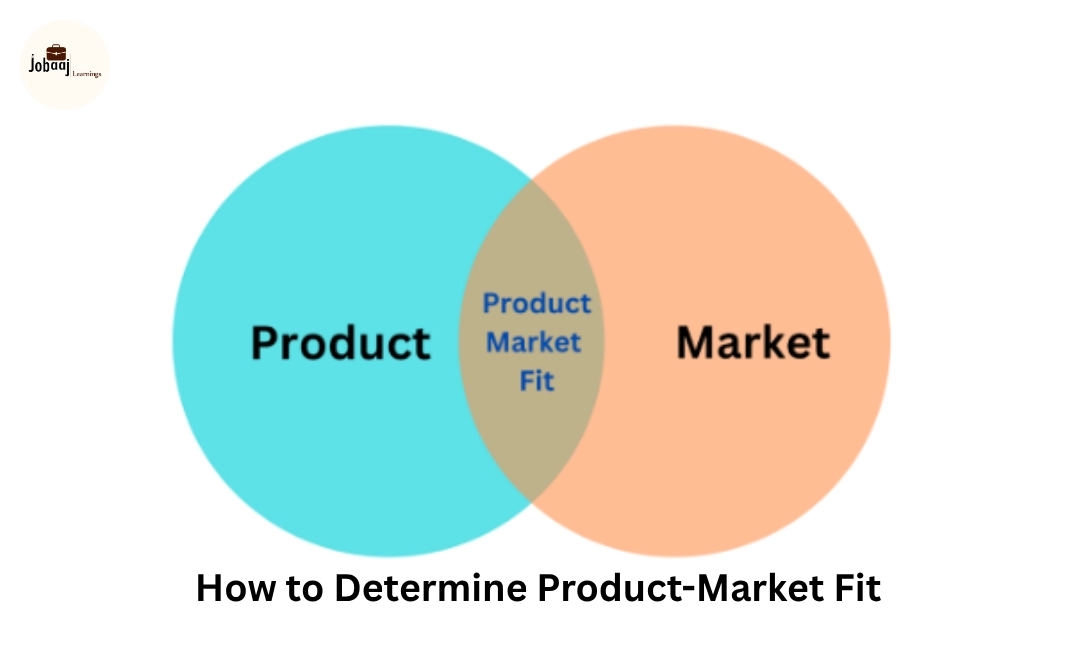
In simple terms, product-market fit happens when three elements come together naturally: a real problem, a clearly defined audience, and a solution that effectively addresses that problem. If any one of these elements is weak, the product struggles to gain traction. But when they align, the product starts to feel relevant and necessary in the user’s life or workflow.
Why Product-Market Fit is Critical for Growth
Before achieving product-market fit, growth often feels forced. Teams rely heavily on marketing campaigns, paid ads, and constant push strategies to attract users. Even then, retention tends to be low because users do not find enough value to stay.
Once product-market fit is achieved, the situation changes significantly. Users begin to return on their own, recommendations start happening organically, and the cost of acquiring new users reduces over time. The product starts gaining momentum because it is delivering clear value.
This is why experienced founders and product managers focus on finding product-market fit before scaling. Without it, scaling only amplifies existing problems instead of solving them.
The Core Idea Behind Product-Market Fit
At its core, product-market fit is about alignment. You are aligning what you build with what people actually need. This alignment is often explained through three key components:
- The problem must be real, frequent, and important
- The audience must be clearly defined and reachable
- The solution must be simple, effective, and valuable
If the problem is not strong enough, people will not care. If the audience is not clear, the product will feel unfocused. If the solution is weak, users will not stay. True product-market fit only happens when all three work together.
How to Determine Product-Market Fit
Determining product-market fit is not a single action but a process that involves observation, feedback, and continuous improvement. It requires you to look at both qualitative insights and quantitative data.
The first step is understanding whether the problem you are solving is meaningful. A strong problem usually shows up in the form of repeated frustration, inefficiency, or unmet needs. If users are already trying to solve the problem in different ways, it is a good sign that the problem is worth addressing.
The next step is clearly defining your target audience. Instead of trying to serve everyone, it is far more effective to focus on a specific group of users who experience the problem most intensely. This clarity allows you to tailor your solution more precisely and identify early signals of product-market fit.
Once the problem and audience are clear, the focus shifts to building a minimum viable product. The goal here is not to create a perfect product but to test the core value. An MVP should solve the main problem in the simplest possible way so that users can experience its benefit quickly.
After launching the MVP, user behavior becomes the most important source of truth. It is essential to observe how users interact with the product. Do they complete key actions? Do they return after the first use? Which parts of the product do they use most? These patterns provide valuable insights into whether the product is delivering real value.
At the same time, collecting user feedback helps you understand the reasons behind user behavior. Instead of asking generic questions, it is more useful to ask what problem the product solved for them, what they found confusing, and whether they would be willing to pay for it. The goal is to identify patterns rather than rely on individual opinions.
Key Metrics to Evaluate Product-Market Fit
To make a reliable judgment, it is important to support observations with data. Several metrics help in determining whether a product is moving toward product-market fit.
- Retention rate shows whether users are coming back over time
- Churn rate indicates how many users are leaving
- Activation rate measures how many users reach the core value
- Engagement reflects how actively users interact with the product
- Conversion rate shows willingness to pay
- Referral rate indicates how often users recommend the product
Strong product-market fit usually shows up as high retention, consistent engagement, and increasing referrals. These metrics together give a clearer picture than any single number.
The 40 Percent Rule
One commonly used method to assess product-market fit is the 40 percent rule. This involves asking users how they would feel if they could no longer use the product. If a significant portion of users say they would be very disappointed, it suggests that the product is delivering strong value.
This method works because it captures emotional dependence, not just casual usage. When users feel that they would genuinely miss the product, it indicates that the product has become important in their routine.
Signs That You Have Achieved Product-Market Fit
Product-market fit often reveals itself through a combination of signals rather than a single indicator. You may start noticing that users return consistently without reminders, and new users begin coming in through referrals. The product becomes easier to explain because its value is clear, and users start showing a willingness to pay.
Other signs include improved retention, reduced churn, and more enthusiastic feedback. The product begins to feel less like something you are pushing and more like something users are naturally adopting.
Challenges in Achieving Product-Market Fit
Reaching product-market fit is rarely straightforward. Many teams struggle because they misjudge the problem, target the wrong audience, or build features that do not add real value. Sometimes the issue lies in poor onboarding, where users do not experience the product’s value quickly enough.
Another common challenge is ignoring feedback or relying too much on assumptions. Product-market fit requires continuous learning, and teams that fail to adapt often struggle to achieve it.
Common Mistakes to Avoid
There are several mistakes that can delay or prevent product-market fit:
- Building without validating the problem
- Targeting too broad an audience
- Adding features instead of improving core value
- Ignoring user behavior and focusing only on opinions
- Scaling too early without strong retention
Avoiding these mistakes can significantly improve your chances of finding product-market fit faster.
Real-World Examples
Products like WhatsApp, Swiggy, and Zoom achieved product-market fit because they solved clear problems in a simple and effective way. WhatsApp removed friction from communication, Swiggy improved reliability in food delivery, and Zoom simplified online meetings. In each case, the product matched user needs closely, which led to strong adoption and growth.
Final Thoughts
Determining product-market fit is about understanding whether your product truly matters to the people you are building it for. It requires a combination of problem clarity, user understanding, product simplicity, and continuous iteration.
If users keep returning, find value, and would feel disappointed without your product, you are moving in the right direction. If not, it is an opportunity to learn and improve.
The goal is not just to build a product, but to build something that people genuinely want to use and continue using over time.
Dreaming of a Product Management Career? Start with Product Management Certificate with Jobaaj Learnings.
Frequently asked questions
What is product-market fit in simple terms?
Product-market fit means your product successfully solves a real problem for a specific group of users, and they continue using it because it provides strong value.
How do you determine product-market fit?
You determine product-market fit by analyzing user behavior, retention, engagement, feedback, and willingness to pay. Consistent usage is a key signal.
What metrics indicate product-market fit?
Important metrics include retention rate, churn rate, activation rate, engagement, conversion rate, and referral rate, which together show user satisfaction and value.
What is the 40 percent rule in product-market fit?
The 40 percent rule suggests that if at least 40 percent of users say they would be very disappointed without your product, it indicates strong product-market fit.
Why do startups fail to achieve product-market fit?
Startups fail due to weak problem selection, poor audience targeting, ignoring feedback, and focusing too much on features instead of solving real user needs.
Join 5,00,000+ Subscribers
Be a part of our ever growing community.