Categories






































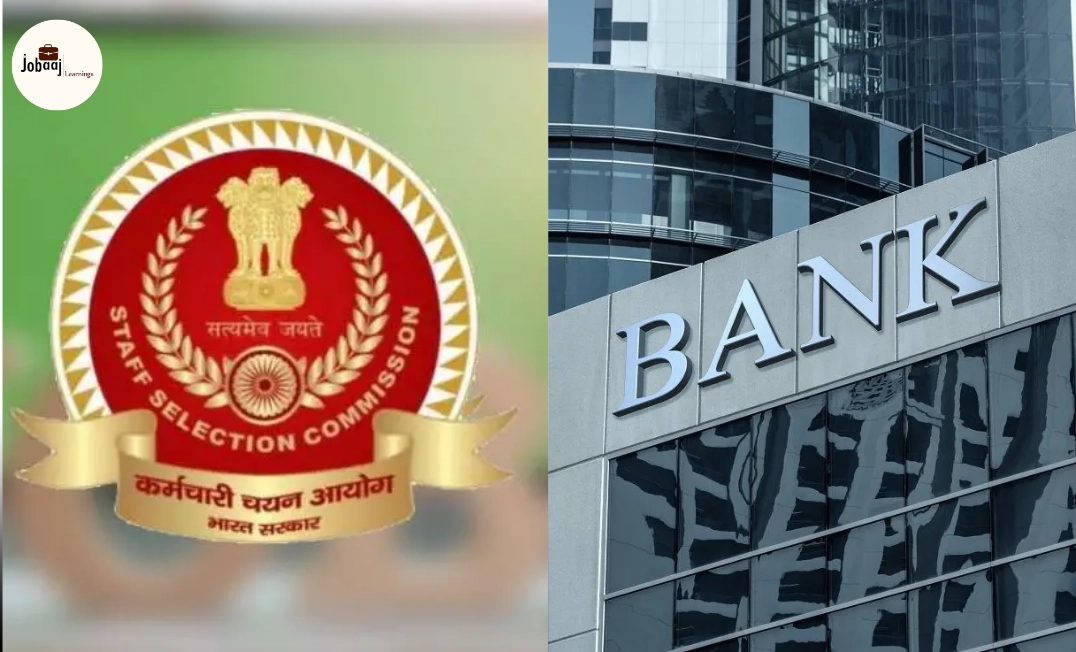
SSC and banking exams are two of the most popular career routes for graduates preparing for government and public-sector jobs in India.
At first glance, both look similar. You prepare quantitative aptitude, reasoning, English and general awareness, clear a competitive examination and enter a relatively stable career.
But the jobs you get afterward can feel very different.
An SSC CGL candidate may become an Income Tax Inspector, Assistant Section Officer, Auditor, Assistant Enforcement Officer or another employee in a central government department.
A banking candidate may join a public-sector bank as a Probationary Officer or Customer Service Associate and work directly with customers, loans, deposits, branch operations and business targets.
The better career therefore depends less on the exam and more on what kind of working life you want after clearing it.
SSC vs Banking Jobs: Quick Comparison
|
|
|
|
|
|
|
|
|
|
|
|
|
|
|
|
|
|
|
|
|
|
|
|
|
|
|
|
|
|
|
|
|
|
|
|
|
|
|
|
|
|
|
|
The important phrase here is “depends on the post.”
SSC is not one job, and banking is not one job either.
An Assistant Section Officer and a CBI Sub-Inspector can have completely different working conditions even though both may enter through SSC CGL.
Similarly, a bank clerk and a Probationary Officer have very different responsibilities and career paths.
What Kind of Jobs Do You Get Through SSC?
SSC conducts recruitment for a large number of central government ministries, departments and organisations.
SSC CGL 2026 includes posts such as:
- Assistant Audit Officer
- Assistant Accounts Officer
- Assistant Section Officer
- Income Tax Inspector
- Central Excise Inspector
- Assistant Enforcement Officer
- CBI Sub-Inspector
- Auditor
- Accountant
- Postal Assistant
The official SSC CGL 2026 notification lists posts across Pay Levels 4 to 8. For example, Level 8 starts at a basic pay of ₹47,600, Level 7 at ₹44,900, Level 6 at ₹35,400, Level 5 at ₹29,200 and Level 4 at ₹25,500.
That wide range is why asking for a single “SSC salary” can be misleading.
Your actual salary and work profile depend heavily on the post allocated to you.
What Kind of Jobs Do You Get Through Banking Exams?
The main public-sector banking routes include:
IBPS PO for Probationary Officer or Management Trainee roles.
IBPS CSA for Customer Service Associate roles, traditionally associated with the clerical cadre.
SBI PO and SBI Junior Associate for State Bank of India recruitment.
A Probationary Officer is an officer-track employee who may work across branch operations, loans, customer service, compliance, business development and later managerial responsibilities.
A Customer Service Associate works more closely with routine branch operations and customer transactions.
Under the current IBPS PO XVI notification, the basic pay for a PO/Management Trainee starts at ₹48,480, with allowances and perquisites added according to the participating bank's rules.
For the recent IBPS Customer Service Associate structure, basic pay starts at ₹24,050, with allowances and benefits added separately.
So if you compare SSC CGL with Bank PO, the salaries can be quite competitive at entry level.
SSC vs Banking Salary: Which Pays More?
There is no single winner.
A top SSC CGL post can have a basic salary very close to or comparable with a Bank PO.
For example:
|
|
|
|
|
|
|
|
|
|
|
|
|
|
|
|
|
|
Official SSC and IBPS notifications confirm these basic-pay structures for the relevant current recruitment cycles.
However, basic pay is not the same as in-hand salary.
Final compensation may include:
- Dearness allowance
- House rent allowance
- Transport allowance
- Special allowances
- Bank-specific benefits
- Location-based allowances
- Other applicable benefits
This means comparing only basic pay does not tell the full story.
Who Wins on Salary?
If you compare a Bank PO with a lower-level SSC CGL post, the Bank PO can offer stronger initial compensation.
If you compare a Bank PO with a Level 7 or Level 8 SSC post, the difference becomes much smaller.
Over the long term, banking officers may also move through promotions more aggressively, while government pay progression is more structured.
So salary alone should not decide your choice.
Work-Life Balance: SSC Usually Has an Advantage
This is one of the biggest reasons many aspirants prefer SSC.
A large number of SSC desk-based jobs follow more predictable office schedules.
Roles in ministries, audit offices, accounts departments and administrative offices may provide relatively structured working hours.
That said, not every SSC post is relaxed.
Positions involving:
- Investigation
- Enforcement
- Field inspections
- Intelligence work
- Customs
- CBI
can involve field duties, irregular hours or greater pressure.
Banking work is typically more customer-facing.
A public-sector bank officer may need to handle:
- Customers
- Deposits
- Loan processing
- Compliance
- Branch targets
- Audits
- Reporting
- Cross-selling
- Operational issues
Month-end, financial year-end or business-target periods can become particularly demanding.
So if your highest priority is predictable working hours, many SSC desk posts usually have an edge.
SSC vs Banking: Where Is the Work Pressure Higher?
Banking generally involves more direct business pressure.
A bank is a commercial organisation, even when it is government-owned.
Branches need to grow deposits, distribute loans, acquire customers and sell financial products while remaining compliant with banking regulations.
This can create pressure around:
- Business targets
- Customer complaints
- Loan recovery
- Cross-selling
- Audits
- Staff shortages
- Branch performance
SSC jobs vary much more.
An Auditor may have a very different pressure level from an Enforcement Officer or CBI Sub-Inspector.
This is why saying “SSC jobs have no pressure” would be inaccurate.
The safer conclusion is:
Banking pressure is usually more consistent and business-driven. SSC pressure depends much more on the specific department and post.
Transfers and Posting: Which Is Better?
Posting can become a major deciding factor, especially for candidates who want to remain close to their home state.
Bank officers should generally be prepared for transfers as part of their career.
Promotions can also involve movement between branches, regions or administrative offices.
Banking jobs can therefore provide excellent exposure but may require more geographical flexibility.
SSC posting depends strongly on the department.
Some posts offer a greater possibility of spending long periods in major government centres, while others may involve field postings or transfers across regions.
Neither route guarantees that you will remain in your hometown.
If location matters greatly to you, compare the specific SSC post or banking cadre, not just the exams.
Promotion and Career Growth
This is where banking can become attractive.
Banking Career Growth
A PO may progress through positions such as:
Probationary Officer → Assistant Manager → Manager → Senior Manager → Chief Manager → Assistant General Manager → Deputy General Manager → General Manager
Exact designations vary between banks.
Strong performers may receive significant responsibility relatively early because banking is a large operational business with many branches and management layers.
The trade-off is that greater responsibility can mean:
- More targets
- Larger teams
- Bigger portfolios
- Transfers
- Higher accountability
SSC Career Growth
Promotion depends on the department, seniority rules, vacancies and departmental procedures.
A typical SSC employee may move through progressively senior government grades over time.
Growth can be stable, but in some cadres the promotion cycle may feel slower than a banking officer's career path.
This creates a simple trade-off:
Banking can offer faster managerial progression.
SSC often offers more predictable long-term stability.
SSC vs Banking Exam: Which Is Harder?
Both are highly competitive, but the nature of preparation differs.
SSC CGL 2026 uses a two-tier computer-based examination system. Tier I currently covers General Intelligence and Reasoning, General Awareness, Quantitative Aptitude and English Comprehension.
Bank PO examinations focus heavily on:
- Quantitative aptitude
- Reasoning
- English
- Banking/economic awareness
- Data interpretation
- Computer or digital awareness
- Descriptive communication in relevant stages
The current IBPS PO process includes Preliminary and Main examinations, followed by a Personality Test and Interview for shortlisted candidates.
This means the challenge is slightly different.
SSC often demands stronger preparation in:
- Static general knowledge
- General awareness
- Mathematics
- English
- Accuracy
Banking exams often place greater emphasis on:
- Speed
- Reasoning
- Data interpretation
- Current financial awareness
- Time pressure
A candidate strong in calculations and reasoning may find banking preparation more natural.
Someone comfortable with mathematics, English and broader general knowledge may prefer SSC.
Job Security: Both Are Strong Choices
This is one category where both careers perform well.
SSC recruits into central government organisations, while IBPS and SBI recruitment provides opportunities in established public-sector banks.
Both offer structured employment, benefits and relatively strong long-term career stability compared with many private-sector entry-level jobs.
SSC may still appeal more to someone whose main priority is the traditional central-government employment structure.
Banking appeals more to candidates who want similar stability but also want a more commercial and managerial career environment.
Which Career Is Better for Women?
There is no universal answer based on gender.
The better question is which working conditions matter more to the individual candidate.
Someone who values:
- Predictable office schedules
- Lower customer pressure
- Less business-target pressure
may prefer certain SSC desk jobs.
Someone who values:
- Faster career growth
- Branch leadership
- Finance exposure
- Management opportunities
may prefer banking.
Posting, family responsibilities and willingness to relocate should be considered for both options.
Candidates should evaluate the actual post rather than assuming every SSC job or bank job has the same lifestyle.
Who Should Choose SSC?
SSC may be the better option if your priorities are:
Work-life balance: You prefer relatively predictable schedules.
Central government career: You specifically want to work in ministries, departments or government agencies.
Less sales pressure: You do not want business targets to become a major part of your job.
Long-term stability: You value structured salary progression and government-service benefits.
Administrative or investigative work: You are interested in posts such as ASO, Income Tax Inspector, Auditor or Enforcement Officer.
SSC is particularly attractive for candidates who prioritise stability and lifestyle over rapid managerial growth.
Who Should Choose Banking?
Banking may be the better option if you:
Want quicker responsibility: Bank POs can take on managerial responsibilities relatively early.
Enjoy dealing with people: Customer interaction is central to many banking roles.
Are interested in finance: Banking gives direct exposure to loans, deposits, credit and financial products.
Can handle targets: Commercial responsibilities are a normal part of banking.
Are comfortable with transfers: Mobility can become part of career progression.
Banking can be a strong option for someone who wants stability without giving up a faster-moving professional environment.
SSC CGL vs Bank PO: The Practical Verdict
For many graduates, this is the comparison that actually matters.
|
|
|
|
|
|
|
|
|
|
|
|
|
|
|
|
|
|
|
|
|
|
|
|
|
|
|
|
|
|
|
|
|
The interesting part is salary.
Bank PO does not automatically pay far more than SSC CGL.
Higher-level SSC CGL posts start at competitive basic-pay levels, while IBPS PO currently begins at ₹48,480 basic pay.
The real decision therefore comes down to lifestyle and career style rather than only money.
Conclusion
Choose SSC if you want a central government career, more predictable working conditions, lower business pressure and a lifestyle-focused long-term job.
Choose banking if you want faster managerial growth, finance exposure, greater responsibility and are comfortable handling customers, targets and transfers.
Neither is universally better.
For someone who values work-life balance and stability, SSC CGL is often the stronger choice.
For someone who values promotion speed, responsibility and an active professional environment, Bank PO can be more attractive.
And if salary is your only deciding factor, compare the actual posts.
A Level 7 or Level 8 SSC CGL post and a Bank PO can both provide competitive starting compensation.