

 Categories











































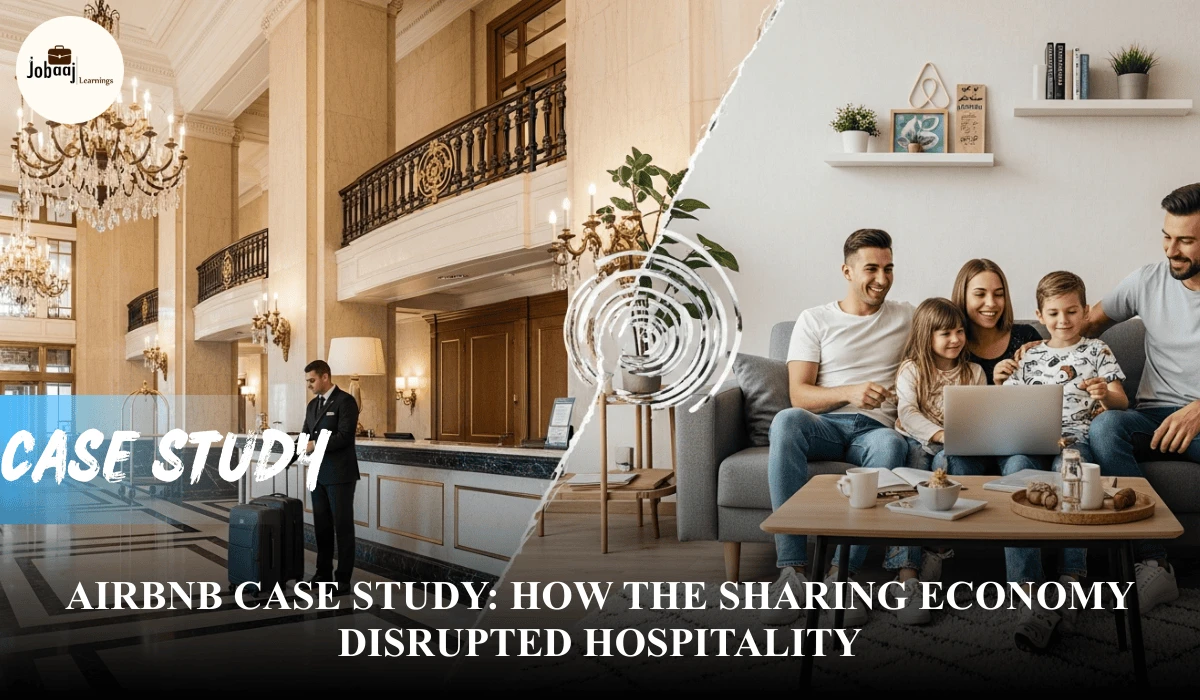
In just over a decade, Airbnb has transformed the way people travel, stay, and experience new cities. What started as a simple solution for finding accommodation during a conference in San Francisco has blossomed into a multi-billion dollar company that has reshaped the entire hospitality industry. Airbnb’s success story is a prime example of how the sharing economy can create new business models, disrupt traditional industries, and generate immense value for both consumers and entrepreneurs.
In this case study, we’ll explore how Airbnb leveraged the sharing economy to offer travelers a more personalized experience while allowing hosts to monetize their spare rooms and properties. We'll also look at the key strategies that propelled Airbnb’s growth and the lessons learned along the way.
Background
Airbnb was founded in 2008 by Brian Chesky, Joe Gebbia, and Nathan Blecharczyk in San Francisco. The idea was simple: provide an alternative to traditional hotel accommodations by allowing people to rent out their extra space—whether it was a spare room, an entire apartment, or even a treehouse.
The concept tapped into the growing trend of the sharing economy, which is based on the idea of peer-to-peer sharing of goods and services. Rather than relying on large corporations to provide services like accommodation, the sharing economy connects individuals who can share resources with others in need.
In Airbnb’s case, the platform facilitated transactions between hosts and travelers, making it possible for anyone with an extra room to earn money while giving guests more affordable and unique lodging options.
Problem / Market Gap
Before Airbnb, the hotel industry dominated the accommodation sector. But as cities became more expensive and traditional hotels remained relatively unchanged, travelers began to look for more affordable and authentic experiences. The existing hotel model failed to cater to the rising demand for personalized experiences, affordable alternatives, and local immersion.
Airbnb saw the gap: Travelers were increasingly seeking unique, budget-friendly options that allowed them to immerse themselves in the culture of the places they were visiting. At the same time, there were countless unused properties—rooms, apartments, houses—just waiting to be rented out by owners eager to make extra income.
Strategy & Implementation
To succeed in the sharing economy, Airbnb had to solve several key challenges:
-
Building Trust: One of the biggest hurdles in the sharing economy is trust. How could Airbnb ensure both hosts and guests felt comfortable with strangers renting out their space or staying in someone else's home? The company invested heavily in building a secure, reliable platform that included user reviews, secure payment processing, and a 24/7 customer support team.
-
Creating a Scalable Platform: Airbnb needed a platform that could scale quickly while maintaining a seamless user experience. They developed an intuitive, easy-to-use website and mobile app, allowing hosts to list their properties and travelers to book stays with just a few clicks.
-
Localized Growth: Instead of focusing on global expansion from the start, Airbnb initially concentrated on specific cities where there was a strong demand for affordable accommodations and a young, tech-savvy user base. As a result, Airbnb was able to refine its product before scaling to other regions.
-
Community Building: Airbnb’s success wasn’t just about offering accommodation—it was about building a global community of hosts and guests. The company actively fostered relationships between hosts and guests, encouraging personalized experiences and mutual respect. They also offered Airbnb Experiences, where hosts could offer unique activities to guests, further strengthening the community feel.
Key Findings
-
Trust and Safety Are Crucial: One of the most significant insights from Airbnb’s journey is that in a peer-to-peer marketplace, trust is paramount. By implementing user reviews, secure payments, and a robust support system, Airbnb built a trustworthy environment where both hosts and guests felt secure.
-
The Power of Authenticity: Travelers didn’t just want a place to stay—they wanted to immerse themselves in local cultures. Airbnb’s success shows that authenticity can be a powerful selling point in the travel industry. People are looking for more than just a roof over their heads—they want an experience that reflects the unique culture of their destination.
-
The Sharing Economy is Here to Stay: Airbnb’s meteoric rise validated the idea of the sharing economy. Peer-to-peer platforms that facilitate the sharing of goods and services have proven to be more than just a trend—they represent a fundamental shift in how business is conducted. By 2026, the sharing economy is expected to continue growing and further challenge traditional business models across industries.
-
Building a Scalable Platform Is Key: Airbnb’s ability to scale rapidly was central to its success. The company’s use of technology, data analytics, and user-friendly interfaces allowed them to grow quickly without sacrificing quality or customer satisfaction.
Results / Impact
By 2026, Airbnb has expanded its reach to over 220 countries and territories, with millions of listings worldwide. The company has become a household name and is now valued at over $100 billion.
-
Revenue: Airbnb’s revenue has skyrocketed, with the platform generating billions in revenue annually. The company has created a massive market for both hosts and guests, making it one of the top players in the travel and hospitality space.
-
Host Earnings: Airbnb has allowed hosts to earn significant income, with the average host making over $9,000 per year. In fact, many hosts have turned their Airbnb listings into full-time businesses, contributing to the gig economy.
-
Job Creation: Airbnb has also created thousands of jobs, both directly within the company and indirectly through its impact on local economies. As travelers spend money in local businesses, cities have benefited from increased tourism.
Lessons Learned
-
Trust is Everything: Building trust between users is crucial for the success of any peer-to-peer platform. Airbnb’s emphasis on user reviews, secure payments, and strong customer support set the standard for how sharing economy platforms should operate.
-
Start Small, Scale Fast: Airbnb focused on refining its model in key cities before expanding. This localized growth strategy allowed them to fine-tune their product and adapt to different markets.
-
Community Matters: Successful sharing economy platforms need to foster a sense of community. Airbnb’s efforts to build relationships between hosts and guests have helped create an ecosystem that encourages mutual respect and personalized experiences.
Conclusion
Airbnb’s success in the sharing economy demonstrates how innovative thinking, the power of technology, and a focus on community can transform industries. By leveraging the principles of the sharing economy, Airbnb has not only disrupted the traditional hotel industry but also empowered individuals to earn money by sharing their personal spaces. As the sharing economy continues to grow, Airbnb’s story serves as a blueprint for aspiring entrepreneurs and businesses looking to tap into this evolving market.
With the growing demand for authentic, budget-friendly travel experiences and the continued rise of the sharing economy, Airbnb’s model will continue to inspire new businesses for years to come.
Could you solve it?
Think you can last in the competitive world of Product Management?? No?
Don't worry. Click on the link to join hundreds of other people who aspire to be Product Managers. With professional instructors working in the industry, you will be able to learn how the competitive world of Product Management works and increase your chances of getting recruited as one!
Join our latest cohort NOW!!
[Disclaimer: This case study is entirely hypothetical and unrelated to real-world situations. It's designed for educational purposes to illustrate theoretical concepts and potential scenarios within a given context. Any similarities to actual events or individuals are purely coincidental.]





