

 Categories











































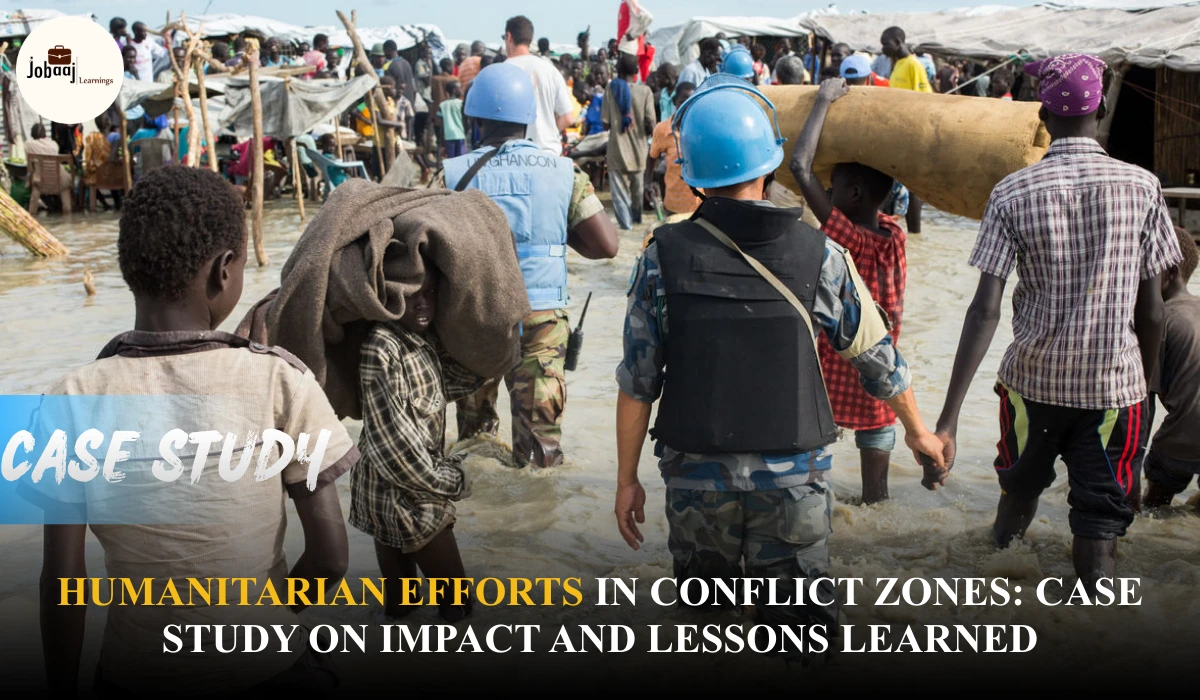
In conflict zones, the complexity of humanitarian crises often demands urgent and sustained intervention to save lives and provide relief. For organizations operating in these areas, the challenges are immense ranging from security risks to logistical nightmares. Yet, humanitarian efforts in conflict zones are critical not only for saving lives but also for restoring hope and dignity to displaced populations.
This case study explores the role of humanitarian organizations in conflict zones, focusing on the strategies they use, the challenges they face, and the tangible impact they have on local communities during times of war and unrest. By examining specific interventions, this case study offers valuable lessons for how humanitarian work can be most effective under the direst circumstances.
The Problem
Conflict zones are often characterized by severe and widespread human suffering. Wars lead to mass displacement, lack of access to basic resources like food, water, and healthcare, as well as widespread destruction of infrastructure. For humanitarian organizations, this creates multiple problems:
-
Lack of Access: Constantly shifting frontlines and the volatility of the conflict often make it impossible for humanitarian groups to deliver aid effectively.
-
Security Risks: Workers and volunteers are at risk of being targeted in areas where violence is widespread.
-
Logistical Challenges: Transporting food, medical supplies, and personnel into conflict zones can be slow, costly, and dangerous.
-
Coordination Issues: Various organizations operate in conflict zones, making collaboration difficult, which often results in overlapping efforts or gaps in aid.
In many conflict zones, these challenges are compounded by political and ethnic tensions, as different factions may block or manipulate aid for strategic or ideological reasons.
Humanitarian Efforts in Syria
Background
Since the outbreak of civil war in Syria, humanitarian organizations like the UNHCR, Red Cross, and local NGOs have faced extreme difficulties in delivering aid to the millions of people displaced by the conflict. Over the years, the war has caused millions of deaths, forced over half of Syria's population to flee, and left many areas without basic services or infrastructure.
The Humanitarian Response
In response to the crisis, several humanitarian efforts were launched. These initiatives aimed to provide food, medical care, shelter, and protection to the most vulnerable groups, including children, women, and the elderly. The focus was on areas that had experienced mass displacement, as well as those that had been directly affected by bombings and airstrikes.
Key components of the humanitarian efforts in Syria included:
-
Food and Water Distribution: Humanitarian organizations set up distribution points in refugee camps and neighboring countries (like Jordan and Lebanon), providing emergency rations and clean water.
-
Medical Aid: Health organizations worked to set up makeshift clinics and field hospitals. They also coordinated with local healthcare providers to handle emergencies.
-
Psychosocial Support: Efforts were made to offer mental health services, particularly for children who had witnessed violence, lost family members, or experienced displacement.
Findings
The humanitarian efforts in Syria revealed both success stories and critical lessons for the future.
Successes:
-
Collaboration: Despite the logistical challenges, organizations like the UN and the Red Cross worked together to coordinate efforts. This enabled a more effective use of resources, minimizing waste.
-
Technological Innovation: Drones were used to assess damaged areas and deliver small medical supplies to hard-to-reach locations. This innovative approach helped increase the efficiency of aid distribution.
-
Localized Solutions: Local NGOs and community leaders played a crucial role in getting aid to populations that larger organizations couldn’t reach due to security concerns.
Failures:
-
Access Restrictions: In many cases, armed factions (both governmental and rebel) prevented aid from reaching certain populations. Political maneuvering and blockades delayed assistance to those in greatest need.
-
Logistical Hurdles: The sheer scale of the displacement meant that some areas went without aid for extended periods, leading to shortages and suffering.
-
Security Risks: Many humanitarian workers became targets of violence, either directly through attacks or indirectly via threats from armed groups. This resulted in reduced trust from the local population.
Results
The humanitarian intervention in Syria, despite facing significant challenges, did lead to tangible results:
-
Survival and Relief: Over 3 million refugees were provided with basic food, shelter, and medical services. Many lives were saved, and the provision of emergency aid in shelters and camps prevented further widespread malnutrition and disease outbreaks.
-
Restoring Hope: While not a long-term solution, humanitarian aid helped stabilize communities in refugee camps, providing them with access to critical services like education, healthcare, and food security.
-
Building Local Capacity: By working closely with local organizations, international NGOs helped build local capacity to provide ongoing aid. This support will have long-term benefits for community resilience.
Lessons Learned
-
Improved Coordination: Stronger coordination among humanitarian agencies could prevent overlapping efforts and ensure that aid reaches the people who need it most, regardless of political barriers.
-
Faster Response Times: In conflict zones, speed is crucial. Setting up more flexible systems for rapid deployment of resources, especially mobile medical units and communication tools, could reduce response times.
-
Political Neutrality: Humanitarian aid must be kept neutral. In politically charged environments, organizations must ensure that their efforts do not inadvertently support one side or another.
-
Sustainable Support: Long-term sustainability is essential. Efforts should not just focus on emergency relief but also on creating pathways for self-sufficiency for displaced communities, whether through education programs, skills development, or microfinance initiatives.
Conclusion
Humanitarian work in conflict zones, such as Syria, is far from easy, but it is absolutely essential. By understanding the challenges faced in these areas, humanitarian organizations can refine their approaches to better serve displaced and vulnerable populations.
This case study shows that even in the most dire situations, collaboration, innovation, and a focus on local solutions can make a profound difference in the lives of those affected by conflict. The lessons learned here will help shape future interventions in conflict zones, ensuring that more lives can be saved and improved in the years to come.
Was that difficult?
Think being a Management Consultant is too hard?? Fear not.
Click on the link here to join our program where Shubham Agarwal, a professional management consultant, will teach you all about the exciting field of Management Consultancy and make sure simple case studies like these never scare you!
Join our latest cohort NOW!!
[Disclaimer: This case study is entirely hypothetical and unrelated to real-world situations. It's designed for educational purposes to illustrate theoretical concepts and potential scenarios within a given context. Any similarities to actual events or individuals are purely coincidental.]





