Categories














/content/learnings/assets/header/ManagementConsulting.svg)
/content/learnings/assets/header/InvestmentBanking.svg)


























Project management shapes the success of almost every business today. But with multiple approaches available, understanding the difference between Agile and Waterfall can set you apart as a budding professional. This guide explains both methodologies, career paths, skills required, salary prospects, and future opportunities in a student-friendly manner.
What is Agile Project Management?
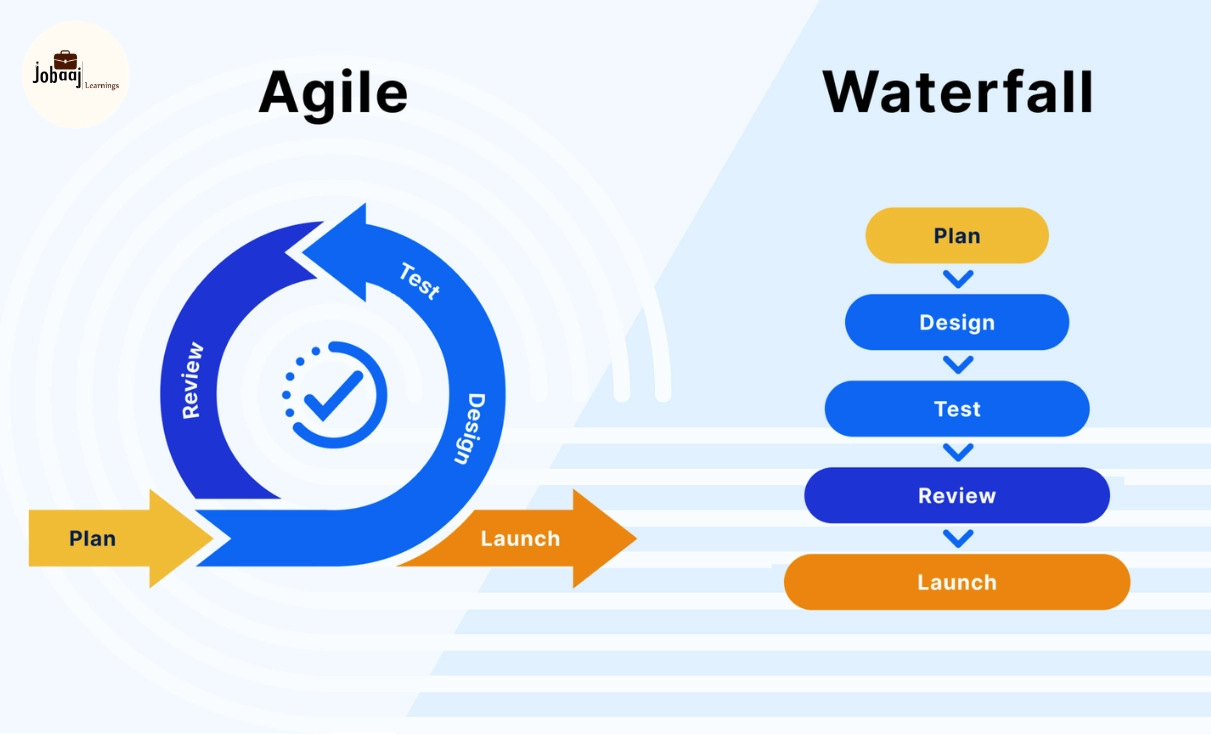
Agile is a flexible, iterative approach to project management. Instead of planning the entire project upfront, Agile focuses on incremental progress through short cycles, known as sprints. This allows teams to adapt quickly to changes, deliver faster, and improve collaboration with stakeholders.
Key Features of Agile:
- Short development cycles (sprints)
- Regular feedback loops
- Continuous improvement
- Cross-functional team collaboration
Popular Frameworks:
- Scrum
- Kanban
- Lean
- Extreme Programming (XP)
What is Waterfall Project Management?
Waterfall is a linear and sequential approach. Each phase must be completed before the next begins, from requirements gathering to design, development, testing, and deployment. Waterfall works best in projects with well-defined requirements that are unlikely to change.
Key Features of Waterfall:
- Step-by-step project progression
- Clear documentation
- Defined scope and timelines
- Easier for regulatory compliance
Common Use Cases:
- Construction
- Manufacturing
- Government projects
Agile vs Waterfall
|
Feature |
Agile |
Waterfall |
|
Approach |
Iterative & flexible |
Linear & sequential |
|
Flexibility |
High |
Low |
|
Delivery |
Incremental |
Single final delivery |
|
Stakeholder Feedback |
Frequent |
Limited to milestones |
|
Documentation |
Minimal |
Extensive |
|
Best For |
Software development, startups |
Large-scale, predictable projects |
Eligibility to Enter Project Management
Students from any background can pursue project management, but these can help:
- Bachelor’s degree in any discipline
- Certifications (optional but recommended)
- Interest in problem-solving and team collaboration
Popular Certifications:
- PMP (Project Management Professional)
- Jobaaj Learnings Project Management Nano Degree Program
- Certified ScrumMaster (CSM)
- AgilePM Foundation
Top Skills for Agile and Waterfall Professionals
Agile Skills:
- Sprint planning & backlog management
- Scrum ceremonies (Daily Standups, Retrospectives)
- Kanban visualization
- Adaptability and teamwork
Waterfall Skills:
- Requirement analysis
- Documentation & reporting
- Risk management
- Critical path analysis
Software Tools to Learn:
- Agile: Jira, Trello, Asana, Monday.com
- Waterfall: MS Project, Wrike, Smartsheet
Job Roles and Career Opportunities
|
Methodology |
Entry-Level Roles |
Mid-Level Roles |
Senior Roles |
|
Agile |
Scrum Master, Agile Coordinator, Junior PM |
Product Owner, Agile Coach |
Program Manager, Portfolio Manager |
|
Waterfall |
Project Coordinator, Assistant PM |
Project Manager |
PMO Director, Senior Project Manager |
Industries Hiring:
- IT & Software
- Finance & Banking
- Construction & Manufacturing
- Healthcare & Pharmaceuticals
Salary Expectations
India: ₹4–10 LPA for entry-level
₹10–20 LPA for mid-level
₹20 LPA+ for senior roles.
Project management is growing worldwide. Agile adoption is skyrocketing in software, startups, and digital businesses, while Waterfall remains important for regulated and infrastructure-heavy industries. Students skilled in both approaches have flexibility to switch domains and remain competitive.
Frequently asked questions
What’s the main difference between Agile and Waterfall?
Agile project management is iterative, flexible, and works in short sprints, allowing teams to adapt to changes quickly. Waterfall methodology is sequential, with each phase completed before the next. Choosing between Agile vs Waterfall depends on project type, flexibility, and stakeholder requirements.
Which methodology pays better in India?
Salary depends on experience, certifications, and industry. Agile roles like Scrum Master or Agile Coordinator often start higher due to demand in IT and startups. Waterfall project managers in regulated sectors like construction or government also earn well. Career growth in both Agile vs Waterfall is strong.
Do I need a technical background for Agile or Waterfall?
No, project management welcomes students from any discipline. While technical knowledge is beneficial for IT projects, understanding Agile frameworks, Waterfall processes, and PM tools like Jira or MS Project is more important to build a successful career.
What certifications are valuable for students?
Popular certifications include PMP (Project Management Professional), PRINCE2, Certified ScrumMaster (CSM), and AgilePM. These credentials improve your profile for both Agile and Waterfall roles, enhance employability, and help you gain practical knowledge in planning, execution, and project monitoring.
Can I switch between Agile and Waterfall careers?
Yes. Many organizations adopt hybrid approaches combining Agile and Waterfall methods. Learning both methodologies increases flexibility, opens opportunities across IT, finance, construction, and healthcare, and positions you as a versatile project manager capable of handling diverse projects.

Join 5,00,000+ Subscribers
Be a part of our ever growing community.