Categories














/content/learnings/assets/header/ManagementConsulting.svg)
/content/learnings/assets/header/InvestmentBanking.svg)


























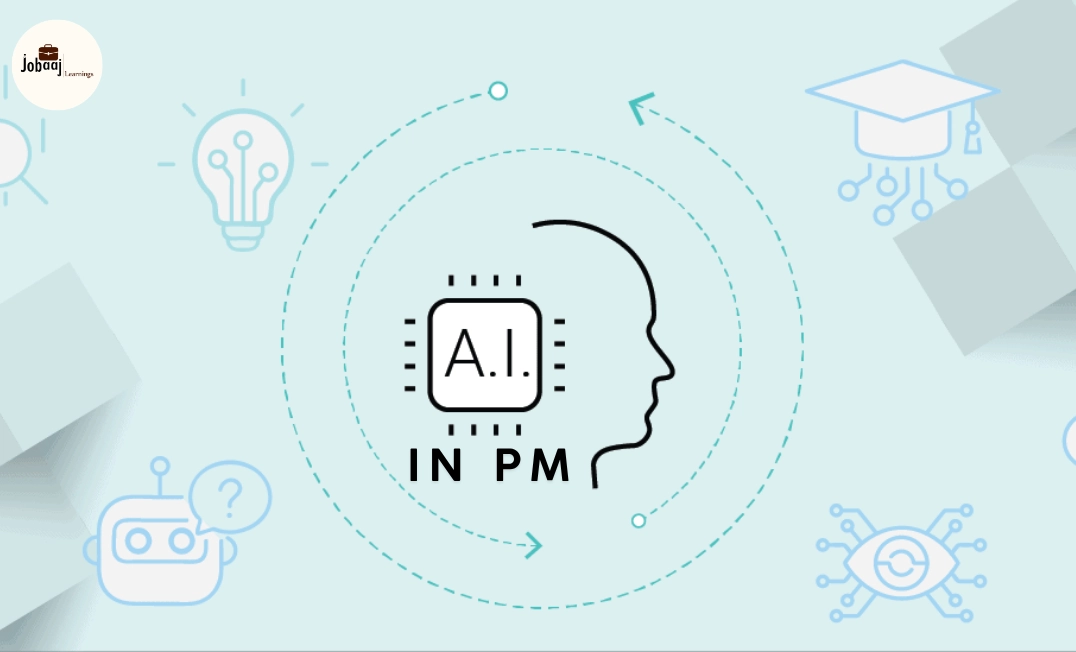
Artificial Intelligence is no longer just a technical concept limited to engineers or data scientists. It has become a core part of product development and decision-making.
In 2026, product managers are expected to work in environments where AI is deeply integrated into products, user experiences, and business strategies.
This does not mean every product manager needs to become a machine learning expert. Instead, it means PMs need to understand how AI works, how it impacts users, and how it can be used to build better products.
Dreaming of a Product Management Career? Start with Product Management Certificate with Jobaaj Learnings.
AI is not replacing product managers it is changing how they work.
Why AI Matters for Product Managers
AI is becoming important in product management for three main reasons.
First, products are becoming AI-driven. From recommendation systems to chatbots and personalization engines, AI is now part of core product functionality.
Second, decision-making is becoming data-driven. AI helps product managers analyze user behavior faster and with more accuracy.
Third, competition is increasing. Companies that use AI effectively are building faster, smarter, and more personalized products.
Because of this shift, AI awareness is now a core PM skill, not an optional skill.
Core AI Skills Every Product Manager Should Learn
1. Understanding AI Fundamentals
Product managers do not need to build models, but they should understand basic AI concepts like:
- Machine learning
- Natural language processing
- Predictive models
- Recommendation systems
This helps PMs communicate better with engineering teams and make realistic product decisions.
2. Data Thinking and AI Interpretation
AI systems rely heavily on data. PMs should know how to:
- Read dashboards
- Understand user behavior patterns
- Interpret model outputs
- Track AI-driven product metrics
Without data understanding, AI features cannot be evaluated properly.
3. Prompt Engineering Basics
With generative AI becoming common, PMs now interact directly with AI tools.
Prompt engineering helps PMs:
- Generate product ideas
- Write user stories
- Create feature documentation
- Test product concepts quickly
It is becoming one of the most practical AI skills for non-technical roles.
4. AI Product Strategy Thinking
This is one of the most important PM skills in 2026.
It includes:
- Identifying where AI adds value in a product
- Deciding when NOT to use AI
- Balancing cost vs impact of AI features
- Designing AI-powered user experiences
Good PMs do not just use AI they apply it strategically.
AI Tools Product Managers Should Learn
AI tools are now part of everyday PM workflows.
1. ChatGPT and Generative AI Tools
Used for:
- Writing product requirements
- Brainstorming ideas
- Summarizing research
- Creating user stories
It acts as a productivity assistant for PMs.
2. Notion AI
Used for:
- Documentation
- Meeting summaries
- Product planning notes
- Knowledge organization
It helps PMs manage information efficiently.
3. Jira AI / Project Management Tools
Used for:
- Sprint planning
- Task prioritization
- Workflow automation
- Tracking development progress
AI makes project management faster and more structured.
4. Amplitude and Mixpanel
Used for:
- User behavior tracking
- Funnel analysis
- Retention metrics
- Product performance insights
These tools help PMs make data-driven decisions.
5. Figma AI Features
Used for:
- UI generation
- Design suggestions
- Faster prototyping
- Collaboration with designers
This improves speed of product design cycles.
How AI is Changing Product Management Roles
AI is not replacing product managers but changing their responsibilities.
Earlier, PMs focused on:
- manual analysis
- static product planning
- feature prioritization based on intuition
Now, PMs focus on:
- AI-driven insights
- automated analytics
- real-time user understanding
- faster experimentation
This shift makes PM roles more analytical and strategic.
Challenges of Using AI in Product Management
While AI is powerful, it comes with challenges:
- AI outputs are not always accurate
- Bias in data can affect decisions
- Over-reliance on AI can reduce human judgment
- AI features increase product complexity
Good PMs balance AI insights with human decision-making.
Future of AI in Product Management
In the coming years, AI will become deeply embedded in every product.
We will see:
- fully AI-powered product analytics
- automated product roadmap suggestions
- personalized user experiences at scale
- AI-assisted decision-making tools
Product managers who understand AI early will have a strong career advantage.
Conclusion
AI is transforming product management from a traditional decision-making role into a data-driven and intelligent product leadership role.
In 2026, product managers are not expected to build AI systems, but they are expected to understand, use, and strategically apply AI in product development.
PMs who learn AI tools, data thinking, and prompt engineering will be better positioned to build modern products and grow faster in their careers.
The future of product management is not just digital it is AI-powered.
Ready to Take the Next Step in Your Career? Apply Now!
Frequently asked questions
How is AI used in product management?
AI helps product managers in user analysis, product decisions, roadmap planning, personalization, and automating repetitive tasks.
Do product managers need to learn AI?
Yes, basic AI understanding is becoming essential for PMs to build modern, data-driven and AI-powered products.
What AI tools should product managers use?
PMs can use ChatGPT, Notion AI, Jira AI, Amplitude, Mixpanel, and Figma AI features for productivity and decision-making.
Is coding required for AI product management?
Coding is not mandatory, but understanding AI concepts and how models work is highly beneficial.
What skills are needed for AI product managers?
Key skills include AI fundamentals, data thinking, prompt engineering, product strategy, and user behavior analysis.

Join 5,00,000+ Subscribers
Be a part of our ever growing community.