Categories








































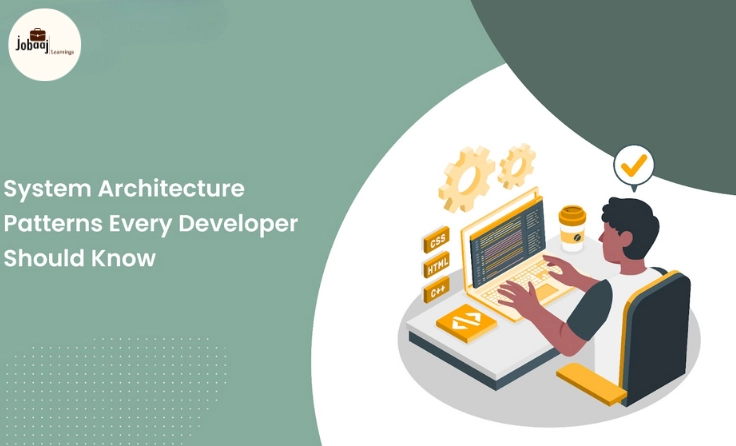
Have you ever wondered how large-scale applications are built efficiently? Or how companies manage to scale their systems to handle millions of users without crashing? It’s all about the architecture. As a developer, understanding architecture patterns is essential. These patterns provide time-tested solutions to common software design problems, ensuring that your applications are scalable, maintainable, and efficient. But architecture is not something you learn in a day—it’s an evolving skill that comes with experience and knowledge of the patterns that power successful software systems.
Exploring a career in Web Development? Apply now!
In this blog, we will explore the most important architecture patterns every developer should be familiar with. Whether you're building small applications or working with large enterprise systems, knowing these patterns can make your life much easier. From the classic monolithic architecture to the more modern microservices, we’ll break down each pattern, discuss when to use it, and why it matters. Let’s dive in!
1. Monolithic Architecture
Monolithic architecture is the traditional approach where an entire application is built as a single unit. In a monolithic system, all the components such as user interface, business logic, and data access are tightly coupled and run as a single service. While this architecture is simple to build and deploy, it can become difficult to maintain as the application grows larger.
When to Use: Monolithic architecture is a good choice for small to medium-sized applications where simplicity and quick deployment are key. However, as the system scales, it may become harder to manage and modify without affecting the entire system.
2. Microservices Architecture
Microservices is an architecture pattern where an application is broken down into smaller, independent services that communicate through APIs. Each service is responsible for a specific business function, making it easier to update, deploy, and scale. Microservices provide flexibility, resilience, and scalability, but they also introduce complexity, as managing multiple services requires sophisticated infrastructure and orchestration.
When to Use: Microservices are ideal for large-scale applications that need to scale independently, like e-commerce platforms, social media networks, or cloud-native applications.
3. Serverless Architecture
Serverless computing allows developers to build and run applications without managing servers. In serverless architecture, the cloud provider automatically manages the infrastructure, scaling resources as needed. You only pay for what you use, making it cost-efficient and scalable. Serverless architecture is often used with services like AWS Lambda, Google Cloud Functions, or Azure Functions.
When to Use: Serverless is a great fit for applications with variable or unpredictable workloads, such as event-driven applications, microservices, or back-end processes.
4. Event-Driven Architecture
In event-driven architecture (EDA), applications are designed to respond to events or changes in state. This architecture is based on the principle of asynchronous communication, where services communicate by publishing and subscribing to events. It’s commonly used in systems that require real-time data processing and rapid responses to user actions, such as e-commerce platforms or online banking systems.
When to Use: EDA is ideal for building scalable and reactive systems where real-time processing and responsiveness are crucial.
5. Layered (N-Tier) Architecture
Layered architecture, also known as N-tier architecture, divides an application into distinct layers, each responsible for a specific task. These layers typically include the presentation layer, business logic layer, and data access layer. The separation of concerns ensures that the application is modular and easier to maintain.
When to Use: Layered architecture is best suited for traditional enterprise applications where separation of concerns, maintainability, and testability are critical.
6. Hexagonal (Ports and Adapters) Architecture
Hexagonal architecture, or ports and adapters, emphasizes separating the core logic of an application from external services. The core logic is surrounded by "ports" that define how the application interacts with the outside world (e.g., databases, APIs, or user interfaces). The adapters serve as bridges to external systems, making it easy to swap out components without affecting the core logic.
When to Use: Hexagonal architecture is ideal for applications that need to be decoupled from external dependencies, making it easy to test and adapt to new technologies.
7. CQRS (Command Query Responsibility Segregation)
CQRS is an architecture pattern that separates the reading of data (queries) from writing data (commands). In this pattern, the system is split into two parts: one that handles write operations (commands) and another that handles read operations (queries). This separation allows for optimized performance and scalability, particularly in applications with complex business logic.
When to Use: CQRS is a good fit for applications with high read and write load, such as large-scale financial or e-commerce systems where querying and updating data needs to be handled differently.
8. Client-Server Architecture
Client-server architecture is one of the oldest and most commonly used patterns, where clients (end-users or devices) request resources from a central server. The server processes these requests and sends back the appropriate data. This pattern is the foundation for most web applications.
When to Use: Client-server architecture works well for applications where the client needs to interact with a centralized server, such as in web or mobile applications.
9. Monorepo Architecture
A monorepo (monolithic repository) is a version control strategy where multiple applications or services are stored in a single code repository. This approach allows teams to manage and scale applications more efficiently while maintaining a consistent development workflow.
When to Use: Monorepo architecture is a good choice for teams that work on multiple related applications or services and want to streamline collaboration and code management.
10. Service-Oriented Architecture (SOA)
Service-oriented architecture (SOA) involves designing applications as a collection of loosely coupled services that communicate with each other over a network. These services are independent, reusable, and discoverable. SOA promotes modularity and makes it easier to scale, manage, and update different parts of the application.
When to Use: SOA is ideal for large enterprises or applications that require integration with multiple systems and services.
Conclusion
Understanding architecture patterns is essential for developers looking to design scalable, efficient, and maintainable systems. Whether you’re building small apps or large enterprise systems, knowing which architecture to use can significantly impact your project’s success. While each pattern comes with its own set of pros and cons, the key is to choose the one that aligns with your application’s requirements and goals. By mastering these patterns, you’ll be better equipped to tackle complex challenges and design systems that stand the test of time.
Dreaming of a Web Development Career? Start with Web Development Certificate with Jobaaj Learnings.
Frequently asked questions
What are architecture patterns in software development?
Architecture patterns are reusable solutions to common software design problems. They provide best practices for designing scalable, maintainable, and efficient systems.
What is the difference between monolithic and microservices architecture?
Monolithic architecture combines all components into a single system, whereas microservices architecture breaks the application into smaller, independent services. Microservices offer more flexibility, scalability, and ease of maintenance but introduce complexity.
When should I use serverless architecture?
Serverless architecture is ideal for event-driven applications with unpredictable workloads. It allows you to scale automatically and only pay for the resources you use, making it cost-efficient for certain use cases.
What are the benefits of event-driven architecture?
Event-driven architecture allows systems to react to events asynchronously, making it perfect for real-time data processing and responsive applications like e-commerce or banking systems.
What is CQRS and when should it be used?
CQRS stands for Command Query Responsibility Segregation, a pattern where reading and writing data are handled separately. It is useful for systems with high read/write loads, as it allows for better optimization and scalability.
Why is understanding architecture patterns important for developers?
Understanding architecture patterns helps developers design robust, scalable, and maintainable systems. It allows them to make informed decisions about which approach to take based on the needs of the application.

Join 5,00,000+ Subscribers
Be a part of our ever growing community.