Categories














/content/learnings/assets/header/ManagementConsulting.svg)
/content/learnings/assets/header/InvestmentBanking.svg)

























Blockchain Consensus Explained: PoW, PoS, DPoS, PBFT, and PoA Simplified


Imagine a group of strangers trying to agree on a shared ledger of transactions, without trusting any one person to tell the truth. That’s essentially the challenge blockchain networks face. Unlike banks or centralized systems, which rely on a trusted authority to approve transactions, blockchain is decentralized, meaning the system must ensure everyone agrees on what is true without a single central controller.
Exploring a career in Web Development? Apply now!
This is where consensus algorithms come in. Think of them as the rules or procedures that let everyone on the network agree, stay honest, and keep the system secure, even when participants don’t know or trust each other. In a world moving towards digital assets, cryptocurrencies, and decentralized apps, understanding consensus algorithms isn’t just technical knowledge it’s the foundation of trust in the digital economy.
Why Consensus Algorithms Matter
You might ask: why do we need these algorithms at all? After all, can’t blockchain just record transactions and let the network work itself out?
The problem is human nature and malicious actors. Without rules to verify transactions, a single bad actor could:
- Spend the same cryptocurrency twice (double-spending)
- Tamper with transaction history
- Attempt to manipulate the system for personal gain
Consensus algorithms prevent this chaos. They create a system where participants must agree on the current state of the ledger, ensuring that every transaction is legitimate. They also reward honest participation and penalize malicious behavior, making the network self-regulating. In short, consensus algorithms are the glue that holds decentralized networks together, making trustless systems reliable.
How Consensus Algorithms Work
Imagine a group of friends keeping a shared notebook of who lent money to whom. Each time someone adds a note, the others check it for accuracy. If everyone agrees, the note is added to the notebook permanently. If one person tries to cheat, the majority reject it.
In blockchain terms:
- A user proposes a transaction.
- The network validates it using the consensus protocol.
- Once verified, the transaction is recorded in a block and added to the chain.
- The blockchain is updated across all network nodes, ensuring everyone has the same version.
This analogy shows how decentralization + consensus = trust without relying on a bank or central authority.
Popular Consensus Algorithms Explained
Different blockchain networks use different consensus algorithms, depending on their goals, security needs, and efficiency priorities.
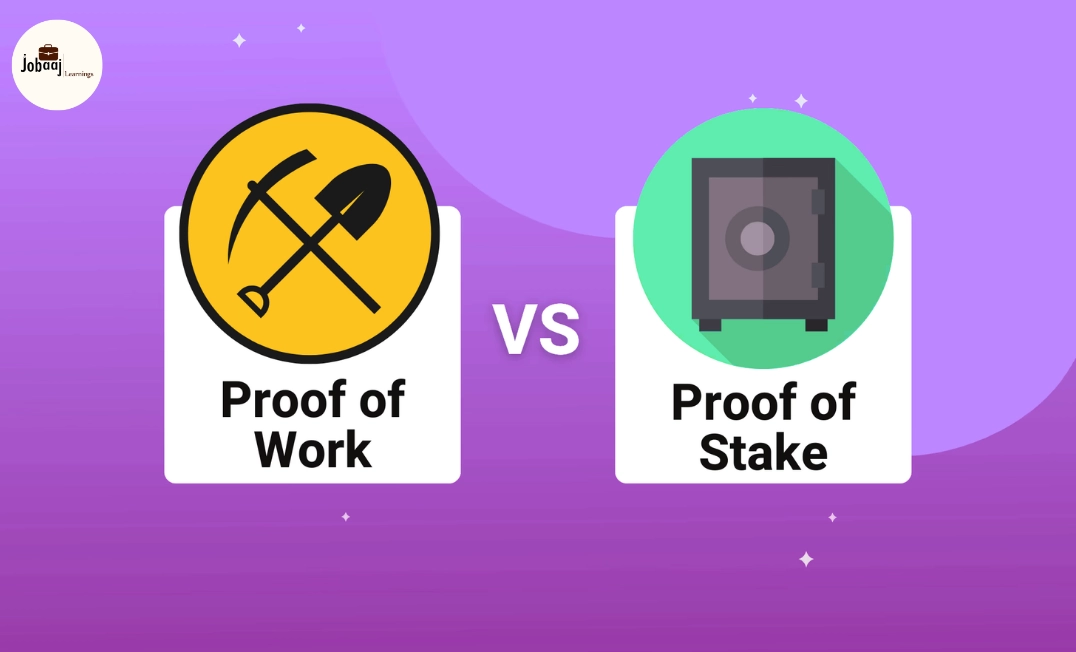
1. Proof-of-Work (PoW)
PoW is the original algorithm used by Bitcoin. Think of it as a competitive puzzle: miners solve complex mathematical problems, and the first to solve it gets to add a new block to the chain.
- Security: The difficulty of the puzzle makes it extremely hard to alter previous blocks.
- Energy: PoW requires enormous computational power, which is why Bitcoin mining consumes significant electricity.
- Human Connection: Imagine people racing to solve a complex riddle to validate records the one who finishes first earns a reward. It’s competitive, fair, but resource-intensive.
2. Proof-of-Stake (PoS)
PoS doesn’t rely on puzzles. Instead, validators are chosen based on the amount of cryptocurrency they “stake” or lock in the network.
- Security: Validators risk losing their staked coins if they try to cheat.
- Efficiency: PoS is far less energy-intensive than PoW.
- Human Connection: Imagine a group voting on who should record the next transaction, and those with the most “skin in the game” are chosen. Everyone has an incentive to be honest.
Ethereum 2.0 and Cardano are examples of networks using PoS.
3. Delegated Proof-of-Stake (DPoS)
DPoS adds a democratic element. Token holders vote for delegates who will validate transactions on behalf of the network.
- Security: Delegates are accountable to voters; bad behavior can remove them.
- Efficiency: Highly scalable and energy-efficient.
- Human Connection: It’s like electing trusted representatives in a town to manage public records. The community holds them accountable.
EOS and Tron use DPoS.
4. Practical Byzantine Fault Tolerance (PBFT)
PBFT is designed for consortium or private blockchains. It allows the network to reach agreement even if some nodes act maliciously.
- Security: Can tolerate up to one-third of participants being faulty or malicious.
- Efficiency: Faster than PoW, suitable for enterprise systems.
- Human Connection: Imagine a committee where members keep cross-checking each other to ensure the final decision is accurate, even if some members try to mislead.
5. Proof-of-Authority (PoA)
PoA is commonly used in private or permissioned networks. A small group of approved validators maintain the ledger.
- Efficiency: Very fast and energy-efficient.
- Trust: Validators are known entities, so accountability is social and legal.
- Human Connection: Like trusted administrators maintaining a digital ledger for an organization.
Real-World Applications
Consensus algorithms aren’t just theory; they power everything in blockchain ecosystems:
- Cryptocurrencies: Bitcoin (PoW) and Ethereum 2.0 (PoS) rely on consensus to validate transactions.
- Enterprise Blockchains: PBFT and PoA secure supply chains, banking networks, and health records.
- Decentralized Finance (DeFi): PoS and DPoS enable high-speed, low-cost transactions.
- Voting and Governance: DPoS can ensure transparent and tamper-resistant election or voting systems.
These examples show that the choice of consensus algorithm is critical for performance, scalability, and security.
Benefits of Consensus Algorithms
- Security: Prevent tampering and double-spending, protecting the ledger from malicious activity.
- Decentralization: Avoids reliance on a single authority, distributing trust across participants.
- Transparency: Every participant can verify transactions, building confidence in the system.
- Reliability: Ensures a single, agreed-upon version of the blockchain at all times.
- Efficiency: Some algorithms like DPoS and PoA allow high transaction throughput, suitable for enterprise and large-scale applications.
Humanized Example to Connect
Think of blockchain consensus like a group of friends maintaining a shared family photo album. Everyone has a copy, and before a new photo is added, the group checks it for authenticity. PoW is like a race to validate the photo with a puzzle; PoS is like letting the person who contributed the most to the album approve it; DPoS is voting for someone trustworthy to approve. Each method ensures the album remains consistent, secure, and trusted by all participants.
Conclusion
Consensus algorithms are the foundation of blockchain’s trust and security. They allow decentralized networks to agree on transactions, maintain a consistent ledger, and prevent fraud all without central oversight. Understanding these mechanisms, their differences, and their real-world applications is essential for anyone participating in blockchain networks, developing dApps, or exploring cryptocurrency.
The future of decentralized technology depends on strong, efficient, and fair consensus mechanisms, ensuring trust in a world where central authorities are no longer required.
Dreaming of a Web Development Career? Start with Web Development Certificate with Jobaaj Learnings.
Frequently asked questions
What are consensus algorithms in blockchain?
Consensus algorithms are protocols that allow blockchain networks to agree on the validity of transactions and maintain a single, consistent ledger without a central authority.
Why are consensus mechanisms important for blockchain?
They ensure security, prevent double-spending, maintain decentralization, and allow trustless verification of transactions across all network participants.
What are the main types of consensus algorithms?
Popular types include Proof-of-Work (PoW), Proof-of-Stake (PoS), Delegated Proof-of-Stake (DPoS), Practical Byzantine Fault Tolerance (PBFT), and Proof-of-Authority (PoA).
How do PoW and PoS differ?
PoW relies on computational puzzles solved by miners to validate transactions, whereas PoS selects validators based on cryptocurrency holdings and staking, making it more energy-efficient.
Where are consensus algorithms applied in real life?
They secure cryptocurrencies, DeFi platforms, enterprise blockchains, decentralized apps, and voting systems by ensuring all transactions are validated and the ledger remains trustworthy.
Join 5,00,000+ Subscribers
Be a part of our ever growing community.
Related reads

Blockchain Technology Challenges and Limitations: 2026 Guide

Ensuring the Security of Blockchain Transactions: A Complete 2026 Guide