Categories








































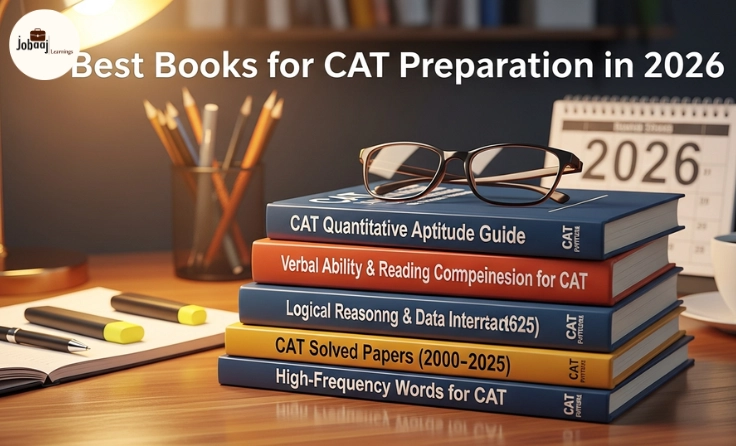
When it comes to preparing for one of the most competitive exams in India, the CAT exam, the right study material can make all the difference. With a vast syllabus that covers Quantitative Ability (QA), Verbal Ability and Reading Comprehension (VARC), and Data Interpretation and Logical Reasoning (DILR), choosing the right books is essential to streamline your preparation. The right books not only help you understand concepts but also guide you in developing your problem-solving abilities, improving speed, and building exam-ready strategies.
In this blog, we’ll dive into the best books for CAT preparation in 2026—from classical books that have stood the test of time to newer resources designed for the modern aspirant. These books will help you build a strong foundation, hone your skills, and ace the CAT exam with confidence.
Best Books for Quantitative Ability (QA)
1. How to Prepare for Quantitative Aptitude for the CAT by Arun Sharma
This book is a classic for CAT aspirants and widely regarded as one of the best books for QA preparation. Arun Sharma’s book is comprehensive, covering all topics from basic to advanced level. It provides detailed explanations of various concepts in arithmetic, algebra, geometry, and number theory. It also includes a large number of practice questions with varying difficulty levels, which helps you gradually build up your skills.
Why it’s great: It’s systematic and well-organized, making it easier for you to understand even the more complex topics.
Key features: Detailed theory, practice exercises, and topic-wise questions.
2. Quantitative Aptitude for CAT by Nishit K. Sinha
Nishit K. Sinha’s book is another must-have for any serious CAT aspirant. It’s known for its clarity and concise explanations. It is packed with concept-building exercises and problem-solving strategies, which help you understand the underlying principles of the topics covered. This book is especially useful for those who find QA challenging and need a step-by-step approach.
Why it’s great: The book focuses on building a strong conceptual foundation.
Key features: Focus on conceptual clarity, solved examples, and practice sets.
3. The Pearson Guide to Quantitative Aptitude for the CAT by Trishna Knowledge Systems
Pearson’s book is a well-rounded resource for all CAT aspirants. It covers all important topics like time and work, probability, and permutation and combination, with easy-to-understand explanations and tips. The book includes ample practice questions and mock tests that replicate the format of the CAT exam.
Why it’s great: It’s ideal for consistent practice and revision.
Key features: Concise theory, practice problems, and mock tests.
Best Books for Verbal Ability and Reading Comprehension (VARC)
1. Word Power Made Easy by Norman Lewis
When it comes to improving your vocabulary for the VARC section, Word Power Made Easy is one of the most popular books. Although it’s not specifically designed for the CAT, it’s incredibly effective for building a strong vocabulary, which is crucial for both the verbal reasoning and reading comprehension parts of the exam. The book offers systematic ways to enhance your vocabulary and word association skills.
Why it’s great: It’s a comprehensive vocabulary-building tool.
Key features: Etymology-based approach, practical exercises, and regular quizzes.
2. How to Prepare for Verbal Ability and Reading Comprehension for the CAT by Arun Sharma
This book is part of the popular Arun Sharma series and is specifically designed for the VARC section. The book covers various reading comprehension techniques, grammar rules, and verbal reasoning exercises. It’s one of the most well-organized resources for CAT aspirants looking to improve their verbal skills and comprehension speed.
Why it’s great: The explanations are simple, and the book contains numerous practice questions.
Key features: Detailed theory, practice sets, and sectional exercises.
3. The Pearson Guide to Verbal Ability for CAT by Ajay Singh
This book is well-regarded for its structured approach to both verbal ability and reading comprehension. It breaks down concepts like sentence correction, para jumbles, and critical reasoning in a simplified manner, making it easier for you to understand and practice. The book also contains plenty of mock tests, which simulate the actual CAT environment.
Why it’s great: Provides ample practice questions and mock tests.
Key features: Grammar exercises, verbal reasoning problems, and reading comprehension practice.
Best Books for Data Interpretation and Logical Reasoning (DILR)
1. How to Prepare for Data Interpretation & Logical Reasoning for the CAT by Arun Sharma
Arun Sharma’s book is often regarded as the go-to resource for DILR preparation. The book thoroughly covers all the core concepts, starting from basic data interpretation and reasoning to advanced-level questions. It’s filled with practical exercises that help you develop the critical thinking required for the exam. Each section ends with multiple practice sets that test your skills and understanding.
Why it’s great: It breaks down complex topics into easily digestible parts and provides lots of practice problems.
Key features: Step-by-step problem-solving approach and topic-wise practice sets.
2. Data Interpretation and Logical Reasoning for the CAT by Nishit K. Sinha
This book is another excellent choice for improving your DILR skills. Nishit K. Sinha’s approach focuses on understanding patterns and relationships in data, which is essential for tackling the tricky DILR section. The book also has mock tests designed to simulate the difficulty level of actual CAT questions.
Why it’s great: It offers problem-solving strategies and test-taking techniques for DILR.
Key features: Focus on logical reasoning, data interpretation exercises, and mock tests.
3. The Pearson Guide to Data Interpretation and Logical Reasoning for CAT by Nishit K. Sinha
Another offering from Pearson, this book covers both data interpretation and logical reasoning in great detail. The book explains various types of charts, graphs, and tables that appear frequently in the CAT, along with tips for solving them efficiently.
Why it’s great: The book breaks down difficult concepts and encourages practice with detailed explanations.
Key features: A wide variety of questions and techniques for data analysis.
Supplementary Books
1. CAT 2026 Mock Tests and Previous Year Papers
While specific books can help you with concepts and practice, mock tests and previous year papers are indispensable in your preparation. Books and resources that offer a collection of CAT past papers or simulated mock tests are essential for understanding the exam’s changing patterns and difficulty level.
Look for books from TIME, Career Launcher, or Arihant that provide mock tests, solutions, and detailed explanations.
Why it’s great: These tests offer a realistic simulation of the exam, allowing you to assess your performance and time management skills.
Key features: Previous year papers, simulated CAT exams, and detailed solutions.
Conclusion
Choosing the best books for CAT preparation in 2026 is critical for maximizing your score. With the right books, you can build a strong foundation, improve your problem-solving ability, and stay ahead of the competition. Whether you’re focusing on Quantitative Ability, Verbal Ability, or Data Interpretation and Logical Reasoning, the books listed in this guide provide comprehensive coverage of the entire syllabus.
Remember, it’s not just about reading the books—it’s about consistent practice, regular self-assessment, and strategic revision. By incorporating these books into your study plan and dedicating time to mastering the concepts, you will be on the right path to cracking CAT 2026 and securing a seat in your dream B-school.
Frequently asked questions
Which book is best for CAT Quantitative Ability preparation?
Books like **How to Prepare for Quantitative Aptitude for the CAT by Arun Sharma** and **Quantitative Aptitude for CAT by Nishit K. Sinha** are great resources for mastering the QA section. These books cover fundamental concepts, practice problems, and strategies for CAT.
Should I rely on online resources or books for CAT preparation?
Both online resources and books are useful for CAT preparation. Books offer structured learning and in-depth concepts, while online resources provide interactive learning and mock tests. Combining both can yield the best results.
Are mock tests important for CAT preparation?
Yes, mock tests are crucial for CAT preparation. They help you assess your strengths, identify weak areas, and improve your time management skills. Taking mock tests regularly will help you build stamina and confidence for the actual exam.
Can I rely solely on coaching institutes for CAT preparation?
Coaching institutes can be helpful for structured learning and expert guidance, but they should not be your sole source of preparation. Self-study, practice, and using good reference books are also important to ensure you are fully prepared for CAT.
How many hours should I dedicate to studying for CAT each day?
Aim to study **4-6 hours a day** consistently. The key is **consistent practice** and **time management**. Prioritize your weaker areas and focus on building a solid understanding of core concepts.
What is the best approach to mastering DILR for CAT?
Focus on practicing various types of logical reasoning and data interpretation problems. Books like **How to Prepare for Data Interpretation & Logical Reasoning for the CAT by Arun Sharma** can help you build a strong foundation and improve your problem-solving skills.

Join 5,00,000+ Subscribers
Be a part of our ever growing community.