Categories














/content/learnings/assets/header/ManagementConsulting.svg)
/content/learnings/assets/header/InvestmentBanking.svg)

























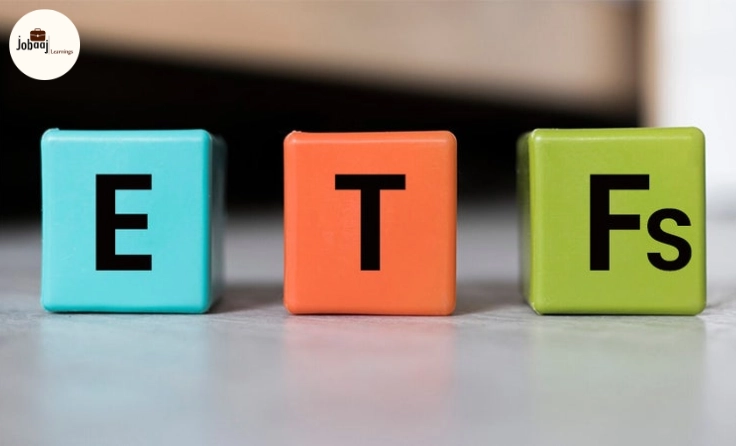
In 2026, the financial world is more dynamic than ever before. As Indian markets mature and retail participation keeps climbing, exchange-traded funds (ETFs) have become one of the simplest ways for investors to get diversified exposure across asset classes, sectors, and even global markets all from a single demat account.
But with more than 250 ETFs now listed on the NSE and BSE, figuring out where to start can feel overwhelming.
If you're looking to diversify your portfolio and take advantage of market opportunities, this guide will help you identify the best ETFs to consider in India in 2026. Whether you're a seasoned investor or just getting started, these picks cover the main building blocks of a well-spread portfolio.
What Are ETFs and Why Should You Consider Them?
Exchange-Traded Funds (ETFs) are investment funds that trade on stock exchanges, much like individual stocks. They hold a collection of assets equities, bonds, gold, silver, or even other funds and can be bought or sold throughout the trading day using your existing demat and trading account.
Here's why ETFs make sense for Indian investors in 2026:
Diversification: A single unit of a Nifty 50 ETF gives you a slice of 50 of India's largest companies. You're not betting your savings on one stock.
Low Expense Ratios: Passive ETFs in India charge a fraction of what actively managed mutual funds do. Broad-market index ETFs often cost under 0.10% a year, compared with 0.50%–1.20% for a direct-plan active fund. Over a 15-year horizon, that gap compounds meaningfully.
Liquidity: Since ETFs trade like stocks, you can enter or exit during market hours at live prices no waiting for end-of-day NAV.
Transparency: AMCs disclose ETF holdings regularly, so you always know what you own. Index ETFs are fully rule-based, with no fund-manager discretion.
Flexibility: Large-cap, midcap, banking, IT, gold, silver, government bonds, global tech there's an ETF for nearly every allocation you might want.
No minimum SIP hassle: You can buy as little as one unit. Some ETFs trade at ₹50–₹300 a unit, making them genuinely accessible to first-time investors.
Now, let's explore the best ETFs to consider in India in 2026.
1. Nippon India ETF Nifty 50 BeES (NIFTYBEES)
The oldest and largest ETF in India, NIFTYBEES tracks the Nifty 50 the 50 largest and most liquid companies listed on the NSE, spanning banking, IT, energy, FMCG, and auto.
Why it's great for 2026: This is the default core holding for most Indian portfolios. With over ₹60,000 crore in AUM, it has the deepest liquidity of any Indian ETF, which means tight bid-ask spreads and minimal tracking error.
- Expense Ratio: approx. 0.03%–0.05%
- Best for: Long-term investors who want a low-cost, one-click foundation for their equity allocation.
2. Nippon India ETF Nifty Next 50 Junior BeES (JUNIORBEES)
JUNIORBEES tracks the Nifty Next 50 the 50 companies ranked just below the Nifty 50 by market cap. Think of it as the waiting room for tomorrow's index heavyweights.
Why it's great for 2026: The Next 50 has historically been more volatile than the Nifty 50 but has offered higher long-term growth, since it captures companies still in their scaling phase. It pairs naturally with NIFTYBEES.
- Expense Ratio: approx. 0.15%
- Best for: Investors with a 7+ year horizon who can tolerate sharper drawdowns for higher growth potential.
3. Motilal Oswal Nifty Midcap 150 ETF (MIDCAPETF)
This ETF tracks the Nifty Midcap 150 index, covering 150 midcap companies across manufacturing, chemicals, capital goods, financials, and consumer sectors.
Why it's great for 2026: India's capex and manufacturing cycle has disproportionately benefited midcaps. That said, midcap valuations have run hot in recent years, so staggered buying (SIP-style) matters more here than in large caps.
- Expense Ratio: approx. 0.20%
- Best for: Investors seeking domestic growth exposure beyond the large-cap universe.
4. Nippon India ETF Nifty Bank BeES (BANKBEES)
BANKBEES tracks the Nifty Bank index India's 12 largest banking stocks, including HDFC Bank, ICICI Bank, SBI, Axis Bank, and Kotak Mahindra Bank.
Why it's great for 2026: Banking is the single biggest weight in Indian indices and the most direct proxy for credit growth in the economy. When the rate cycle and credit demand align, banks lead the market.
- Expense Ratio: approx. 0.19%
- Best for: Investors making a deliberate sector bet on Indian financials. This is a concentrated position, not a core holding.
5. Nippon India ETF Nifty IT (ITBEES)
ITBEES tracks the Nifty IT index, giving you exposure to TCS, Infosys, HCL Technologies, Wipro, Tech Mahindra, and other Indian technology services companies.
Why it's great for 2026: Indian IT is at an inflection point AI-led deal restructuring, dollar revenue exposure, and strong cash flows. It is also the most rupee-hedged sector in the index, since most revenue is earned abroad.
- Expense Ratio: approx. 0.20%
- Best for: Investors who want technology exposure and a natural hedge against rupee depreciation.
6. Motilal Oswal NASDAQ 100 ETF (MON100)
For international diversification, MON100 tracks the NASDAQ-100 the 100 largest non-financial companies on the NASDAQ, including Apple, Microsoft, NVIDIA, Amazon, and Alphabet.
Why it's great for 2026: Indian indices have zero exposure to global mega-cap technology. MON100 fills that gap and adds dollar-asset exposure to a rupee-denominated portfolio.
Important caveat: SEBI and the RBI cap how much Indian mutual funds can collectively invest overseas an industry-wide limit of USD 7 billion, plus a separate USD 1 billion sub-limit for overseas ETFs. When these limits are exhausted, AMCs suspend fresh unit creation. During those periods, international ETFs can trade on the exchange at a significant premium to their actual NAV, meaning you may end up overpaying. Always compare the market price against the AMC's published iNAV before buying, and check whether subscriptions are currently open.
- Expense Ratio: approx. 0.58%
- Best for: Investors who want global tech exposure and are willing to monitor the premium/discount closely.
7. Nippon India ETF Gold BeES (GOLDBEES)
GOLDBEES tracks the domestic price of physical gold, backed by gold held in vaults. One unit represents roughly 1/100th of a gram, so entry is very affordable.
Why it's great for 2026: Gold has done its job as a hedge delivering strong returns during periods of currency weakness and geopolitical stress. For Indian investors, it also carries a rupee-depreciation kicker: when the rupee weakens against the dollar, domestic gold prices rise even if global prices stay flat.
Compared with physical jewellery, GOLDBEES has no making charges, no purity risk, no locker cost, and no storage worry.
- Expense Ratio: approx. 0.70%–0.80%
- Best for: Investors wanting a 5%–15% portfolio hedge against inflation and currency risk.
8. Nippon India Silver ETF (SILVERBEES)
SILVERBEES tracks the domestic price of silver, backed by physical silver holdings.
Why it's great for 2026: Silver is a hybrid part precious metal, part industrial commodity. Demand from solar panels, EVs, and electronics gives it a growth angle gold doesn't have. The trade-off is that it's noticeably more volatile than gold.
- Expense Ratio: approx. 0.50%
- Best for: Investors who already hold gold and want a satellite commodity position with industrial upside.
9. Bharat Bond ETF
Bharat Bond ETFs are India's target-maturity debt ETFs, holding AAA-rated bonds issued by public sector undertakings. Each series has a fixed maturity date you can pick a series that matches your goal.
Why it's great for 2026: If you hold to maturity, you get a reasonably predictable return with minimal credit risk. It is one of the cheapest debt products available anywhere in the world, with an expense ratio that is effectively negligible.
- Expense Ratio: approx. 0.0005%
- Best for: Conservative investors and anyone building a debt allocation with a defined time horizon.
10. Nippon India ETF Nifty 1D Rate Liquid BeES (LIQUIDBEES)
LIQUIDBEES is a liquid ETF that invests in overnight instruments. Its NAV stays fixed at ₹1,000 and returns come as daily dividend units.
Why it's great for 2026: This is where you park cash between decisions. Instead of leaving idle funds in your trading account earning nothing, you earn near-overnight-rate returns with same-day-ish liquidity. Many traders also use it as collateral margin.
- Expense Ratio: approx. 0.65%
- Best for: Parking short-term surplus, emergency-fund buffers, or waiting-to-deploy capital.
How to Buy ETFs in India
- Open a demat and trading account with any SEBI-registered broker.
- Search the ETF by its ticker (e.g. NIFTYBEES, GOLDBEES) in your broker's app ETFs trade in the cash segment just like stocks.
- Check the iNAV brokers and AMC websites publish the indicative NAV live. If the market price is far above iNAV, you're paying a premium. Wait.
- Use limit orders, not market orders, especially for lower-volume ETFs. A market order in a thin ETF can execute several percent away from fair value.
- Stagger your purchases most brokers now let you set up an ETF SIP, or you can simply buy on a fixed date each month.
Things to Watch Out For
Tracking error: No ETF perfectly matches its index. Compare the tracking difference disclosed in the AMC factsheet before choosing between two ETFs on the same index.
Liquidity: AUM matters less than daily traded volume. A thinly traded ETF can have a wide bid-ask spread that quietly eats into your returns.
Premium and discount: Especially relevant for international and commodity ETFs. Always cross-check against iNAV.
Overlap: Holding NIFTYBEES, BANKBEES, and an IT ETF together means you're heavily doubled up on financials and technology. Check your look-through exposure.
Taxation: Equity ETFs, debt ETFs, and commodity ETFs are taxed under different rules, and these rules have changed more than once in recent budgets. Confirm the current treatment for your holding period with a qualified tax advisor before you sell.
Conclusion
In 2026, ETFs remain one of the most efficient ways for Indian investors to build a diversified portfolio without needing to pick individual stocks or pay high management fees.
A sensible starting framework for most investors looks something like this: a broad-market ETF as the core, a midcap or Next 50 ETF for growth, gold as a hedge, a debt ETF for stability, and a small satellite allocation to sectors or international markets if you have a specific view.
Remember to consider your risk tolerance, financial goals, and time horizon when choosing the right ETFs for your strategy. The best portfolio is the one you can hold through a drawdown without panicking.
Disclaimer: This article is for educational purposes only and does not constitute investment advice. Mutual fund and ETF investments are subject to market risks; read all scheme-related documents carefully. Expense ratios, AUM figures, and index constituents change over time verify current details from the AMC's latest factsheet before investing. Past performance is not indicative of future results. Please consult a SEBI-registered investment adviser before making investment decisions.
Frequently asked questions
What is an ETF and how is it different from a mutual fund?
An ETF is a fund that trades on the stock exchange like a share, while a regular mutual fund is bought and sold directly from the AMC at the end-of-day NAV. With an ETF you need a demat and trading account, you transact at live market prices during market hours, and you pay brokerage. With a mutual fund you can invest without a demat account, but you only get one price per day. ETFs are usually cheaper; index funds are usually more convenient.
Do I need a demat account to buy ETFs in India?
Yes. ETFs are held in dematerialised form, so you need both a demat account and a trading account with a SEBI-registered broker. If you would rather not open one, the equivalent index fund from the same AMC gives you nearly identical exposure without a demat account, usually at a slightly higher expense ratio.
Which is the best ETF for beginners in India?
Most first-time investors start with a broad-market Nifty 50 ETF because it is the least concentrated, the most liquid, and the cheapest to hold. Sector ETFs like banking or IT are concentrated bets and are better added later, once you have a core allocation in place and a specific reason for the tilt.
Can I start an SIP in ETFs?
Yes. Many brokers now offer ETF SIPs that place a buy order for a fixed quantity or amount on a chosen date each month. If your broker does not support it, you can simply place a manual order on the same date every month — the discipline matters more than the automation.
How much money do I need to start investing in ETFs?
You can buy a single unit, and many Indian ETFs trade between roughly ₹50 and ₹300 per unit. That makes the practical starting point a few hundred rupees, though you should factor in brokerage and other transaction charges, which make very small trades inefficient.
What is tracking error, and why does it matter?
Tracking error measures how much an ETF's returns deviate from the index it is supposed to mirror. It comes from expenses, cash holdings, and delays in rebalancing. When two ETFs track the same index, the one with the lower tracking difference and higher trading volume is generally the better pick, even if its expense ratio is marginally higher.
Why do some ETFs trade above or below their NAV?
An ETF's market price is set by supply and demand on the exchange, while its NAV reflects the value of its underlying holdings. Normally market makers keep the two close. But when fresh unit creation is restricted as has happened repeatedly with international ETFs due to overseas investment limits demand can push the market price well above NAV. Always compare the live price against the published iNAV before placing an order.

Join 5,00,000+ Subscribers
Be a part of our ever growing community.