Categories














/content/learnings/assets/header/ManagementConsulting.svg)
/content/learnings/assets/header/InvestmentBanking.svg)



























/content/learnings/assets/header/programs/1.png)
/content/learnings/assets/header/programs/4.png)

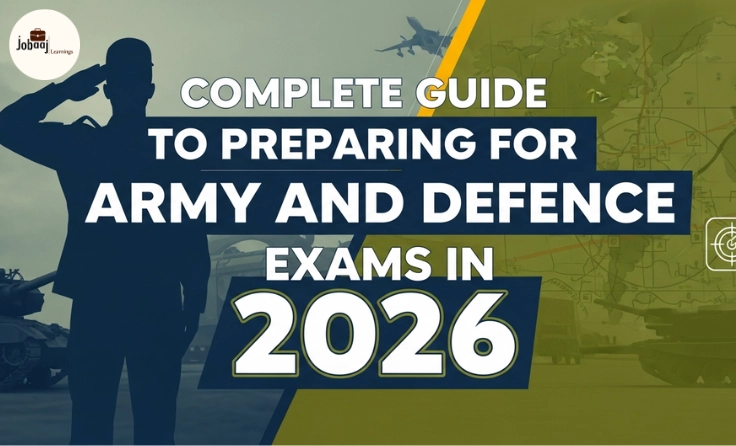
Serving in the Indian Army, Navy, or Air Force is a dream for many young individuals. The pride of wearing the uniform, serving the nation, and leading a life of discipline and adventure is unmatched. If you’re aiming for a career in the Indian Defence Forces in 2026, the road ahead requires thorough preparation and dedication.
The selection process for defence exams is rigorous, and candidates are tested not only on academic knowledge but also on their physical endurance, mental toughness, and aptitude. But don’t worry—if you have the right strategy and resources, you can navigate this process with confidence and come out on top.
In this comprehensive guide, we’ll walk you through everything you need to know about preparing for Army and Defence exams in 2026, from the eligibility criteria to the physical tests, written exams, and interview stages.
Understanding the Different Defence Exams
The Indian Defence Forces offer a wide range of roles, and the exams vary based on the branch you’re interested in. Below are some of the major exams for the Army, Navy, and Air Force:
-
Indian Army:
-
Indian Army Recruitment (GD): This exam is for individuals who want to join the army as soldiers in various trades.
-
CDS (Combined Defence Services): This exam is for graduates who want to join the Indian Army, Navy, or Air Force as officers.
-
TGC (Technical Graduate Course): This is for engineering graduates looking to join the Indian Army as technical officers.
-
-
Indian Navy:
-
Indian Navy SSR (Senior Secondary Recruit): This exam is for candidates who have completed their 12th grade and wish to join the Navy as sailors.
-
NDA (National Defence Academy): This is for those looking to join the Army, Navy, or Air Force after completing their 12th grade education.
-
-
Indian Air Force:
-
Airmen Selection: This is for candidates who want to become airmen in the Indian Air Force. It includes both Group X and Group Y positions based on education qualifications.
-
NDA: Like in the Army, this exam is also relevant for candidates wishing to join the Air Force after 12th grade.
-
Each of these exams has specific eligibility criteria, exam patterns, and selection procedures that you must familiarize yourself with in order to prepare effectively.
Step-by-Step Preparation Guide
1. Know the Eligibility Criteria
Before you dive into your preparation, it's essential to understand the eligibility requirements for the specific exam you plan to take. Here are the key factors you should consider:
-
Age Limit: Different exams have different age limits, typically ranging from 16 to 24 years.
-
Educational Qualifications: For most exams, you need at least a 12th-grade education, but some exams like CDS require a graduation degree.
-
Physical Standards: The Army, Navy, and Air Force exams require you to meet certain height, weight, and vision standards.
-
Nationality: You must be an Indian citizen.
Once you have checked the eligibility criteria for your specific exam, you can move forward with your preparation.
2. Focus on Physical Fitness
One of the most important aspects of preparing for defence exams is maintaining physical fitness. For the Army, Navy, and Air Force, physical endurance and strength are critical, as all these forces require personnel to be physically capable.
Here’s what to focus on:
-
Endurance Training: Running is a vital part of all physical fitness tests. Start by building your stamina with daily running, gradually increasing your distance and time.
-
Strength Training: Push-ups, squats, and sit-ups will help build muscle strength. These are often part of the physical tests, so aim for consistency.
-
Flexibility and Agility: Incorporate exercises that improve your flexibility and overall body control. Yoga and stretching exercises will also help with this.
Tip: Prepare for the physical test as early as possible. This will not only help you clear the physical standards but also increase your overall confidence.
3. Focus on the Written Exam
The written exam for defence services varies based on the position and branch. However, there are common subjects you should prepare for across most exams:
-
General Knowledge and Current Affairs: Keep yourself updated with national and international events. Read newspapers, magazines, and watch the news regularly.
-
Mathematics: The exams often contain a maths section with questions on arithmetic, algebra, geometry, and basic problem-solving.
-
Reasoning: Expect questions on logical reasoning, pattern recognition, and verbal reasoning.
-
English: Improving your English language skills, especially vocabulary, grammar, and comprehension, is crucial for all exams.
-
Science: Basic physics, chemistry, and biology are often tested in the written exams.
How to Prepare:
-
Books: Start with standard books like RS Aggarwal for reasoning, Maths by S. Chand for mathematics, and Lucent’s General Knowledge for current affairs.
-
Practice Mock Tests: Regularly attempt mock tests to get familiar with the exam pattern, manage time, and boost your speed.
-
Focus on Weak Areas: Analyze your performance in mock tests and dedicate more time to the subjects or topics you find difficult.
4. Prepare for the Interview
The interview is an integral part of the recruitment process for all defence services exams. It’s your chance to showcase your personality, decision-making skills, and passion for serving in the forces.
What to Expect:
-
Personal Background: Be prepared to discuss your background, education, and motivation for joining the police or military.
-
Situational Questions: The interview panel may ask how you would handle real-life situations, like maintaining law and order, handling public emergencies, etc.
-
General Awareness: Expect questions related to current affairs, defense policies, and international relations.
How to Prepare:
-
Mock Interviews: Practice mock interviews with mentors, friends, or family to build confidence and refine your answers.
-
Stay Calm and Confident: Remember, interviews are about your potential and fit for the forces. Stay calm and articulate your thoughts clearly.
Recommended Resources for Preparation
Here are some of the top resources to aid your preparation:
-
Books:
-
General Knowledge: Lucent’s GK, Manorama Yearbook
-
Reasoning: RS Aggarwal
-
Maths: Quantitative Aptitude by R.S. Aggarwal
-
English: Wren and Martin for Grammar, Objective General English by SP Bakshi
-
Current Affairs: The Hindu, The Indian Express
-
-
Online Platforms:
-
Unacademy: Online courses specifically designed for defence exams.
-
BYJU’s: Offers study material and mock tests.
-
Testbook: A platform for mock tests and practice questions for defence exams.
-
-
YouTube Channels:
-
Defense Exam Prep: Provides videos focused on exam strategies and tips.
-
StudyIQ: Offers videos on general knowledge and current affairs.
-
Conclusion
The path to joining the Indian Army, Navy, or Air Force in 2026 requires both physical and mental preparation. Whether you’re preparing for NDA, CDS, Army recruitment, or Airmen Selection, following the right strategy and utilizing quality resources will give you the best chance of success.
Focus on maintaining a high level of physical fitness, understanding the exam syllabus, and practicing regularly. Don’t forget to stay updated on current affairs and keep a positive mindset throughout your preparation.
The journey might be long, but with persistence and dedication, you can serve your country with pride. Prepare well, stay disciplined, and make 2026 the year you take the first step toward your dream career in the Indian Armed Forces!
Frequently asked questions
What are the eligibility criteria for Army and Defence exams?
The eligibility criteria vary depending on the exam. For most Army and Defence recruitment exams, candidates must be Indian citizens, typically between the ages of 16 and 24 years. Educational requirements include a 12th-grade qualification for entry-level positions and a graduate degree for officer-level exams like CDS. Physical fitness standards, such as height, weight, and vision requirements, are also necessary.
How do I prepare for the physical fitness test in Defence exams?
The physical fitness test is crucial in most Army and Defence exams. Candidates are tested on endurance, strength, and agility. Start by incorporating running, push-ups, sit-ups, and strength training into your routine. Aim for daily practice and gradually increase your speed and endurance to meet the required standards.
What subjects should I focus on for the written exam in Army and Defence recruitment?
The written exam typically covers subjects like General Knowledge, English, Reasoning, Mathematics, and Science. Focus on understanding key topics in these areas and stay updated on current affairs through newspapers and magazines. Regular practice with mock tests will help you improve speed and accuracy.
How can I improve my General Knowledge for Army and Defence exams?
To improve your General Knowledge, read newspapers like The Hindu and The Indian Express regularly. Follow current events, national issues, and defense-related news. Additionally, use resources like Manorama Yearbook, and watch current affairs videos or discussions online to strengthen your knowledge base.
What resources are helpful for preparing for the Army and Defence exams?
Useful resources for Army and Defence exams include books like RS Aggarwal for Reasoning, Quantitative Aptitude by R.S. Aggarwal, Lucent’s General Knowledge for current affairs, and Wren & Martin for English. Online platforms like BYJU’s, Unacademy, and Testbook provide study material, mock tests, and video lessons.
What happens after clearing the written exam in Army and Defence recruitment?
After clearing the written exam, candidates are called for physical fitness tests and interviews. Once the physical tests are cleared, an interview or personality test is conducted to evaluate candidates' decision-making skills, confidence, and passion for joining the forces. If successful, candidates move to the medical examination phase before final selection.

Join 5,00,000+ Subscribers
Be a part of our ever growing community.