Categories














/content/learnings/assets/header/ManagementConsulting.svg)
/content/learnings/assets/header/InvestmentBanking.svg)



























/content/learnings/assets/header/programs/1.png)
/content/learnings/assets/header/programs/4.png)

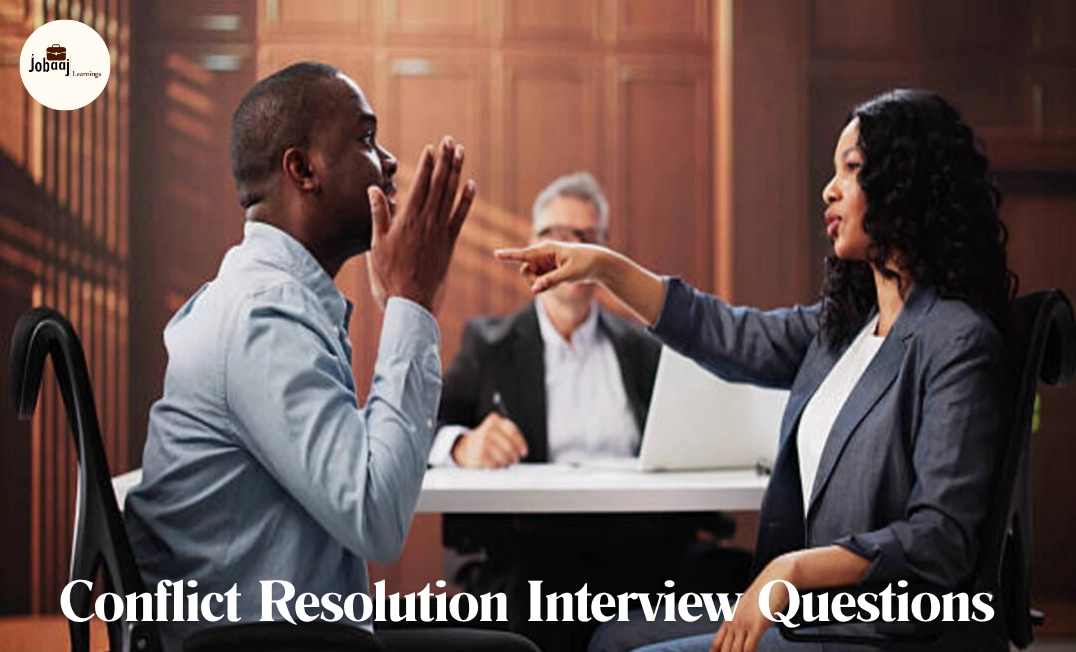
Conflict is an inevitable part of any workplace. Whether it's a disagreement between team members, a clash of ideas, or a difference in work styles, being able to effectively manage and resolve conflict is one of the most valuable skills for any professional, especially for those in managerial or team-leading positions. Employers seek candidates who can navigate difficult situations calmly, communicate effectively, and find constructive solutions.
In this blog, we’ll explore the Top 20 Conflict Resolution Interview Questions that will help you prepare for your next interview. These questions assess your ability to handle disagreements, solve problems, and maintain a positive work environment. We’ll also provide tips on how to answer each question and sample answers to guide your preparation.
Top 20 Conflict Resolution Interview Questions
1. Can you describe a time when you had to resolve a conflict at work?
Use a specific example to demonstrate your conflict resolution skills. Follow the STAR method (Situation, Task, Action, Result) to structure your answer.
Sample answer:
"In my previous role, two team members had a disagreement about the approach to a project. I facilitated a meeting where each person could explain their perspective. After understanding both sides, we compromised by merging elements from both ideas, which led to a successful project outcome. The conflict was resolved, and the team learned how to communicate better moving forward."
2. How do you approach a situation where two team members are not getting along?
Explain your approach to mediation and how you ensure a fair resolution while maintaining team harmony.
Sample answer:
"When two team members are not getting along, I first meet with each person individually to understand their perspectives. I then bring them together for a joint discussion, where I encourage respectful communication and collaboration. My goal is to identify common ground and help them find a solution that benefits the team. I also set clear expectations for behavior and follow up to ensure the issue doesn’t resurface."
3. How do you deal with a conflict between a team member and a client?
Talk about how you manage conflicts while maintaining professionalism and client satisfaction.
Sample answer:
"In situations where there is conflict between a team member and a client, I ensure that both parties feel heard. I first listen to the client’s concerns and then speak with the team member to get their side. I bring both parties together and facilitate a productive conversation, focusing on finding a solution that aligns with the client’s needs while supporting my team. The key is to remain calm and professional while working toward a resolution that strengthens the relationship."
4. Can you give an example of a time when you had to mediate a dispute between two colleagues?
Share an example where you acted as a mediator and how your intervention led to a positive outcome.
Sample answer:
"Two colleagues disagreed on how to handle a critical project deadline, and it created tension in the team. I stepped in as a mediator, providing a neutral space for both to express their concerns. By encouraging active listening and brainstorming alternative solutions, we reached a consensus that satisfied both parties. This not only resolved the issue but also improved team collaboration."
5. What steps do you take to avoid conflicts in the workplace?
Discuss the proactive measures you take to prevent conflicts before they arise.
Sample answer:
"I believe in creating an open and inclusive environment where everyone feels comfortable sharing their ideas. I promote clear communication and set expectations for teamwork. Regular check-ins and feedback sessions help address any issues early on. I also encourage collaboration and mutual respect, which fosters positive working relationships and reduces the likelihood of conflicts."
6. How do you handle a situation where you disagree with your manager?
Explain how you approach disagreements with supervisors, focusing on your ability to maintain professionalism.
Sample answer:
"When I disagree with my manager, I ensure that I respectfully express my viewpoint while considering their perspective. I gather relevant information to support my stance and engage in a constructive conversation. If necessary, I suggest alternative solutions and remain open to feedback. My goal is to foster a collaborative dialogue that leads to a mutually beneficial outcome."
7. Tell me about a time when you had to manage a difficult customer or client.
Describe a situation where you resolved a difficult customer issue and the steps you took to ensure satisfaction.
Sample answer:
"A customer was upset about a product issue and was about to leave a negative review. I calmly listened to their concerns, acknowledged their frustration, and offered a solution, such as an immediate replacement and a discount on their next purchase. By addressing their concerns quickly and effectively, I was able to turn the situation around and retain the customer’s business."
8. How do you handle a situation where you disagree with a company policy?
Describe your approach to handling disagreements with company policies while maintaining professionalism.
Sample answer:
"When I disagree with a company policy, I first ensure that I understand the rationale behind it. I then address the issue through the appropriate channels, such as speaking with my manager or HR. If I believe the policy can be improved, I offer constructive feedback and suggest alternatives that might benefit both the company and employees. My focus is always on finding a solution that aligns with the company’s objectives."
9. Can you share a time when you had to change your approach to resolve a conflict?
Provide an example of how you adapted your conflict resolution approach based on the situation.
Sample answer:
"During a project, there was a disagreement over how to allocate resources. Initially, I tried to address the issue by focusing on the task at hand, but the tension was still present. I realized that I needed to approach the conflict more empathetically, so I initiated a one-on-one conversation with both team members to understand their underlying concerns. This change in approach allowed us to resolve the conflict more effectively and move forward with the project."
10. How do you balance fairness while resolving a conflict between team members?
Explain your strategy for ensuring fairness when resolving conflicts within your team.
Sample answer:
"I always approach conflicts with an open mind and aim to be impartial. I listen to both sides of the story and avoid jumping to conclusions. My goal is to ensure that both parties feel heard and that the resolution is fair to everyone involved. I also consider the broader impact on the team and the work, ensuring that the resolution contributes to a positive team dynamic."
11. Tell me about a time when you had to give difficult feedback to a colleague. How did you handle it?
Share an example of a situation where you provided constructive feedback and how it was received.
Sample answer:
"I had to give feedback to a colleague regarding their time management skills. I approached the conversation with empathy, explaining how their delays were affecting the team. I focused on providing specific examples and offering solutions, such as prioritizing tasks and setting clearer deadlines. The colleague appreciated my approach and took immediate steps to improve their efficiency."
12. How do you handle a situation when a team member is not meeting expectations?
Explain how you address underperformance and help team members improve.
Sample answer:
"I approach underperformance with a supportive mindset. First, I have a private conversation with the team member to understand any challenges they may be facing. I then work with them to set clear goals and provide the necessary resources or support. I follow up regularly to track progress and offer feedback. My goal is to help them improve and succeed within the team."
13. How do you encourage team members to resolve their own conflicts?
Discuss how you empower team members to handle conflicts independently.
Sample answer:
"I encourage team members to resolve conflicts by promoting open communication and active listening. I provide them with tools and strategies for conflict resolution, such as focusing on finding common ground and compromising where necessary. I also create an environment where team members feel comfortable discussing their issues without fear of judgment. By empowering them to resolve conflicts on their own, I help build trust and self-reliance within the team."
14. Tell me about a time when you had to mediate a conflict between different departments.
Share an example of how you facilitated cooperation between different departments.
Sample answer:
"I once had to mediate a conflict between the marketing and sales teams regarding conflicting priorities. I arranged a meeting where each department could express their concerns and priorities. By finding common ground and encouraging collaboration, we developed a strategy that aligned both departments' goals, leading to improved communication and a more streamlined approach to achieving our objectives."
15. How do you ensure that conflicts do not impact team morale?
Describe how you maintain morale and motivation even during conflicts.
Sample answer:
"I ensure that conflicts do not impact morale by addressing issues quickly and fairly. I maintain transparency in my communication, keeping the team informed about the steps being taken to resolve the conflict. I also emphasize the importance of teamwork and collaboration, reminding the team of our shared goals. After resolving conflicts, I focus on team-building activities to restore positivity and foster unity."
16. How do you approach handling conflicts when the team is divided on a decision?
This question assesses your ability to navigate team disagreements and find a consensus.
Sample answer:
"When the team is divided on a decision, I first ensure that all voices are heard. I encourage an open discussion where everyone can present their viewpoint. I then facilitate a structured conversation to identify common ground and potential compromises. My goal is to find a solution that aligns with the team's objectives while considering everyone’s perspective."
17. Tell me about a time when you had to handle a situation where you were personally involved in a conflict. How did you resolve it?
This question evaluates your self-awareness and ability to resolve conflicts in which you are directly involved.
Sample answer:
"Once, I was in a disagreement with a colleague about the allocation of resources for a project. I realized that the issue was escalating, so I took the initiative to sit down with the colleague and discuss the situation calmly. I acknowledged my perspective and listened to their concerns. Together, we were able to find a solution that was fair to both sides and helped move the project forward smoothly."
18. How do you ensure that a conflict resolution process remains fair to all parties involved?
This question is designed to assess your ability to remain impartial and ensure equity in conflict resolution.
Sample answer:
"I make sure that all parties involved in a conflict are treated with fairness and respect. I ensure that everyone has the opportunity to speak, and I actively listen to all perspectives without bias. I then analyze the situation objectively, focusing on the facts and potential solutions that benefit the team or organization as a whole."
19. How do you deal with a situation when a conflict seems to be escalating despite your efforts to resolve it?
This question examines how you handle situations where your initial conflict resolution efforts are not successful.
Sample answer:
"When a conflict seems to be escalating despite my efforts, I take a step back and reassess the situation. I might involve a neutral third party, such as HR, to mediate and ensure an objective perspective. If necessary, I’ll give the parties involved time to cool off and revisit the conversation once emotions have settled. My priority is to prevent the conflict from negatively affecting team morale or productivity."
20. How do you follow up after resolving a conflict to ensure that it does not arise again?
This question checks your approach to follow-up after conflict resolution and ensuring lasting solutions.
Sample answer:
"After resolving a conflict, I follow up with the individuals involved to ensure that the solution is working and that there are no lingering issues. I also monitor team dynamics to ensure that the conflict doesn’t resurface. Regular check-ins and open communication are crucial in maintaining a positive working relationship and preventing future conflicts."
Conclusion
Conflict resolution is an essential skill for any professional, especially those in leadership or managerial roles. Being able to manage conflicts effectively ensures that teams remain focused, productive, and cohesive. By preparing for these Top 20 Conflict Resolution Interview Questions, you can demonstrate your ability to navigate difficult situations and maintain a positive, collaborative work environment.
Frequently asked questions
What are conflict resolution interview questions?
Conflict resolution interview questions are designed to assess your ability to handle and resolve disagreements or conflicts in a professional setting. Employers want to know how you manage difficult situations, communicate effectively, and maintain a productive work environment.
How can I prepare for conflict resolution interview questions?
Prepare by reflecting on your past experiences with conflict and thinking about how you handled those situations. Practice using the STAR method (Situation, Task, Action, Result) to structure your responses with real-world examples.
What should I do if I’ve never had to resolve a conflict in the workplace?
If you haven’t faced significant conflicts in the workplace, draw on examples from school, volunteer work, or other experiences where you had to resolve disagreements or find common ground. Highlight your problem-solving and communication skills.
What is the STAR method for answering conflict resolution questions?
The STAR method helps you structure your answers to behavioral questions. It stands for Situation, Task, Action, and Result. This method ensures you provide clear, concise, and comprehensive answers, using real-life examples to demonstrate your ability to resolve conflicts.
Why are conflict resolution skills important in the workplace?
Conflict resolution skills are crucial because they help maintain a positive work environment, foster collaboration, and ensure that disagreements do not hinder productivity. Good conflict resolution helps teams stay focused on their goals and creates a harmonious workplace culture.

Join 5,00,000+ Subscribers
Be a part of our ever growing community.