Categories














/content/learnings/assets/header/ManagementConsulting.svg)
/content/learnings/assets/header/InvestmentBanking.svg)



























/content/learnings/assets/header/programs/1.png)
/content/learnings/assets/header/programs/4.png)

Walk Through Your Design Process for a New Website or App: Best Practices for Success

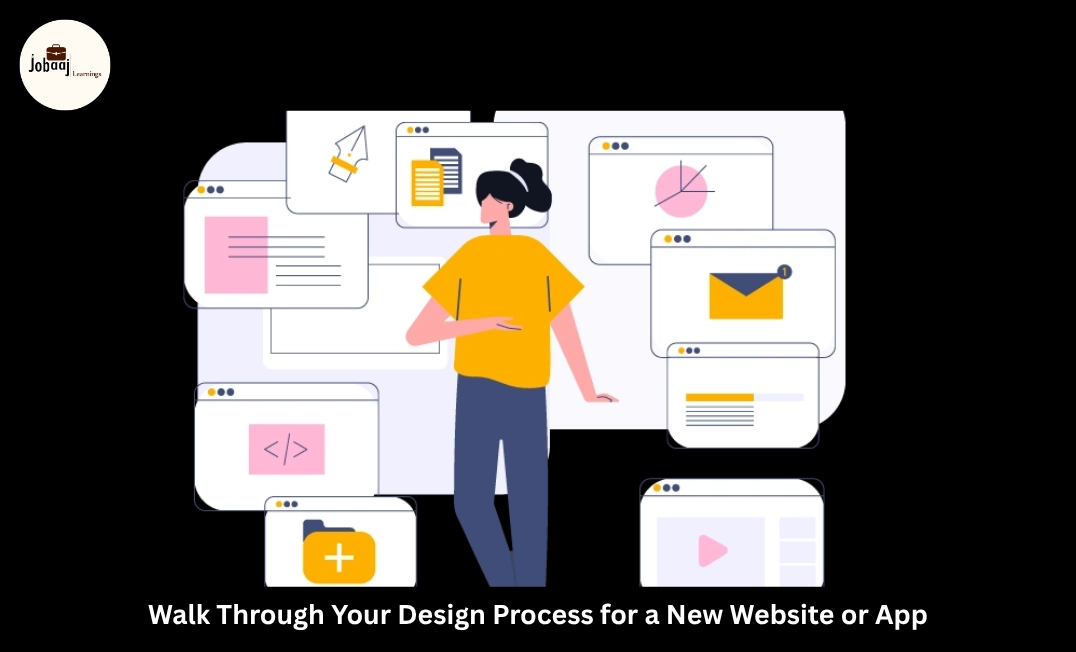
Designing a website or an app isn’t just about making something look good – it’s about creating an experience. Whether it's a website or an app, the end goal is to solve a problem, engage users, and provide value. But how do designers ensure that the end product meets both the client's goals and the user's needs?
Exploring a career in Web Development? Apply now!
In this blog, we’ll walk you through the design process I follow when creating a new website or app. It’s a structured yet flexible approach that ensures every project is tailored to deliver the best possible user experience, functionality, and design.
Step 1: Understanding the Project and Setting Clear Objectives
The first step in the design process is understanding the project at a deep level. This involves communicating with stakeholders to gather insights into their goals, vision, and expectations.
- Client Briefing: I ask clients to define the purpose of the website/app and its target audience.
- Research: I conduct research on industry trends, competitor analysis, and user behavior to inform the design decisions.
- Goal Definition: Set clear, measurable goals for the project, such as increasing conversions, improving navigation, or enhancing brand awareness.
By understanding the bigger picture and setting clear objectives, I can create a design that aligns with the business goals and resonates with the users.
Step 2: Planning and Wireframing
Once I have a solid understanding of the project’s scope and objectives, the next step is planning the structure of the website or app. This is where the user flow and wireframes come into play.
- User Flow Mapping: I map out the user journey, understanding how users will interact with the website or app from start to finish.
- Wireframes: I create low-fidelity wireframes to define the basic layout, structure, and functionality. Wireframes act as a blueprint for the design and development phases.
- Content Strategy: This step also involves planning the content structure, ensuring that all elements such as text, images, and videos are strategically placed for maximum impact.
Wireframing helps visualize the layout and functionality without diving into the detailed design. This allows stakeholders to see and approve the overall structure before moving on to more intricate work.
Step 3: Design and User Interface (UI) Development
This is the fun part! Once the wireframes are approved, I move on to the design phase, where the visuals come to life. The goal is to make the interface not only visually appealing but also intuitive and user-friendly.
- UI Design: I focus on creating visually engaging elements such as color schemes, typography, imagery, icons, and buttons.
- Prototypes: Using tools like Figma or Adobe XD, I create interactive prototypes that showcase how the website or app will function. This gives stakeholders a hands-on feel of the design.
- Consistency: I ensure the design follows a consistent theme that aligns with the brand’s identity, creating a cohesive look and feel across all screens.
Good design is not just about aesthetics but also about functionality. The user interface should be intuitive and make the user’s experience as smooth as possible.
Step 4: Development Collaboration
Once the design is ready, the next step is development. This is where the front-end and back-end developers work on turning the design into a fully functional product.
- Front-End Development: Developers code the user interface, ensuring that the design elements are translated into a responsive, functional website or app.
- Back-End Development: Developers work on server-side logic, databases, and any integrations that are needed to support the functionality of the site or app.
- Collaboration: I collaborate with developers to ensure that the design vision is being executed properly and the functionality is working as intended.
During this phase, the design evolves into a fully operational product. It’s important for designers to maintain close communication with developers to ensure a smooth transition from design to development.
Step 5: Testing and Quality Assurance (QA)
Before the website or app is launched, rigorous testing is essential. This phase involves identifying any bugs, ensuring compatibility across devices, and making sure the product meets the set objectives.
- Usability Testing: I conduct tests with actual users to ensure that the interface is easy to use and that navigation flows logically.
- Cross-Browser and Device Testing: I check the product’s compatibility across different browsers (Chrome, Safari, Firefox) and devices (mobile, tablet, desktop).
- Bug Fixing: Developers fix any issues or bugs that arise during the testing phase, ensuring everything runs smoothly.
Testing ensures the final product is bug-free, performs well across all platforms, and delivers an optimal experience to the users.
Step 6: Launch and Post-Launch Review
The final step is launching the website or app to the public. However, the job doesn’t end here.
- Launch: The website or app is deployed to a live environment, and users can begin interacting with it.
- Post-Launch Monitoring: After launch, I monitor the performance, user behavior, and any feedback to ensure the product meets the objectives.
- Iterative Improvements: Based on the feedback, I make iterative improvements to enhance the user experience and address any issues that arise after launch.
The post-launch phase involves ensuring that the product continues to perform well and delivers long-term value to users and the business.
Conclusion
The process of designing a website or app is dynamic, involving collaboration between stakeholders, designers, and developers to create a product that delivers both aesthetically and functionally. By following a structured yet flexible design process from understanding the project to post-launch improvements designers can create seamless, user-friendly experiences that help businesses achieve their goals and stand out in a crowded market.
Whether you’re working on a website or an app, this process ensures that every detail is carefully thought out and executed to meet both business objectives and user needs.
Dreaming of a Web Development Career? Start with Web Development Certificate with Jobaaj Learnings.
Frequently asked questions
What is the first step in designing a new website or app?
The first step is understanding the project’s goals and setting clear objectives. This involves communicating with stakeholders to gather insights about the purpose of the website or app, its target audience, and the desired outcomes.
How do you ensure that the design meets user needs?
User research is essential to understanding the pain points and expectations of the target audience. By mapping out the user journey, conducting usability testing, and gathering feedback, designers can ensure the product meets user needs effectively.
What tools do you use during the design process?
I use a variety of design tools such as Figma, Adobe XD, and Sketch for wireframing and prototyping. For development collaboration, I often work with developers using tools like GitHub and Slack for seamless communication and task management.
How do you ensure that the design is mobile-friendly?
Designing mobile-first is crucial in today’s market. I ensure that the design is responsive by using flexible grids, media queries, and testing the design across multiple screen sizes. This ensures that the website or app delivers a consistent experience on both mobile and desktop devices.
What happens after the design is launched?
After launch, I conduct post-launch monitoring to track performance, user engagement, and gather feedback. This allows me to identify areas for improvement and make iterative updates to continuously enhance the user experience.
Join 5,00,000+ Subscribers
Be a part of our ever growing community.