Categories








































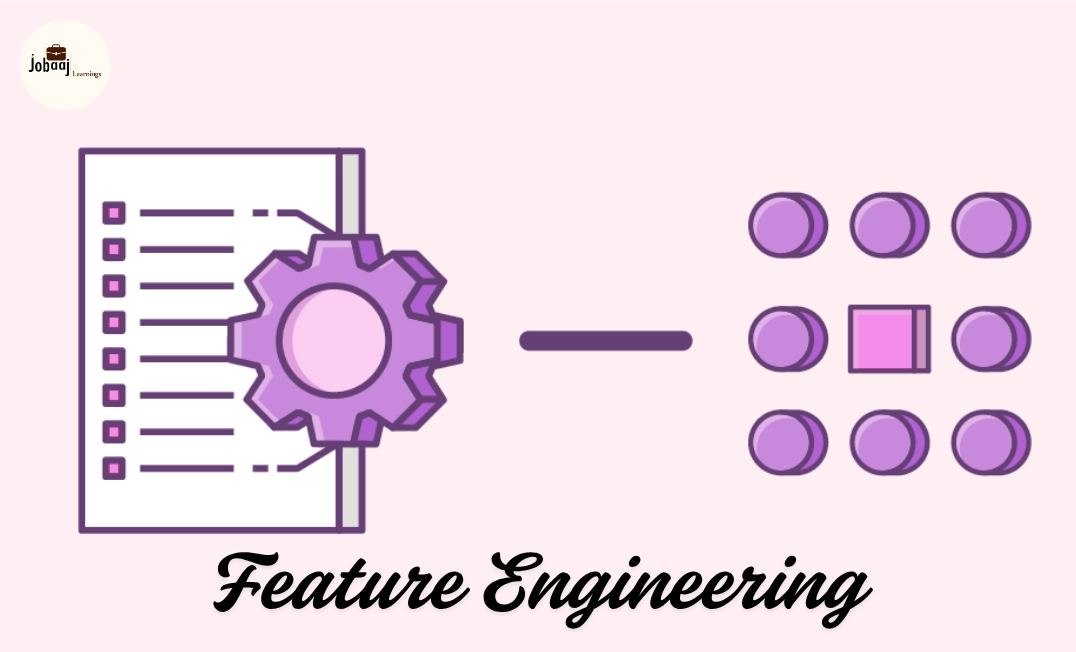
If you've ever worked with machine learning, you’ve probably heard the term feature engineering thrown around. But what does it really mean? And why is it so crucial for building good machine learning models?
In simple terms, feature engineering is the art and science of preparing your data so that a machine learning algorithm can understand it better and make more accurate predictions.
Exploring a career in Data and Business Analytics? Apply Now!
While data scientists often talk about “features,” they’re referring to the individual measurable properties or characteristics of the phenomenon being observed. For example, in a dataset about houses, features could include the number of bedrooms, size of the house, and the neighborhood.
But here’s where the magic happens. Feature engineering is the process of transforming those raw features into something more useful, creating a new set of features that can help your model understand the data more effectively. It's not just about feeding the raw numbers; it’s about giving the model the best possible data to make predictions.
What is Feature Engineering?
Imagine you’re building a house from scratch. You’ve got raw materials bricks, wood, and cement but simply piling them together doesn’t make a house. You need to refine, shape, and assemble those materials in a way that they fit together and form something meaningful. That’s feature engineering in machine learning.
In the context of machine learning, feature engineering involves:
- Selecting the most important variables from your dataset.
- Transforming those variables into new features that can improve the performance of your algorithm.
- Creating new features by combining or breaking down existing ones to extract more useful information.
To make it clearer, let’s look at a few examples:
Example 1: Predicting House Prices
Let’s say you're trying to predict the price of a house based on a dataset that includes features like square footage, number of bedrooms, and age of the house. These are good features, but what if you could engineer new features that give the model even more insight?
For instance:
- Price per square foot: A feature that’s often more predictive of house value than square footage alone.
- Age of the house: This could be transformed into a new feature like years since last renovation if you believe recent renovations impact pricing more than just age.
Example 2: Predicting Loan Default
Let’s say you’re working with a dataset of people applying for loans. The raw data might include age, income, and credit score. But how do you turn these into features that can predict loan default more effectively?
You could:
- Bin ages into categories like "young," "middle-aged," and "older."
- Categorize income levels as "high," "medium," and "low."
- Combine credit score and income to create a new feature called “affordability index” to measure how likely someone is to repay the loan based on their financial situation.
By transforming and combining these raw features, you help the model pick up on hidden patterns that might be crucial for making accurate predictions.
Why is Feature Engineering So Important in Machine Learning?
Feature engineering is often the key to making your model smarter. Here's why it matters:
1. Raw Data is Not Always Enough
Machine learning algorithms work best when they receive well-structured, meaningful data. Raw data often contains a lot of noise or irrelevant information, which can confuse the model.
Feature engineering allows you to refine the data, remove noise, and focus on the most important signals, leading to better predictions.
2. Improves Model Accuracy
A well-engineered feature set helps machine learning models learn the most useful patterns in the data. For example:
- Normalization (scaling numerical features) makes sure all features are on the same scale, so models like linear regression or KNN don’t prioritize features with higher magnitudes.
- One-hot encoding transforms categorical data (like city names) into binary vectors, allowing models like decision trees and neural networks to make use of this information effectively.
By transforming the features in a way that makes sense, you're giving the model better inputs to work with, improving accuracy.
3. Reduces the Need for Complex Models
Sometimes, the simplest models work best, but this depends on having the right features. With proper feature engineering, you can turn a relatively simple model (like a decision tree or linear regression) into something highly powerful, without needing a complex neural network.
Good feature engineering can result in higher predictive power, even from simpler models, saving both computational resources and time.
4. Helps Uncover Hidden Patterns
When you create new features or combine existing ones, you may reveal relationships in the data that were not obvious at first glance. This deeper insight is exactly why feature engineering is crucial.
For example, you might have a feature for temperature and another for sales data. Creating a new feature called “seasonality” could reveal strong relationships between sales and weather patterns that weren’t initially obvious.
Types of Feature Engineering
Here are some common types of feature engineering techniques used in practice:
1. Scaling and Normalization
This process adjusts features so they are all on the same scale. It’s particularly important for algorithms that depend on the distance between points (e.g., KNN, SVM).
- Min-Max Scaling: Rescales the data to a range between 0 and 1.
- Standardization: Transforms data to have a mean of 0 and a standard deviation of 1.
2. Encoding Categorical Features
Machine learning models often struggle with categorical data (e.g., “red,” “blue,” “green” for colors). You can transform these into numerical values through:
- One-Hot Encoding: Converts categories into binary vectors (0 or 1).
- Label Encoding: Converts categories into integer labels.
3. Binning or Discretization
Sometimes, continuous features (e.g., age, income) can be divided into bins or ranges. This can be helpful in cases where relationships are non-linear, and you want to model the data in chunks.
For example:
- Instead of raw age values, you might create bins like “0-20”, “21-40”, “41-60”, and so on.
4. Feature Extraction
This involves creating new features from existing ones. For instance:
- Time-based features: Extracting month, day of the week, and hour from a timestamp.
- Text-based features: Converting text into numerical values using techniques like TF-IDF or word embeddings.
5. Feature Selection
This is about identifying which features are the most important for the model. Too many irrelevant features can hurt model performance. Techniques like correlation analysis or LASSO regression help in identifying and selecting the right features.
Common Pitfalls in Feature Engineering
While feature engineering can greatly improve model performance, it’s also easy to make mistakes that can hurt your model’s accuracy. Here are a few things to avoid:
1. Over-engineering
It’s tempting to create many new features, but this can lead to overfitting. Overfitting happens when your model learns patterns that only exist in your training data and doesn’t generalize well to new data.
2. Ignoring Data Leaks
A feature that is strongly correlated with the target variable might seem helpful, but it can also lead to data leakage. Data leakage happens when information from outside the training dataset is used to create the model, which leads to overly optimistic performance.
3. Not Testing Your Features
Always test the impact of your engineered features. Adding new features might not always lead to improvements in model performance. It’s crucial to evaluate your model after each engineering step to ensure you are moving in the right direction.
Conclusion
Feature engineering is often the difference between a good machine learning model and a great one. It's about transforming raw data into something a model can easily learn from, giving it the best chance to make accurate predictions.
While it can seem complicated at first, with the right approach and understanding, feature engineering becomes a valuable tool that lets you unlock hidden patterns, improve model performance, and drive better outcomes.
Remember, machine learning isn’t just about algorithms. It’s about providing your model with the best data to understand and work with. If you focus on creating the right features and test them carefully, you’ll be on your way to creating models that not only predict better but also bring true value to your projects.
Aspiring for a career in Data and Business Analytics? Begin your journey with a Data and Business Analytics Certificate from Jobaaj Learnings.
Frequently asked questions
What is feature engineering in machine learning?
Feature engineering is the process of selecting, modifying, or creating new features from raw data to improve the performance of machine learning models.
Why is feature engineering important?
Feature engineering is critical because it allows models to work with the most meaningful data, improving accuracy and performance while reducing noise and irrelevant information.
How do I create new features for my machine learning model?
New features can be created by transforming existing data, extracting new data points from time or text, combining features, or scaling data to make it easier for the model to process.
What are some common feature engineering techniques?
Common techniques include scaling, encoding categorical features, binning continuous data, feature extraction, and selecting the most important features through statistical methods.
Can feature engineering lead to overfitting?
Yes, over-engineering features can result in overfitting, where the model learns patterns specific to the training data but doesn’t generalize well to new data. Always test and validate your features.

Join 5,00,000+ Subscribers
Be a part of our ever growing community.