Categories








































What Does a Full Stack Developer Do? Key Skills and Career Growth in 2026

The world of software development has evolved significantly over the years, and Full Stack Development has emerged as one of the most sought-after roles in the tech industry. If you’ve ever wondered what a Full Stack Developer does, what skills are required, or how the career prospects look in 2026, you’ve come to the right place.
Exploring a career in Web Development? Apply now!
In this blog, we’ll dive into the key responsibilities of a Full Stack Developer, the essential skills they need, and the exciting career growth opportunities that come with this role. Whether you’re considering a career in full-stack development or looking to level up your existing skills, this guide will help you understand what it takes to succeed in this dynamic and rewarding field.
What is a Full Stack Developer?
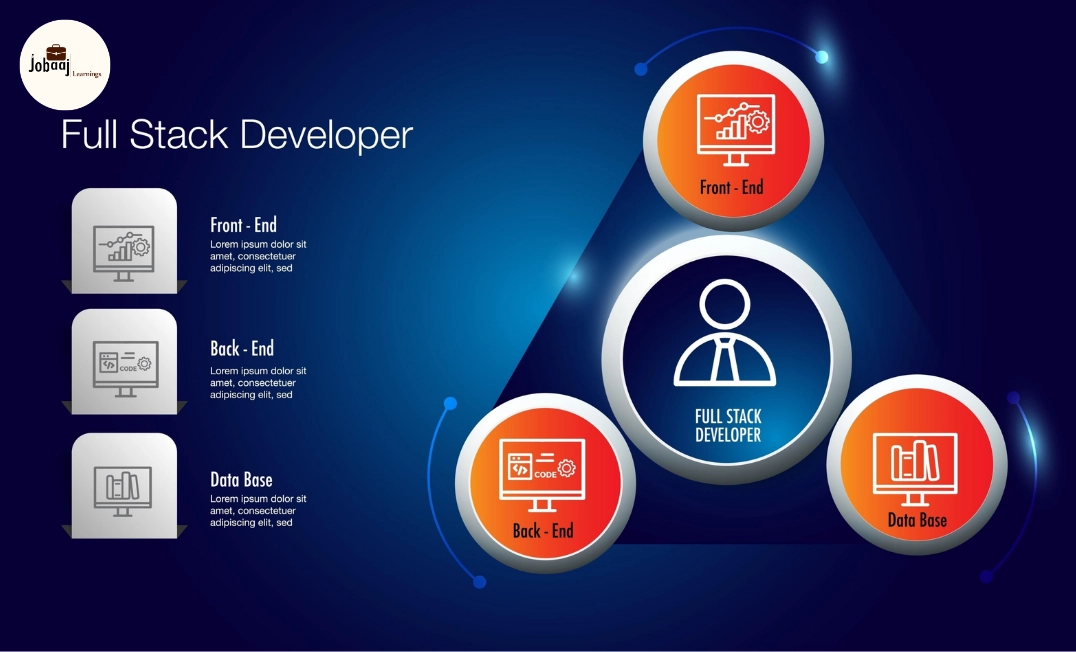
A Full Stack Developer is a versatile software developer who has the skills to work on both the front-end (client side) and back-end (server side) of web applications. Essentially, a full stack developer has expertise in all the layers of software development, from designing the user interface to managing databases and servers.
Full stack developers are responsible for building and maintaining end-to-end applications, ensuring that both the front end (what users see and interact with) and back end (the logic, database, and server side) work seamlessly together. They understand how all parts of the application fit together, making them highly valuable in agile development teams and startups.
What Does a Full Stack Developer Do?
The responsibilities of a full stack developer can vary depending on the project, the company, and the specific tech stack used. However, the typical day-to-day tasks of a full stack developer include:
1. Front-End Development
Front-end development involves designing and building the user-facing components of a website or web application. Full Stack Developers use technologies like HTML, CSS, and JavaScript (and often modern frameworks like React, Vue.js, or Angular) to create dynamic and responsive user interfaces. They ensure that the application is user-friendly, visually appealing, and functional across different devices and browsers.
Key Tasks in Front-End Development:
-
Creating and implementing the user interface (UI)
-
Writing client-side logic and interactivity with JavaScript
-
Optimizing web pages for mobile responsiveness and performance
-
Integrating third-party services and APIs (e.g., maps, social media feeds)
2. Back-End Development
Back-end development focuses on the server side, dealing with the application logic, database management, and server configuration. Full Stack Developers work with server-side programming languages like Node.js, Java, Python, and Ruby, among others. They also work with databases such as MySQL, MongoDB, or PostgreSQL to manage data and ensure that the front-end can retrieve it effectively.
Key Tasks in Back-End Development:
-
Designing and maintaining databases
-
Writing server-side logic and APIs
-
Managing data storage and ensuring data security
-
Ensuring scalability and performance of the server infrastructure
3. Full Stack Development
A full stack developer’s work doesn’t stop at either the front-end or back-end; it involves understanding how both interact and ensuring the smooth integration between them. This means a full stack developer must be familiar with API development, version control systems (like Git), and deployment processes (using tools like Docker, Kubernetes, and CI/CD pipelines).
Key Tasks in Full Stack Development:
-
Collaborating with cross-functional teams to create seamless web applications
-
Managing database interactions and ensuring efficient data handling
-
Debugging and troubleshooting across both front-end and back-end
-
Implementing security protocols and best practices for code quality
Key Skills Every Full Stack Developer Needs
To succeed as a full stack developer in 2026, you need a combination of both technical skills and soft skills. Here’s a breakdown of the essential skills for the role:
1. Proficiency in Front-End Technologies
-
HTML, CSS, and JavaScript: The building blocks of front-end development.
-
Responsive Web Design: Ensuring web apps look great on any device.
-
Front-End Frameworks: Expertise in frameworks like React, Vue.js, or Angular.
2. Back-End Programming Languages
-
Node.js, Python, Ruby, Java: Knowing back-end programming languages and their ecosystems.
-
Database Management: Expertise in working with both relational (SQL) and non-relational (NoSQL) databases.
-
API Design and Development: Knowledge of building and consuming RESTful APIs.
3. Version Control Systems
-
Git: A must-have for managing code changes and collaborating with teams.
4. Deployment and DevOps
-
CI/CD: Continuous Integration and Continuous Deployment to streamline code delivery.
-
Cloud Platforms: Familiarity with cloud services like AWS, Azure, or Google Cloud.
5. Security and Best Practices
-
Web Security: Knowledge of protecting apps against threats like cross-site scripting (XSS) and SQL injection.
-
Data Validation and Testing: Ensuring applications are bug-free and secure.
6. Soft Skills
-
Problem-Solving: The ability to think critically and resolve issues across both front-end and back-end.
-
Communication: Explaining complex technical issues to non-technical team members and clients.
-
Collaboration: Working with other developers, designers, and stakeholders.
Career Growth Opportunities for Full Stack Developers
The demand for full stack developers continues to grow in 2026, and the career prospects are robust. Here’s a look at potential career paths and growth opportunities:
1. Start-Up Opportunities
Many start-ups are looking for full stack developers who can manage both front-end and back-end development. Startups often require individuals who can work across multiple roles, making the full stack skill set highly valuable.
2. Senior Developer and Tech Lead Roles
As a full stack developer gains experience, they can move into senior technical roles, such as Senior Full Stack Developer, Lead Developer, or Technical Architect. In these roles, you’ll take on more responsibility, leading development teams and overseeing the architecture of complex systems.
3. Specializing in Specific Technologies
Full stack developers can also specialize in specific areas of the stack. For example, a full stack developer could move into a front-end expert role focusing on UX/UI design or become a back-end specialist with deep knowledge of server-side technologies.
4. Project Management and CTO Roles
With years of experience, some full stack developers transition into project management or Chief Technology Officer (CTO) roles, where they oversee entire development projects and lead technical strategy at a company.
5. Freelancing and Consulting
Full stack development also offers the flexibility of freelancing or consulting. Many businesses need full stack developers for short-term projects or to help scale their products, making freelancing a lucrative career option.
How to Get Started in Full Stack Development
If you’re interested in becoming a full stack developer in 2026, here are a few steps to help you get started:
-
Learn the Basics: Begin by mastering HTML, CSS, and JavaScript. Then, move on to learning front-end frameworks and back-end programming languages.
-
Practice: Build small projects and contribute to open-source projects to gain practical experience.
-
Take Courses: Consider enrolling in full stack development courses or bootcamps to enhance your skills and knowledge.
-
Stay Updated: Full stack development is constantly evolving, so keep learning about new tools, frameworks, and best practices.
Conclusion
Full stack development is a rewarding and versatile career path that offers exciting challenges and opportunities. With the right skills, you can play a key role in creating innovative applications and systems that power businesses worldwide. As the tech landscape continues to evolve in 2026, full stack developers remain essential for driving digital transformation and ensuring the success of web applications.
Whether you’re just starting or looking to expand your career, becoming a full stack developer provides endless possibilities for personal and professional growth. Embrace the learning journey, stay curious, and develop the skills that will make you indispensable in the future of tech.
Dreaming of a Web Development Career? Start with Web Development Certificate with Jobaaj Learnings.
Frequently asked questions
What skills should a Full Stack Developer have in 2026?
In 2026, Full Stack Developers should have strong proficiency in front-end technologies like HTML, CSS, and JavaScript, as well as back-end languages like Node.js, Python, or Java. They should also be skilled in database management, API development, and cloud technologies. Familiarity with modern frameworks like React, Angular, and Vue.js is also essential.
What are the main responsibilities of a Full Stack Developer?
A Full Stack Developer is responsible for both front-end and back-end development, ensuring seamless integration between the two. They design user interfaces, write server-side logic, manage databases, and ensure the application runs efficiently and securely. They also handle testing, debugging, and deploying applications.
How long does it take to become a Full Stack Developer?
Becoming a Full Stack Developer typically takes around 6 months to 2 years, depending on your background and the depth of skills you wish to master. This includes learning both front-end and back-end technologies, practicing through projects, and gaining real-world experience through internships or freelance work.
What are the career growth opportunities for Full Stack Developers in 2026?
Full Stack Developers can progress to senior roles such as Senior Full Stack Developer, Technical Lead, or Solutions Architect. With experience, some may transition into project management, CTO, or freelance/consulting roles. The demand for Full Stack Developers will continue to grow as businesses embrace digital transformation.
Is Full Stack Development a good career in 2026?
Yes, Full Stack Development remains a highly lucrative and in-demand career in 2026. With businesses relying more on web and mobile applications, Full Stack Developers are essential for creating end-to-end solutions. The flexibility of this role, combined with high salary potential and opportunities for career growth, makes it a great career choice.
Join 5,00,000+ Subscribers
Be a part of our ever growing community.