Categories








































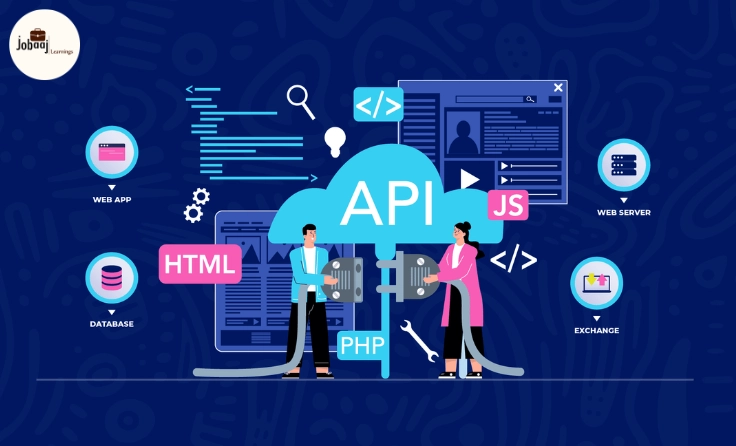
In today’s digital world, many of the apps and services we use daily rely on APIs (Application Programming Interfaces) to function smoothly. APIs allow different software systems to communicate with each other and exchange data, making it possible for apps to deliver the services we rely on without us even realizing it.
Exploring a career in Web Development? Apply now!
Whether it's checking the weather, booking a ride, or browsing a website, APIs work behind the scenes to retrieve and send data between different platforms. They act as the middleman, facilitating communication between systems, so they can perform tasks and display the results that we expect.
In this blog, we’ll explore what APIs are, how they function, and why they’re so essential in the tech world today. By understanding APIs, you’ll see how they play a crucial role in enabling various applications and services to work together seamlessly.
What is an API?
At its core, an API is simply a way for two pieces of software to talk to each other. It defines the rules and protocols that allow one system to request and access information or services from another system. You can think of it as a contract that specifies what actions can be taken and how data is exchanged.
For example, when you use a weather app, the app makes a request to a weather service’s API, asking for the forecast data. The API responds with the requested data, and the app then shows it to you in a user-friendly way.
An API acts like a bridge between different systems, enabling them to share data and functionality without directly exposing their inner workings to each other.
How Does an API Work?
Now, let’s get into how APIs work in a simple way.
1. Making a Request
When you interact with an app, you might trigger an action that requires data or services from another system. For example, let’s say you’re booking a ride through a ride-sharing app. When you click on "book a ride," the app sends a request to the ride-sharing service’s API, asking for available drivers nearby.
This request contains the necessary information, such as your location, destination, and ride preferences. The API request is often sent over the internet using HTTP (Hypertext Transfer Protocol), which is the same protocol used for browsing websites.
2. Processing the Request
Once the API receives the request, it checks if everything is valid. It looks at the data sent by the app and makes sure it meets the expected format or conditions. If the request is valid, the API then forwards it to the appropriate backend service to gather the necessary information.
In our ride-sharing example, the backend service would look at the available drivers near your location and their current availability.
3. Returning the Response
Once the backend service processes the request, it sends a response back through the API. The response could include all sorts of data, like available driver details, pricing information, or even potential wait times.
The API then sends this data back to the app in a format it can understand, typically JSON (JavaScript Object Notation) or XML. This is like the waiter bringing you the food you ordered from the kitchen.
4. Displaying the Data
Finally, the app takes the response from the API and displays it in a way that’s useful for you. In the case of the ride-sharing app, it would show you a list of available drivers and estimated prices. It might even give you the option to choose a driver and confirm your ride.
Types of APIs
There are several types of APIs, each serving a different purpose. Some of the most common ones include:
-
Open APIs (Public APIs): These are available to the public and can be used by any developer. For example, many social media platforms like Twitter and Facebook offer public APIs that allow developers to integrate social media feeds into their apps.
-
Internal APIs (Private APIs): These are used within a single organization to enable communication between internal systems. For example, a company might have an internal API for its HR system to communicate with its payroll system.
-
Partner APIs: These are shared between specific business partners. For instance, an e-commerce platform might share an API with a payment processor to handle transactions.
-
Composite APIs: These allow developers to access several services or endpoints through a single API call. This can be useful if you need to gather data from multiple sources.
Why Are APIs Important?
APIs have become the backbone of modern technology. They enable everything from mobile apps to web applications, cloud services, and even IoT (Internet of Things) devices. Here are a few reasons why APIs are so important:
-
Interoperability: APIs allow different systems and platforms to communicate, making it easier for software to work together. Without APIs, apps wouldn’t be able to pull in data from other sources, like weather apps pulling data from weather services.
-
Scalability: APIs allow businesses to easily integrate new services and data without changing the entire system. For example, an e-commerce platform can integrate with a payment gateway API to accept payments, without having to rewrite its entire payment system.
-
Automation: APIs enable automation of tasks and processes. Instead of having to manually enter data or trigger actions, businesses can use APIs to automate repetitive tasks, like syncing data between systems or updating records in real time.
-
Innovation: APIs allow developers to build on existing platforms and create innovative solutions. This fosters creativity and helps companies quickly adapt to changing technology trends. For example, third-party developers can create apps that work with Google Maps API, offering navigation features without having to build their own mapping system.
Real-World Examples of API Usage
Let’s look at some real-world examples of how APIs are used every day:
-
Social Media: When you share an article on Facebook or Twitter, the app makes an API request to the social media platform’s API to share the post and retrieve a preview or thumbnail.
-
Payment Processing: When you buy something online, the website uses a payment gateway’s API (like PayPal or Stripe) to process the payment securely and return the transaction result.
-
Weather Services: Weather apps use APIs to pull data from weather stations, forecasting services, or satellite imagery. For instance, the OpenWeather API allows apps to display weather conditions and forecasts based on your location.
Conclusion
APIs may seem like a complex concept, but at their core, they are just tools that allow different systems to talk to each other. Whether you’re checking the weather, booking a flight, or connecting to a payment service, APIs make it all possible.
Understanding how APIs work is crucial for developers and businesses because they are essential for modern app development, service integration, and data sharing. As technology continues to evolve, APIs will remain a vital part of how systems and services communicate, helping to drive innovation and improve user experiences.
So next time you use an app, remember: APIs are the unsung heroes working quietly in the background, making sure everything runs smoothly and seamlessly.
Dreaming of a Web Development Career? Start with Web Development Certificate with Jobaaj Learnings.
Frequently asked questions
What is an API?
An API (Application Programming Interface) is a set of protocols that allow different software systems to communicate and share data. It acts as a bridge between different applications or services, enabling them to interact with each other.
How do APIs work?
APIs work by allowing a request to be made from one system, passing data to another system, and then receiving a response. This process allows applications to access services, data, or functionality without having to know the inner workings of the system.
What are some examples of APIs?
Examples of APIs include social media APIs (like Twitter or Facebook), payment gateways (like PayPal), weather data APIs, and mapping APIs like Google Maps, which allow apps to access specific data and services.
Why are APIs important for developers?
APIs allow developers to easily integrate and use third-party services in their applications without having to build everything from scratch. They save time, enhance functionality, and enable faster development cycles.
What is the difference between REST and SOAP APIs?
REST (Representational State Transfer) and SOAP (Simple Object Access Protocol) are two different types of web service APIs. REST is simpler and uses HTTP for communication, whereas SOAP is more rigid and requires XML messaging. REST is more commonly used due to its simplicity and flexibility.
How can I start using APIs in my projects?
To start using APIs, you need to find an API that fits your project’s needs, review its documentation, and make requests using the provided endpoints. Many APIs are accessible via HTTP, and you can use programming languages like Python, JavaScript, or others to interact with them.

Join 5,00,000+ Subscribers
Be a part of our ever growing community.