Categories





































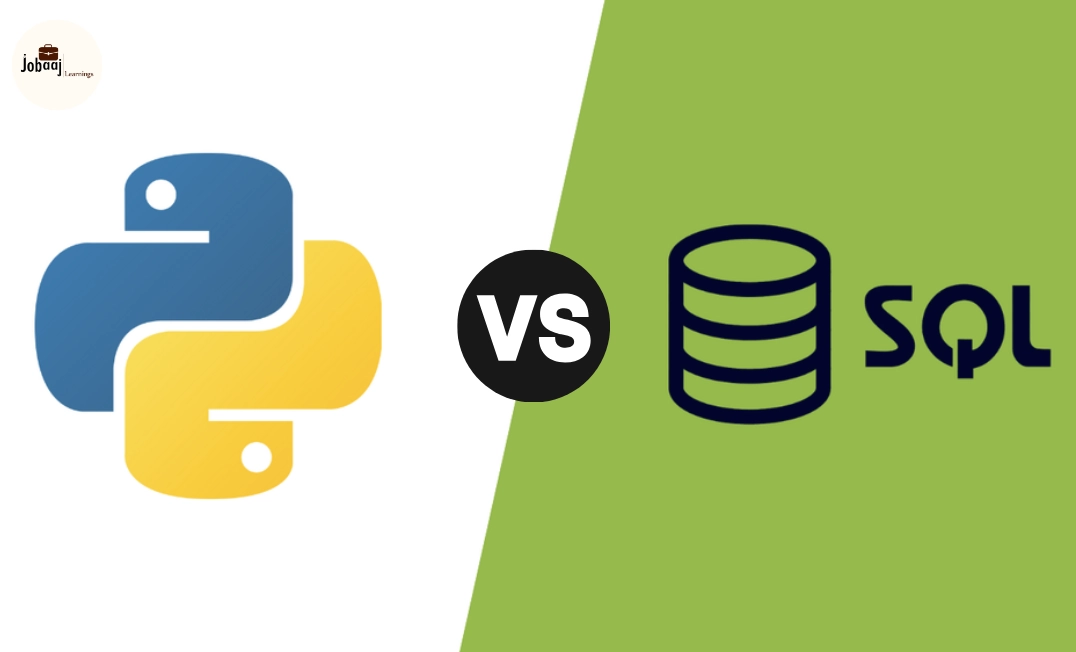
Data analytics is a fast-growing field, and beginners often face the question: Should I learn SQL or Python first? Both are essential tools, but they serve slightly different purposes and are used in different contexts. Choosing the right starting point can help accelerate your learning curve and make you more effective as a data analyst.
This guide breaks down the role of SQL and Python in analytics, compares them, and provides a roadmap to decide which to learn first in 2026.
Understanding SQL in Data Analytics
SQL (Structured Query Language) is the foundation of working with relational databases. It allows analysts to extract, manipulate, and aggregate data efficiently.
Key Uses:
- Querying large datasets to answer business questions
- Filtering, grouping, and joining data from multiple tables
- Generating reports and dashboards for business stakeholders
Why Learn SQL First:
- Most companies store structured data in relational databases.
- SQL allows you to quickly access clean, relevant data without complex programming.
- It provides a strong foundation for understanding data structures and relationships.
Popular SQL Tools: MySQL, PostgreSQL, Microsoft SQL Server, BigQuery
Understanding Python in Data Analytics
Python is a general-purpose programming language widely used in analytics for data cleaning, visualization, statistical analysis, and predictive modeling.
Key Uses:
- Advanced data manipulation with Pandas and NumPy
- Data visualization using Matplotlib, Seaborn, or Plotly
- Building predictive models using Scikit-learn or machine learning libraries
- Automating repetitive data tasks and workflows
Why Learn Python:
- Python is versatile and allows for end-to-end analytics.
- Suitable for unstructured data and more complex analytical tasks.
- Provides a gateway to data science and machine learning for future growth.
SQL vs Python: Key Differences
|
Feature |
SQL |
Python |
|
Data Handling |
Structured databases |
Structured & unstructured data |
|
Learning Curve |
Relatively easy for beginners |
Slightly steeper, requires programming logic |
|
Primary Use |
Data extraction, querying |
Data cleaning, visualization, modeling |
|
Speed |
Fast for aggregating and filtering |
Slower on very large datasets, better for complex analysis |
|
Career Impact |
Essential for all data analysts |
Highly valued for advanced analytics and data science |
|
Tools & Libraries |
MySQL, PostgreSQL, BigQuery |
Pandas, NumPy, Matplotlib, Scikit-learn |
Which to Learn First?
Recommended Approach for Beginners:
- Start with SQL:
- Learn basic queries, joins, aggregations, and filtering.
- Understand relational data structures and data warehousing.
- Helps you quickly work with company datasets and extract insights.
- Then Learn Python:
- Use Python to clean, manipulate, and visualize the data you extracted.
- Explore libraries for statistical analysis and predictive modeling.
- Python enhances your analytical capabilities beyond simple queries.
Alternative Approach:
If your goal is business intelligence or reporting, you can focus more on SQL initially.
If your goal is data science or machine learning, learning Python early can be beneficial, but SQL knowledge is still essential.
Tips for Learning SQL and Python
- Hands-On Practice: Work on real datasets on Kaggle or public databases.
- Build Projects: Combine SQL queries with Python scripts for reporting or analysis.
- Use Interactive Platforms: LeetCode (SQL), Mode Analytics, DataCamp, or Jupyter notebooks.
- Focus on Business Use Cases: Practice queries and Python scripts that answer real-world questions.
- Consistency: Dedicate 30–60 minutes daily to coding and query practice.
Conclusion
Both SQL and Python are cornerstones of data analytics, but the best starting point depends on your career goals. For most beginners, SQL first provides quick wins in data extraction and understanding database structures. Once comfortable, Python expands your analytical capabilities, allowing you to handle more complex datasets, visualizations, and predictive models.
Mastering both in a structured sequence ensures you become a versatile and highly marketable data analyst in 2026 and beyond.
Aspiring for a career in Data and Business Analytics? Begin your journey with a Data and Business Analytics Certificate from Jobaaj Learnings.
Frequently asked questions
Which is better to learn first for data analytics: SQL or Python?
For most beginners, SQL is recommended first for extracting and understanding structured data. Python should follow for data cleaning, visualization, and advanced analysis.
Can I use Python without learning SQL?
Yes, Python can handle analysis, but most real-world datasets are stored in relational databases, making SQL knowledge essential.
How long does it take to learn SQL and Python for analytics?
Basic SQL can be learned in a few weeks, while Python may take 1-3 months depending on practice and project work.
Which Python libraries are most important for data analytics?
Pandas, NumPy, Matplotlib, Seaborn, Plotly, and Scikit-learn are essential for data manipulation, visualization, and basic predictive modeling.
Is SQL still relevant if I focus on Python?
Yes, SQL is fundamental for extracting and querying structured data, which complements Python skills for full-scale analytics.

Join 5,00,000+ Subscribers
Be a part of our ever growing community.