Categories














/content/learnings/assets/header/ManagementConsulting.svg)
/content/learnings/assets/header/InvestmentBanking.svg)


























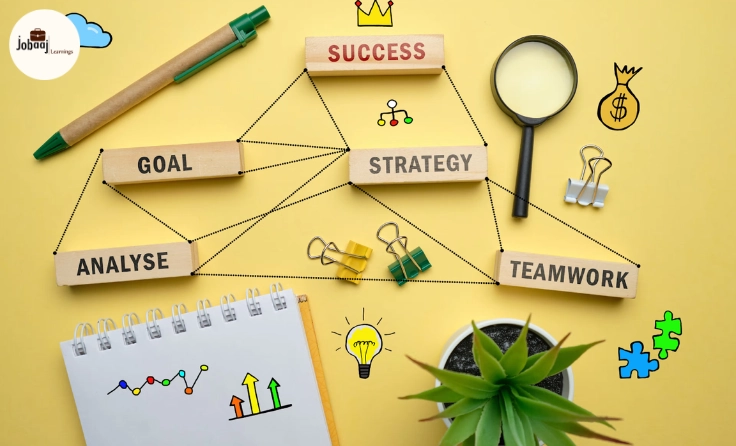
Product management is one of the most sought-after roles in today’s fast-paced business world, and for good reason. It offers the chance to work at the intersection of business, technology, and design, and is central to the development of successful products. As a product manager, you are responsible for ensuring that a product not only meets the market needs but also aligns with the company’s goals.
Exploring a career in Product Management? Apply Now!
Breaking into product management can seem like a challenge, especially if you don’t come from a traditional product background. However, with the right guidance, mindset, and strategic steps, transitioning into this role is completely achievable. Whether you’re coming from engineering, marketing, design, or even another field entirely, product management offers opportunities for those ready to take on the responsibility of shaping the direction of products and services.
What is Product Management?
Before we jump into how to break into the field, let’s take a moment to understand what product management is all about. At its core, a product manager is responsible for the vision, strategy, and execution of a product or feature. They act as the bridge between different departments like engineering, marketing, sales, and design. A product manager ensures that the product meets the needs of the users while aligning with the company's business goals.
Unlike other roles, product managers don’t necessarily do the designing, coding, or marketing directly; instead, they work closely with specialists from each team to make sure all parts of the product come together. Product managers are essentially the CEOs of the products they oversee, guiding it through development, launch, and beyond.
Tips for Breaking Into Product Management
If you’re eager to make the jump into product management, here are some key steps and tips that can help you break into the field:
1. Leverage Your Existing Skills
First, let’s address the elephant in the room. Do you need to have a technical background to break into product management? The answer is no—but it can help. However, non-technical backgrounds like design, marketing, or business operations are also incredibly valuable in product management roles.
Think about what you’ve done so far in your career. Have you worked closely with product teams? Do you have experience collaborating across departments? These skills are transferable to product management. For example, if you’ve worked as a business analyst, project manager, or UX designer, you already have experience managing workflows, gathering requirements, and delivering solutions—all of which are key aspects of being a product manager.
2. Learn the Basics of Product Management
If you’re not already familiar with the day-to-day tasks of a product manager, now is the time to start learning the basics. There are plenty of free and paid resources available that cover the core concepts of product management, such as:
-
Product lifecycle: From ideation and development to launch and iteration.
-
Roadmapping: How to create and manage a product roadmap that aligns with company goals.
-
User stories and requirements: How to gather, write, and prioritize user stories that guide product development.
-
Data-driven decision-making: How product managers use data and analytics to measure success and drive improvements.
Some great places to start are online courses, books on product management, and websites like Mind the Product or ProductCoalition. You could also look into obtaining certifications in product management, such as those offered by Pragmatic Institute or General Assembly, which are widely recognized in the industry.
3. Build a Network of Product Managers
Like most fields, product management relies heavily on networking. If you want to make the transition, it’s helpful to have connections in the industry who can provide insights, advice, and even job leads. Start by joining product management communities like ProductCamp or LinkedIn groups, where you can learn from experienced product managers and ask questions.
Consider reaching out to product managers on platforms like LinkedIn to request informational interviews. This will give you an inside look into what the job really entails, and you might even receive mentorship opportunities.
4. Gain Hands-On Experience
You don’t need to jump into a full-fledged product manager role immediately. Instead, look for opportunities to gain hands-on experience in product management within your current job or through side projects.
Here are a few ways to gain experience:
-
Collaborate with a product manager: If you’re already in a related field (such as design or marketing), see if you can work closely with a product manager on a project. This will help you understand how a product manager operates day-to-day and give you a chance to demonstrate your potential.
-
Volunteer for product management responsibilities: Look for opportunities within your current role to take on more product-related tasks. Whether it's leading a feature from ideation to delivery or working on a product roadmap, small responsibilities will give you a taste of what’s involved in managing a product.
-
Start a side project: If you’re looking for hands-on experience and can’t find it at work, why not start a product from scratch? Launch a simple app or website, gather feedback, and go through the whole process of building a product. This will give you the practical experience of working through product challenges.
5. Develop Strong Communication and Leadership Skills
Product management is as much about communication and leadership as it is about the technical aspects. A product manager needs to work with cross-functional teams and communicate effectively with stakeholders at all levels of the company.
As a future product manager, you’ll be tasked with leading teams without direct authority, so it's essential to develop your influence skills. Start by improving your ability to explain complex ideas in simple, understandable terms, both in writing and verbally. Being a strong listener is equally important, as understanding team needs, user feedback, and stakeholder concerns will be key to your success as a product manager.
6. Be Ready to Start in an Associate Role
While it’s possible to break into product management directly, many professionals start by applying for Associate Product Manager (APM) roles or similar entry-level positions. These roles are specifically designed for those without direct product management experience but with the right background.
As an Associate Product Manager, you’ll get the chance to work alongside experienced product managers and learn the ropes while contributing to the product development process. Many tech companies, like Google and Facebook, have dedicated APM programs that provide mentorship and training to accelerate your growth.
Conclusion
Breaking into product management may seem intimidating, but with the right approach and mindset, you can make the transition successfully. Start by leveraging your existing skills, learning the fundamentals of product management, and building a network of professionals in the field. Gain hands-on experience through side projects or by collaborating with current product managers, and always work on improving your communication and leadership skills.
Remember, the journey to becoming a product manager is unique for everyone. With determination, curiosity, and the right tools, you can confidently make your way into this exciting and dynamic field. So go ahead—take the first step, and start your journey toward becoming a product manager today!
Dreaming of a Product Management Career? Start with Product Management Certificate with Jobaaj Learnings.
Frequently asked questions
What is Product Management?
Product management is the process of overseeing the development and lifecycle of a product, from ideation and design to launch and iteration. A product manager ensures that the product meets the needs of users and aligns with the company's business goals.
Do I need a technical background to become a product manager?
No, you don’t need a technical background to become a product manager. While technical skills can be helpful, many PMs come from fields like design, marketing, or business operations. What matters most is your ability to communicate across teams and understand the needs of the user.
What skills do I need to become a product manager?
Key skills for product managers include strong communication, leadership, problem-solving, decision-making, and analytical skills. You should also be able to collaborate effectively with cross-functional teams and be data-driven in your decision-making.
How can I gain experience in product management?
You can gain experience by collaborating with product managers in your current role, volunteering for product-related tasks, or starting side projects. Many people also start with Associate Product Manager roles to learn the ropes before stepping into more senior positions.
What is an Associate Product Manager (APM) role?
An Associate Product Manager (APM) is an entry-level position in product management, designed for individuals with little to no direct PM experience. APMs work alongside experienced product managers to learn the skills required for the role while contributing to product development projects.
How long does it take to become a product manager?
The time it takes to break into product management depends on your background and experience. With the right preparation, such as learning the fundamentals, gaining hands-on experience, and building a network, it can take anywhere from a few months to a few years to transition into a full-time product management role.

Join 5,00,000+ Subscribers
Be a part of our ever growing community.