Categories














/content/learnings/assets/header/ManagementConsulting.svg)
/content/learnings/assets/header/InvestmentBanking.svg)
























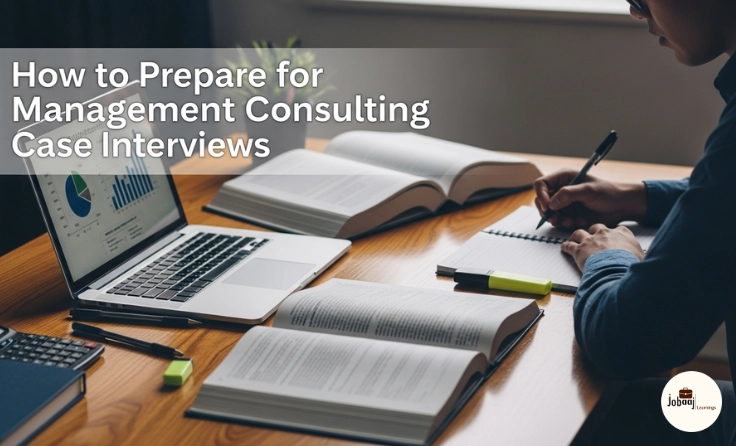
Stepping into the world of management consulting can feel like preparing for a marathon. The excitement, the challenges, and the drive to solve complex business problems are what make consulting an exhilarating career. But before you can even begin to solve those problems, there’s one major hurdle: the case interview.
Exploring a career in Management Consulting? Apply Now!
For anyone looking to break into consulting, case interviews are often the make-or-break moment. They test not only your ability to solve business problems but also how you think on your feet, communicate your ideas, and manage the pressure. At first glance, they may seem intimidating. But with the right preparation, you can tackle any case interview with confidence. This blog will guide you through the essential steps to help you prepare for management consulting case interviews, giving you the tools and strategies you need to stand out from the competition.
Understand the Structure of the Case Interview
The case interview format can be daunting if you don’t understand it fully. You’re presented with a business problem and asked to solve it in real-time. But here’s the catch: it's not just about the solution it’s about how you approach the problem.
The first step in your preparation should be understanding the case structure. Generally, you'll be given a scenario that requires problem-solving, such as increasing a company’s revenue, entering a new market, or addressing operational inefficiencies. During the interview, you’ll need to ask clarifying questions, structure your approach logically, analyze any data presented, and propose actionable solutions. It’s important to remember that the interviewer is evaluating how you think through the problem, not just whether you can provide the "right" answer.
You won’t always have all the information you need, and that’s where your critical thinking comes in. It’s about being able to structure your approach step by step, just like you would in a real consulting environment. Practice makes perfect, so don’t be afraid to start with simpler cases and gradually increase the complexity as you get more comfortable.
Master Problem-Solving and Analytical Thinking
Problem-solving is the backbone of any consulting role, and it’s a critical component of your case interview. You’ll be asked to take complex, ambiguous business problems and break them down into smaller, more manageable pieces. But it’s not just about solving the problem it’s about how you approach it.
Start by practicing how to analyze problems systematically. You’ll need to identify the key issues, prioritize them, and then come up with solutions that make sense given the data. Often, the problems presented in case interviews will require you to use business frameworks, but they shouldn’t be treated as rigid structures. Rather, they should serve as helpful tools to guide your thinking.
Remember, during the case interview, you might be asked to calculate things like profit margins, market sizes, or cost structures. Be sure to practice your math skills, but also focus on making logical connections from the data to your conclusions. In consulting, the ability to extract insights from data and apply them strategically is highly valued.
Communicate Clearly and Confidently
Communication is one of the most important skills to master for consulting case interviews. The interviewer isn’t just looking at whether you can solve the problem they’re paying attention to how you explain your thought process. Throughout the interview, you should talk aloud and clearly express how you're breaking down the problem, what assumptions you’re making, and how you're approaching each step.
While you don’t need to have a perfectly polished solution at every stage, your clarity of thought is what will stand out. Your ability to explain your reasoning shows the interviewer that you can communicate complex ideas in a way that’s accessible and actionable. In a real consulting job, your recommendations will be implemented by clients, so they need to understand your ideas clearly.
In addition to articulating your thought process, listen carefully to the feedback the interviewer gives you. Sometimes they may point out things that will help you refine your solution. Being a good communicator isn’t just about talking it’s also about actively listening, adapting to feedback, and adjusting your approach when necessary.
Practice with Real-Life Examples
A great way to prepare for case interviews is by applying your learning to real-life examples. If you've had previous experience working on business problems whether through school projects, internships, or personal experiences use these as practice cases. Try breaking them down just like you would in a case interview.
For example, if you’ve ever had to analyze a market opportunity or solve a business problem at work, revisit those situations and practice applying the frameworks and strategies you’ve learned. Real-world experience is incredibly valuable for improving your problem-solving skills, and practicing with real-life examples helps make your preparation feel more tangible.
Additionally, consider simulating a case interview with a peer or mentor. You can practice together by giving each other feedback on structure, communication, and problem-solving approach. This type of mock practice is essential for developing confidence and refining your ability to handle the pressure of the real thing.
Time Management in Case Interviews
In case interviews, time is of the essence. You’ll typically have 30-45 minutes to work through a problem, which means you need to be efficient in how you spend that time. If you don’t manage the clock well, you may end up rushing through important steps, missing critical insights, or failing to deliver a structured solution.
It’s important to prioritize key issues and not get bogged down in the details early on. Focus on the big picture first and gradually dig into the specifics as you go. Don’t feel pressured to find a perfect answer immediately. Instead, aim to demonstrate logical thinking and a structured approach to solving the problem.
In your practice, try to simulate the time constraints of the interview. Use a timer and challenge yourself to solve cases within a set time limit. The more you practice under time pressure, the more confident you’ll be during the actual interview.
Leverage Feedback and Continuously Improve
As you prepare for case interviews, feedback is crucial. After practicing a case, ask for constructive feedback from peers, mentors, or anyone who has experience with consulting. Feedback helps you identify areas for improvement and fine-tune your approach.
Keep track of the feedback you receive, and make it a point to incorporate it into your future practice sessions. With each case, aim to improve your performance by focusing on one or two specific areas at a time. Continuous improvement is the key to mastering case interviews and ensuring that you're always getting better.
Conclusion
Preparing for management consulting case interviews can seem overwhelming, but it’s entirely manageable with the right preparation. By practicing your problem-solving, communication, time management, and analytical skills, you’ll be well on your way to performing confidently and effectively during your interviews.
Remember that case interviews are not just about getting the “right” answer they’re about demonstrating your problem-solving abilities, clear thinking, and ability to communicate effectively. With consistent practice, feedback, and a structured approach, you’ll be able to tackle any case interview that comes your way. So, take a deep breath, dive into your preparation, and remember that every case interview is an opportunity to improve and get closer to your dream consulting role.
Dreaming of a Management Consulting Career? Start with Management Consulting Certificate with Jobaaj Learnings.
Frequently asked questions
What is a case interview in management consulting?
A case interview is a type of interview used by consulting firms to assess a candidate’s problem-solving abilities, analytical thinking, and communication skills. It involves working through a business problem and presenting a structured solution.
How can I prepare for case interviews in consulting?
To prepare for case interviews, practice structuring your approach to business problems, work on your analytical skills, improve your communication, and practice under time constraints. Use real-life examples and participate in mock interviews to refine your skills.
Why is time management important in case interviews?
Time management is crucial because you’ll often be working under tight time constraints. Prioritizing key issues and maintaining focus ensures that you can deliver a structured solution without rushing through important details.
What frameworks should I use during a case interview?
Popular frameworks include the Profitability Framework, Market Entry Framework, and 3Cs (Company, Competition, Customers). However, feel free to adapt or create your own framework depending on the case. It’s important to demonstrate logical, structured thinking.
How can I practice case interviews effectively?
Practice case interviews by working through case studies, conducting mock interviews with peers, and getting feedback. Simulate the real interview environment, practice under time limits, and focus on continuous improvement with each session.
How do I handle stress during a case interview?
Staying calm and focused is key. Practice thinking aloud and breaking down the problem step by step. If you get stuck, take a moment to regroup, and remember that the interviewer is more interested in your thought process than in finding the "perfect" answer.

Join 5,00,000+ Subscribers
Be a part of our ever growing community.
Related reads

Product Management vs Consulting: Which Career Is Better in 2026?

Consultant Salary in India 2026: Average Salary, Roles, Experience and Career Growth