Categories














/content/learnings/assets/header/ManagementConsulting.svg)
/content/learnings/assets/header/InvestmentBanking.svg)


























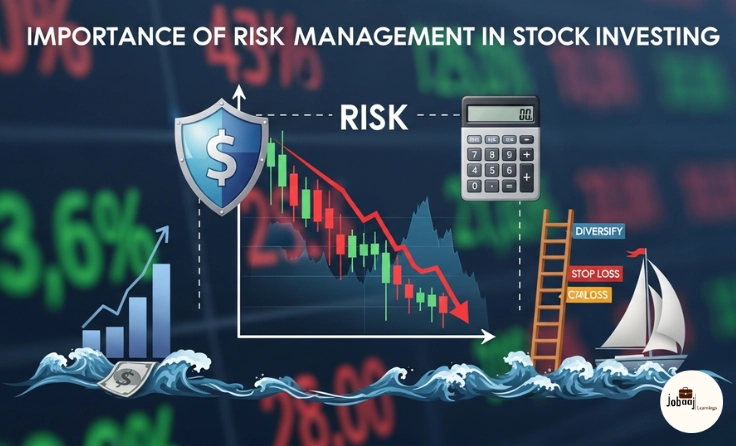
Risk management isn’t just about protecting your investment; it’s about making sure that your portfolio can withstand the ups and downs of the market. Every investor, whether experienced or a beginner, needs to understand the importance of managing risk. Without a solid risk management strategy, even the most promising investment can turn into a costly mistake.
Exploring a career in Investment Banking? Apply now!
In this blog, we’ll explore why risk management is essential in stock investing, the strategies you can use to mitigate risk, and how to approach investing with a well-balanced mindset that focuses on long-term success and consistent growth.
Why Is Risk Management Important in Stock Investing?
Stock investing involves the potential for high rewards, but it also comes with significant risks. The stock market is inherently volatile, meaning prices can fluctuate unpredictably due to various factors, such as economic changes, political events, or even market sentiment. While some investors focus on maximizing their returns, understanding and managing risk is just as crucial.
Without risk management, an investor can find themselves exposed to significant losses. Think about it: if you’re not prepared for a market downturn, you might panic and make impulsive decisions that hurt your portfolio in the long run. However, if you manage your risk wisely, you can ride out the storms and still come out ahead.
The Relationship Between Risk and Return
The principle of risk and return is foundational to investing. Generally speaking, the higher the potential return, the higher the risk involved. For example, investing in a start-up tech company might offer massive potential returns, but it also comes with the risk of the company failing, which could lead to significant losses.
On the other hand, blue-chip stocks, or stocks from well-established, financially stable companies, tend to have lower returns but are also less risky. Understanding this balance is crucial to making informed decisions about where to place your money.
Key Strategies for Managing Risk in Stock Investing
Risk management in stock investing is not about avoiding risk entirely, but rather about controlling and minimizing the risks to a level you’re comfortable with. Here are some key strategies to help manage risk in your stock investments:
1. Diversification
One of the most powerful risk management strategies is diversification. The idea is simple: don’t put all your eggs in one basket. By investing in different stocks across various sectors, industries, and even geographical regions, you can reduce the impact of a poor-performing stock on your overall portfolio.
For example, if you only invest in technology stocks, a downturn in the tech sector could severely impact your portfolio. However, if you also have investments in healthcare, consumer goods, or real estate, the losses from tech may be offset by gains in other sectors.
Diversification doesn’t just apply to the types of stocks you own, but also the types of assets. You might consider including bonds, real estate, or even commodities like gold to reduce the overall volatility of your portfolio.
2. Setting Stop Losses
A stop loss is an order placed with your broker to sell a stock if its price falls to a certain point. This is an essential tool for managing risk because it automatically limits your losses in case the market takes an unexpected downturn.
For instance, let’s say you buy a stock at $100 per share, and you set a stop loss at $90. If the stock drops to $90, the stop loss triggers, and the stock is sold. This ensures that you don’t lose more than a certain amount on the investment, regardless of how much the stock price falls.
Setting stop losses is a great way to protect yourself from large, unexpected losses while still giving your investments room to grow.
3. Position Sizing
Position sizing refers to how much of your total portfolio you allocate to a particular stock or investment. Managing your position size is critical because investing too much in a single stock increases your exposure to risk. If that stock performs poorly, it could hurt your portfolio significantly.
A good rule of thumb is to limit the size of any single investment to a percentage of your total portfolio, depending on your risk tolerance. For example, if you have a $100,000 portfolio, you might decide that no single investment should represent more than 5% of your total portfolio, which means you wouldn’t invest more than $5,000 in a single stock.
4. Risk/Reward Ratio
Every trade or investment should have an established risk/reward ratio. This is the amount of risk you’re willing to take for a potential reward. For instance, if you’re willing to risk a 10% loss on a stock, but you expect a 30% return, the risk/reward ratio is 1:3.
Having a clear risk/reward ratio helps you determine whether a potential investment is worth the risk. Generally, a risk/reward ratio of 1:2 or higher is considered favorable, meaning the potential reward outweighs the risk.
5. Regular Portfolio Review
Risk management isn’t a one-time process; it requires regular monitoring and adjustment. Stock markets are dynamic, and a stock that seemed like a good investment a few months ago may no longer align with your risk tolerance or financial goals. Regularly reviewing your portfolio helps you make necessary adjustments, such as selling underperforming stocks or reallocating funds to different sectors.
A portfolio review also ensures that your investments remain aligned with your long-term goals. For example, if you’re nearing retirement, you may want to shift from higher-risk stocks to more stable investments like bonds or dividend-paying stocks.
Emotional Control and Risk Management
One of the hardest aspects of risk management is managing emotions. It’s easy to get caught up in the excitement when the market is booming or to panic when prices start to fall. Emotional decision-making can lead to impulsive actions like selling off stocks too soon or buying in during a market bubble.
This is where having a solid risk management plan comes in handy. A well-thought-out strategy helps you stay calm and stick to your plan, even when the market gets turbulent. It’s about making data-driven decisions and not letting fear or greed control your actions.
Conclusion
In the world of stock investing, risk management is not just an option—it’s a necessity. By taking proactive steps to understand and manage risk, you can protect your investments from significant losses while still positioning yourself for potential growth. The key is to find the right balance between risk and reward, diversify your portfolio, and set clear guidelines for when to buy, sell, or adjust your positions.
Remember, stock investing is a long-term game. While you can’t predict the market, you can control how much risk you’re willing to take and how you respond to market changes. By mastering the art of risk management, you’ll be better equipped to navigate the ups and downs of the market and build a resilient investment portfolio that can weather any storm.
Dreaming of a Finance career? Start with Investment Banking Certification with Jobaaj Learnings.
Frequently asked questions
What is risk management in stock investing?
Risk management in stock investing involves identifying, analyzing, and mitigating risks associated with investing in the stock market. It helps protect your investments from potential losses by using strategies like diversification and setting stop losses.
Why is risk management important in stock investing?
Risk management is crucial because the stock market is volatile, and prices can fluctuate unexpectedly. By managing risk, investors can protect themselves from significant losses and make more informed decisions about where to allocate their funds.
What is a stop loss and how does it help manage risk?
A stop loss is an order placed with your broker to sell a stock once it reaches a specific price, helping limit losses. It’s a tool to automatically exit a trade if the stock moves in an unfavorable direction, minimizing risk.
How can diversification reduce risk in stock investing?
Diversification involves spreading your investments across different asset classes, sectors, and regions. This reduces the risk of your entire portfolio being affected by the poor performance of a single stock or sector.
What is the risk/reward ratio and why is it important?
The risk/reward ratio helps traders evaluate the potential return of an investment relative to the risk. A favorable risk/reward ratio ensures that the potential return outweighs the risk involved in making the trade.
How often should I review my portfolio to manage risk effectively?
It’s important to review your portfolio regularly at least quarterly to ensure that it aligns with your financial goals and risk tolerance. Adjust your investments as necessary to maintain a balanced and diversified portfolio.

Join 5,00,000+ Subscribers
Be a part of our ever growing community.