Categories






































Low-Fidelity vs High-Fidelity Prototypes: Key Differences and How to Use Them

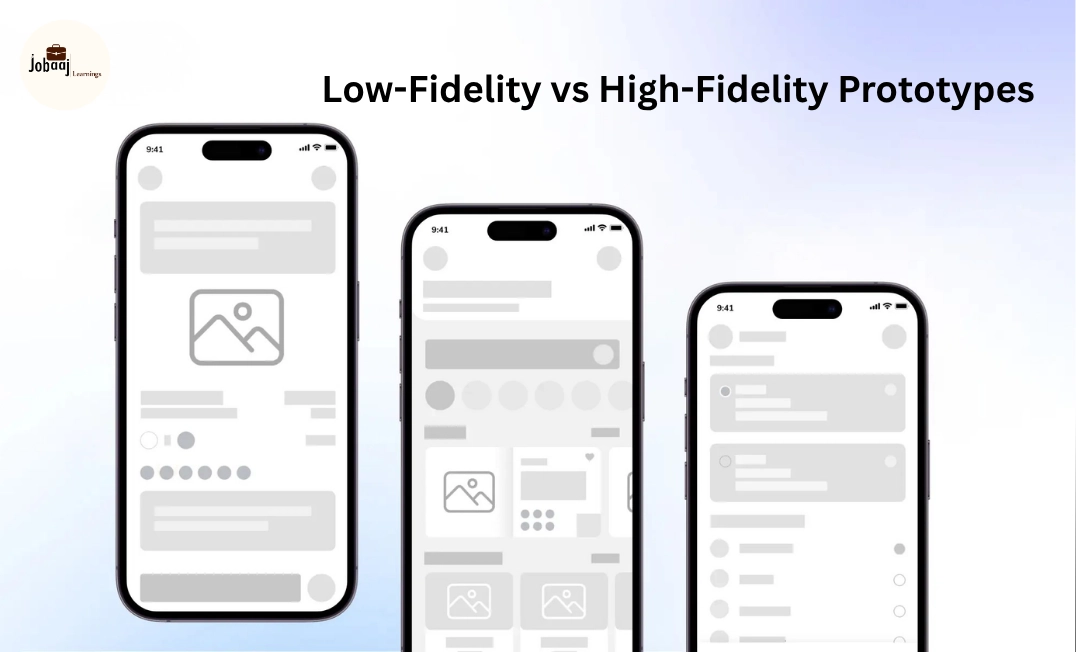
In the world of user experience (UX) design, prototypes play a crucial role in transforming ideas into tangible, testable concepts. These prototypes act as interactive models that simulate the functionality and appearance of the final product. However, not all prototypes are created equal. Two common types of prototypes are low-fidelity and high-fidelity prototypes, each serving distinct purposes in the design and development process.
Exploring a career in Web Development? Apply now!
In this blog post, we will explore the key differences between low-fidelity and high-fidelity prototypes, understand their uses in product development, and how they can impact the user experience.
Low-Fidelity Prototypes
Low-fidelity prototypes are often the starting point in the design process. They are basic, simple representations of a product or app’s interface, designed to focus on layout, structure, and overall flow rather than details. These prototypes help designers and stakeholders visualize the user experience at an early stage.
Characteristics:
- Simplicity: Low-fidelity prototypes are typically made with paper, sketches, or basic wireframe tools. They don’t include much detail and are often rough drafts.
- Focus on Structure: These prototypes focus on the layout and interaction flow, such as where buttons and menus will be placed.
- Cost-Effective and Quick: Due to their simplicity, low-fidelity prototypes are inexpensive and quick to create, allowing designers to iterate faster.
- Low-Interactivity: These prototypes are often static and might not allow for interaction. If they do, the interaction is limited and meant to showcase basic functionality.
Benefits:
- Faster Iterations: Because they are quick to create, low-fidelity prototypes allow for rapid iterations and feedback.
- Easy to Modify: Since they are made with basic tools, making changes is easy and doesn’t require much effort or time.
- Cost-Effective: Low-fidelity prototypes are a budget-friendly way to test ideas without investing too much time or resources.
High-Fidelity Prototypes
High-fidelity prototypes, on the other hand, are more advanced and detailed versions of a product or app’s design. These prototypes look and behave like the final product, showcasing the user interface (UI) in great detail and simulating the user experience more accurately. High-fidelity prototypes are used in later stages of product development to test the functionality, design, and overall usability of the product.
Characteristics:
- Detailed Design: High-fidelity prototypes feature realistic visuals, fonts, colors, and graphics that resemble the final product.
- Interactive Functionality: These prototypes include interactive elements such as buttons, forms, and navigations, giving users a more authentic experience.
- Closer to Final Product: They closely resemble the final product in both design and interaction, allowing for comprehensive user testing.
- Created with Advanced Tools: High-fidelity prototypes are made using design and prototyping software like Figma, Sketch, or Adobe XD.
Benefits:
- Realistic User Testing: High-fidelity prototypes are excellent for usability testing as they offer a true-to-life representation of the product.
- Clear Visual Representation: They give stakeholders and developers a clear idea of the final design and how it will function.
- User Feedback on Detailed Features: High-fidelity prototypes allow you to collect specific feedback on design elements, interactions, and features that are likely to be present in the final product.
Key Differences Between Low-Fidelity and High-Fidelity Prototypes
1. Design Complexity
- Low-fidelity prototypes: Simple, basic designs that focus on structure and layout without much attention to aesthetics or details.
- High-fidelity prototypes: Detailed designs that resemble the final product, with high visual quality, realistic content, and interactive elements.
2. Purpose and Stage of Development
- Low-fidelity prototypes: Ideal for early-stage development, brainstorming, and testing overall structure, layout, and user flow.
- High-fidelity prototypes: Used in later stages of product development for testing visual design, interactivity, and user experience with more accurate feedback.
3. Time and Cost of Creation
- Low-fidelity prototypes: Quick to create and inexpensive, often done with simple materials like paper or wireframing tools.
- High-fidelity prototypes: Time-consuming and resource-heavy, typically created using specialized software with attention to detail.
4. Interactivity and User Experience
- Low-fidelity prototypes: Limited interactivity, focusing on the basic flow and functionality of the design.
- High-fidelity prototypes: Fully interactive, with buttons, forms, and other elements that mimic the actual user experience.
5. User Feedback and Testing
- Low-fidelity prototypes: Useful for gathering early-stage feedback on layout and general structure.
- High-fidelity prototypes: Best for gathering feedback on specific visual design elements, interactions, and user flows.
When to Use Low-Fidelity vs High-Fidelity Prototypes
Low-Fidelity Prototypes:
- Early stages of design: When you are still working out the basic layout and interaction flow.
- Quick iteration: When you need to test and modify ideas rapidly without spending too much time on details.
- Exploring multiple concepts: When you want to test different ideas and structures before committing to a detailed design.
High-Fidelity Prototypes:
- Later stages of design: When the layout and structure are already defined, and you need to fine-tune visual design and interactions.
- Usability testing: When you need to test the full user experience and functionality of the app or website.
- Stakeholder presentations: When you need to showcase a realistic representation of the final product to clients or investors.
Conclusion
Understanding the differences between low-fidelity and high-fidelity prototypes is crucial for product designers. Both types of prototypes serve distinct purposes at different stages of the design process. Low-fidelity prototypes are great for quickly testing concepts and gathering initial feedback, while high-fidelity prototypes are essential for testing and refining user interactions, designs, and features before launch. By knowing when to use each type of prototype, designers can streamline the development process and ensure a better final product.
Dreaming of a Web Development Career? Start with Web Development Certificate with Jobaaj Learnings.
Frequently asked questions
What is the difference between low-fidelity and high-fidelity prototypes?
Low-fidelity prototypes are basic, quick-to-create models that focus on layout and structure, while high-fidelity prototypes closely resemble the final product with detailed design and interactivity for user testing.
When should I use low-fidelity prototypes?
Low-fidelity prototypes should be used in the early stages of design to quickly test ideas, layout, and user flow. They are perfect for brainstorming and gathering initial feedback.
When should I use high-fidelity prototypes?
High-fidelity prototypes should be used in later stages of design when you need to test detailed interactions, visual design, and overall user experience before launching the product.
Can low-fidelity prototypes be interactive?
Yes, low-fidelity prototypes can have limited interactivity, such as clickable buttons or basic navigation, but their primary focus is on structure rather than the user experience.
What tools can I use to create low-fidelity and high-fidelity prototypes?
For low-fidelity prototypes, tools like Balsamiq or simple paper sketches are commonly used. For high-fidelity prototypes, tools like Figma, Adobe XD, and Sketch are popular for their detailed design and interactivity features.
Join 5,00,000+ Subscribers
Be a part of our ever growing community.