Categories








































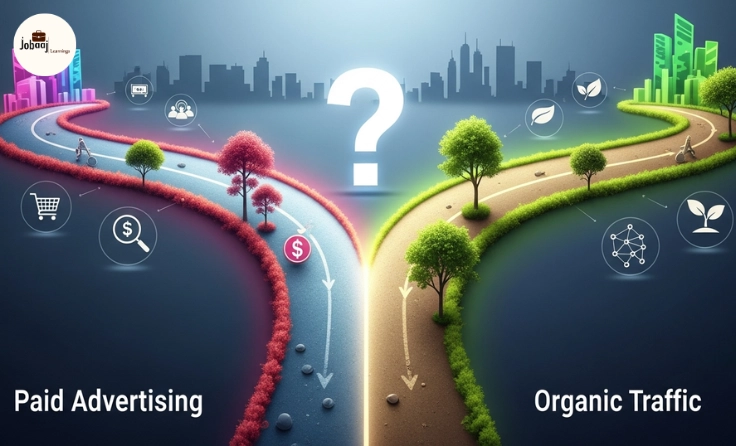
When it comes to driving traffic to your website, businesses often face a critical decision: Paid advertising or organic traffic? Both methods can help you reach your target audience, but each comes with its own set of benefits and challenges.
Paid advertising offers instant traffic and results, but it requires ongoing investment. On the other hand, organic traffic is built over time through SEO efforts, offering long-term benefits but requiring patience and consistency.
In this article, we’ll explore both paid advertising and organic traffic, examining the pros, cons, and key differences to help you determine which approach is best suited for your business.
What is Paid Advertising?
Paid advertising involves paying for visibility on platforms like Google, Facebook, Instagram, LinkedIn, or other ad networks. You create ads, set a budget, and then your ads are shown to your target audience.
Common types of paid advertising include:
-
Search Ads: Ads that appear when users search for specific keywords (e.g., Google Ads).
-
Display Ads: Banner or image-based ads that show up on other websites.
-
Social Media Ads: Ads placed on social platforms such as Facebook, Instagram, or LinkedIn.
-
Video Ads: Ads placed before or during YouTube videos.
Advantages of Paid Advertising:
-
Instant Results: As soon as your ads are live, they’re shown to your targeted audience. You can start seeing traffic within minutes of launching your campaign.
-
Targeting Power: Paid advertising allows you to target your audience precisely. You can select demographics like age, gender, location, interests, and more to ensure that your ads reach the most relevant people.
-
Control: You have full control over your budget, ad copy, placement, and targeting. You can pause, adjust, or scale your campaigns based on performance in real-time.
Challenges of Paid Advertising:
-
Costs Add Up: Paid advertising can be expensive, especially in competitive industries. Without careful management, your budget can be drained quickly, and traffic will stop as soon as you stop paying.
-
Ongoing Investment: To maintain traffic, you need to keep investing in ads. Unlike organic traffic, which continues to generate visits without additional spending, paid traffic requires constant financial investment.
What is Organic Traffic?
Organic traffic refers to visitors who come to your website naturally, as a result of search engines ranking your content. This is the traffic you earn through Search Engine Optimization (SEO) and other free channels like social media shares, referrals, or direct visits.
When people search for topics related to your business or products, search engines like Google crawl through websites and show them the most relevant content. If your website is properly optimized for SEO, your pages can rank higher in search engine results, driving free traffic over time.
Advantages of Organic Traffic:
-
Long-Term Strategy: While it takes time to see significant results, organic traffic keeps flowing even when you’re not actively paying for it. Once your content ranks, it can continue to bring in visitors for months or even years.
-
Credibility: Users tend to trust organic results more than ads because they perceive them as more authentic. Ranking naturally in search engines shows your website is relevant, trustworthy, and valuable to your audience.
-
Cost-Effective: Unlike paid ads, organic traffic doesn’t require constant investment. The primary costs are your time or the investment in an SEO team or content creation.
Challenges of Organic Traffic:
-
Takes Time: Building up organic traffic takes time. SEO efforts can take several months before you start ranking and seeing meaningful traffic.
-
Requires Ongoing Effort: To keep your organic rankings high, you’ll need to continue producing high-quality content, building backlinks, and optimizing your website over time.
-
Highly Competitive: Depending on your industry, ranking for popular keywords can be highly competitive. It’s not always easy to rank in the top spots for keywords with high search volumes.
Paid Advertising vs. Organic Traffic: Key Differences
Let’s break down the key differences between paid advertising and organic traffic to help you decide which approach is best for your business.
1. Speed
Paid advertising gives you immediate results. As soon as you launch your ads, your website will start receiving traffic. In contrast, organic traffic takes time to build. SEO requires consistent effort over months before you start seeing significant traffic, and it’s a gradual process.
2. Cost
Paid ads require a budget. You’ll need to pay per click, impression, or conversion depending on the platform you choose. As long as you run the ads, your website will receive traffic. Once you stop paying, however, the traffic will cease.
Organic traffic, on the other hand, is free in the long run. While you’ll need to invest time, effort, and possibly money in SEO or content marketing, once your content ranks well, it continues to attract traffic without ongoing costs. However, achieving that first page ranking takes time and patience.
3. Control
Paid advertising offers complete control over your audience targeting. You can decide exactly who will see your ads based on factors like age, gender, interests, and location. You also have control over your budget and ad creative.
Organic traffic doesn’t offer the same level of control. You can optimize your website and content to appeal to your target audience, but the search engines decide where your content ranks. However, through consistent SEO practices, you can gain more control over which keywords and topics bring in traffic.
4. Longevity
Paid ads provide instant traffic, but once you stop paying for ads, the traffic stops. Organic traffic, however, is more sustainable. After you achieve high rankings in search results, your content can continue to attract visitors without any additional cost.
5. Trust and Credibility
Users tend to trust organic results more than ads. Being on the first page of Google naturally conveys authority and relevance. Paid ads, while effective, can sometimes be seen as less trustworthy since users know they’re being paid to appear at the top.
Which Is Right for Your Business?
Choosing between paid advertising and organic traffic largely depends on your business goals, timeline, and budget. Here’s a simple guide to help you decide:
When Should You Use Paid Advertising?
-
Immediate traffic needed: If you’re launching a product or need quick visibility, paid ads can give you an immediate boost.
-
Targeting specific audiences: If you need to reach a highly specific audience quickly (based on demographics, interests, etc.), paid ads are ideal.
-
Testing campaigns: Paid advertising is a great way to test different messages, images, or offers without committing to long-term content creation or SEO work.
-
Seasonal promotions or offers: For time-sensitive promotions, paid ads are perfect for driving immediate traffic and sales.
When Should You Focus on Organic Traffic?
-
Long-term sustainability: If you’re building a business for the long haul, organic traffic is a more sustainable solution. It provides long-term value once you’ve put in the effort.
-
Limited budget: If you have limited funds, investing in content marketing and SEO can generate traffic without the need for continuous ad spend.
-
Establishing authority and credibility: Organic content helps you build trust with your audience over time, which is essential for credibility in many industries.
-
Content-driven business: If your business model revolves around content (e.g., blogs, videos, tutorials), organic traffic is crucial for long-term growth.
Conclusion
Both paid advertising and organic traffic have their unique strengths. Paid advertising gives you quick visibility and control, but it comes with a price. Organic traffic takes time and effort to build but offers long-term, cost-effective results.
Ideally, many businesses combine both strategies. Paid ads can help you gain immediate traffic, while organic traffic can provide the sustainable growth your business needs over time. By using a mix of both, you can maximize your reach, target the right audience, and continue to build your online presence in a strategic, cost-efficient way.
Frequently asked questions
What is the difference between paid advertising and organic traffic?
Paid advertising involves paying for traffic, while organic traffic is earned through SEO efforts like content creation and keyword optimization. Paid ads deliver immediate results, whereas organic traffic takes time to build but offers long-term benefits.
Which is more cost-effective, paid advertising or organic traffic?
Organic traffic is more cost-effective in the long run because it doesn’t require continuous payments. However, it takes time and effort to build. Paid advertising requires ongoing investment but offers immediate results.
Can I use both paid advertising and organic traffic for my website?
Yes, many businesses use a combination of both strategies. Paid ads can provide immediate traffic, while organic traffic can build a strong, sustainable online presence over time.
How long does it take to see results from organic traffic?
It can take several months to start seeing significant results from organic traffic. SEO requires time to rank content and build authority, while paid ads can provide immediate results.
Is paid advertising suitable for all businesses?
Paid advertising can benefit businesses that need quick results, are targeting specific audiences, or are promoting time-sensitive offers. However, businesses on a budget or those looking for long-term growth should also focus on organic traffic.
How can I measure the success of paid advertising vs organic traffic?
You can measure the success of paid advertising using metrics like CTR, CPC, and ROI. For organic traffic, you can measure keyword rankings, traffic growth, and engagement metrics such as time on page and bounce rate.

Join 5,00,000+ Subscribers
Be a part of our ever growing community.