Categories








































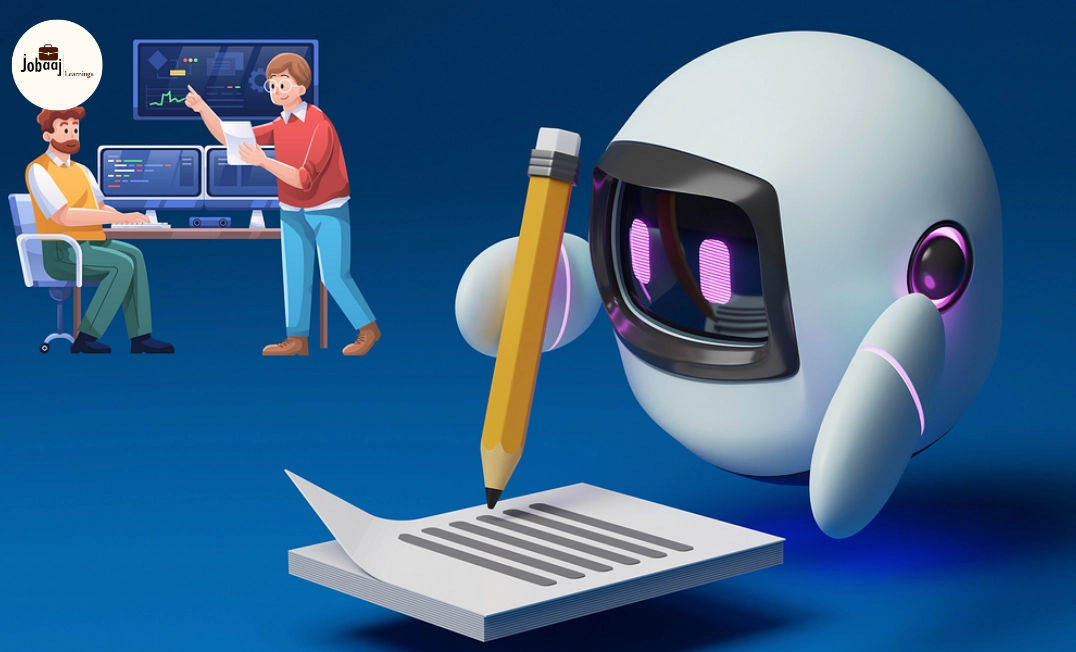
Artificial intelligence has created an entirely new category of technology careers. A few years ago, most people had never heard of roles like Prompt Engineer, AI Specialist or Generative AI Consultant.
Today, companies are exploring AI tools to automate tasks, improve customer experiences and build smarter products. This shift has created demand for professionals who understand how to communicate effectively with AI systems and help businesses get better results from generative AI.
That is where Prompt Engineers come in.
However, Prompt Engineering is often misunderstood. It is not simply writing commands for ChatGPT. A professional Prompt Engineer understands AI behaviour, tests different approaches, designs AI workflows and helps organisations use AI more effectively.
As AI adoption grows, the role is evolving from simple prompt writing into a broader AI optimisation career.
Prompt Engineer Salary in India in 2026
The salary of a Prompt Engineer depends on several factors:
- Experience level
- AI knowledge
- Technical skills
- Industry
- Company size
- Ability to build AI solutions
Since Prompt Engineering is still an emerging field, salary ranges vary significantly.
Fresher Prompt Engineer Salary
Professionals entering AI roles with basic prompt engineering knowledge can expect:
₹5 lakh – ₹10 lakh per year
Freshers are usually expected to understand:
- Generative AI tools
- AI concepts
- Basic automation
- Communication with AI models
- Problem-solving
Candidates with programming knowledge or industry expertise may have better opportunities.
Mid-Level Prompt Engineer Salary
Professionals with experience in AI workflows, automation and business applications can earn:
₹10 lakh – ₹25 lakh per year
At this stage, companies look for people who can:
- Improve AI output quality
- Build reusable AI workflows
- Integrate AI into business processes
- Analyse AI performance
Senior Prompt Engineer Salary
Experienced AI professionals working on enterprise-level AI solutions can earn:
₹25 lakh – ₹50 lakh+ per year
Senior professionals often work on:
- AI strategy
- Large language model applications
- AI implementation
- Team training
- AI product development
Higher salaries are generally available in technology companies, consulting firms and AI-focused startups.
Prompt Engineer Salary Based on Company Type
Salary also depends on where you work.
IT Services Companies
Large IT companies are increasingly building AI consulting and automation teams.
Typical range:
₹6 lakh – ₹20 lakh per year
Roles may involve:
- AI implementation
- Business automation
- AI consulting
Product-Based Technology Companies
Companies building AI-powered products usually offer higher packages.
Typical range:
₹10 lakh – ₹40 lakh+ per year
These roles often require:
- Technical understanding
- Product thinking
- AI workflow development
AI Startups
AI startups may offer strong growth opportunities because they work directly on emerging technologies.
Salary depends heavily on:
- Funding stage
- Role complexity
- Candidate expertise
What Does a Prompt Engineer Actually Do?
A Prompt Engineer works on improving the interaction between humans and AI systems.
Their responsibilities include:
- Designing effective prompts
- Testing AI responses
- Improving accuracy
- Creating AI workflows
- Reducing AI errors
- Building prompt libraries
- Working with AI models
For example:
A company using AI for customer support may need prompts that help AI answer customers accurately.
A marketing company may need AI systems that generate content matching its brand voice.
A software company may use prompt engineering to improve AI coding assistants.
The goal is simple:
Make AI produce more reliable and useful results.
Job Opportunities in Prompt Engineering
Prompt Engineering is not limited to one job title.
As companies adopt AI, related career opportunities are expanding.
1. Prompt Engineer
The most direct role.
Responsibilities:
- Designing prompts
- Testing AI outputs
- Improving AI responses
- Creating AI workflows
Common industries:
- Technology
- Marketing
- Consulting
- SaaS companies
2. Generative AI Specialist
Generative AI Specialists help companies implement AI solutions.
They work on:
- AI tools
- Automation systems
- AI-based applications
- Business workflows
This role requires broader AI knowledge beyond prompts.
3. AI Automation Specialist
Companies use AI to automate repetitive processes.
AI Automation Specialists create systems that combine:
- AI tools
- Business workflows
- Automation platforms
Examples:
- Automated customer support
- AI content workflows
- Research automation
4. AI Product Specialist
AI products need professionals who understand both technology and users.
AI Product Specialists work on:
- AI feature design
- User experience
- Product improvements
- AI capabilities
This role is suitable for people interested in both business and technology.
5. AI Consultant
AI consultants help organisations understand where and how they should use AI.
Their work includes:
- Identifying AI opportunities
- Designing AI strategies
- Improving business processes
Strong communication and business knowledge are important for this role.
6. LLM Application Developer
Professionals with programming skills can move into building applications powered by large language models.
They work on:
- AI chatbots
- AI assistants
- Retrieval-based AI systems
- AI integrations
This role requires stronger technical skills compared to traditional prompt engineering.
Industries Hiring Prompt Engineering Professionals
AI adoption is expanding across industries.
Technology Companies
Tech companies use AI for:
- Software development
- Customer solutions
- Product improvements
Marketing and Advertising
AI professionals help companies with:
- Content generation
- Campaign ideas
- Market research
- Personalisation
Healthcare
Healthcare organisations are exploring AI for:
- Research assistance
- Documentation
- Patient support
Finance
Banks and financial companies use AI for:
- Customer service
- Risk analysis
- Data processing
Education
AI is creating opportunities in:
- Personalised learning
- AI tutors
- Automated assessments
Skills Required to Become a Prompt Engineer
Prompt Engineering requires a combination of technical and creative abilities.
Understanding Large Language Models
A good Prompt Engineer understands:
- How AI models generate responses
- AI limitations
- Hallucinations
- Context handling
This helps create better AI interactions.
Strong Communication Skills
Prompt engineering is based on giving clear instructions.
Professionals need to understand:
- How to explain requirements
- How to structure information
- How to guide AI responses
Clear thinking leads to better AI results.
AI Tool Knowledge
Professionals should be comfortable with:
- ChatGPT
- Claude
- Gemini
- AI automation tools
Understanding different AI platforms helps choose the right solution.
Basic Programming Skills
Coding is not mandatory for every Prompt Engineer role, but it creates an advantage.
Useful skills:
- Python basics
- APIs
- Automation
- Data handling
Technical knowledge helps build advanced AI workflows.
Domain Expertise
AI becomes more valuable when combined with industry knowledge.
Examples:
- Marketing + AI
- Finance + AI
- Healthcare + AI
- Software Development + AI
Professionals who combine AI skills with existing expertise often have stronger career opportunities.
Is Prompt Engineering a Long-Term Career?
This is one of the biggest questions around this profession.
The simple answer:
The basic version of prompt writing may become a common skill.
Just like using spreadsheets became a normal workplace skill, using AI tools will likely become common across professions.
However, advanced AI roles will continue growing.
Future opportunities will focus more on:
- AI workflow design
- AI optimisation
- AI application development
- Human-AI collaboration
The career is likely to evolve rather than disappear.
Prompt Engineer vs AI Engineer: Understanding the Difference
Prompt Engineer
Focuses on:
- Improving AI responses
- Designing AI interactions
- Creating AI workflows
AI Engineer
Focuses on:
- Building AI models
- Machine learning systems
- Data pipelines
- AI infrastructure
AI Engineers require deeper programming and mathematical knowledge.
Prompt Engineers focus more on applying AI effectively.
How to Start a Career in Prompt Engineering
A practical approach:
Step 1: Learn AI Fundamentals
Understand:
- Generative AI
- Large language models
- AI limitations
Step 2: Experiment With AI Tools
Practise creating:
- Content workflows
- AI assistants
- Research systems
Step 3: Build Projects
Examples:
- AI chatbot
- AI research assistant
- Content automation system
- Business workflow automation
Step 4: Combine AI With Another Skill
Examples:
- Marketing + AI
- Data Analytics + AI
- Programming + AI
- Design + AI
Specialisation creates stronger career value.
Future Scope of Prompt Engineering
The future of Prompt Engineering will be connected with the wider AI industry.
Growing opportunities may include:
- AI Specialist
- AI Consultant
- AI Product Manager
- AI Automation Expert
- Generative AI Developer
- AI Solutions Architect
The biggest opportunities will come from professionals who understand not only prompts but also how businesses can use AI effectively.
Final Thoughts
Prompt Engineering represents one of the earliest career opportunities created by the generative AI revolution.
While the role will continue changing, the demand for professionals who can help organisations use AI effectively will continue growing.
The highest-value Prompt Engineers will not simply know how to write prompts.
They will understand AI systems, business problems and how to create solutions using artificial intelligence.
For students and professionals interested in AI careers, Prompt Engineering can be a strong starting point, especially when combined with technical knowledge and industry expertise.
Ready to Dive into the World of Generative AI? Start your journey with the Generative AI Program from Jobaaj Learnings!
Frequently asked questions
What is the salary of a Prompt Engineer in India?
The salary of a Prompt Engineer in India can range from around ₹5 lakh per year for beginners to ₹50 lakh+ for experienced professionals working on advanced AI solutions. Salary depends on AI knowledge, technical skills, industry and company requirements.
Is Prompt Engineering a high-paying career?
Prompt Engineering can offer strong earning potential, especially when combined with AI, automation, programming or industry expertise. Companies value professionals who can use AI to improve productivity and solve business problems.
Can freshers become Prompt Engineers?
Yes, freshers can enter Prompt Engineering by learning AI fundamentals, practising with generative AI tools and building projects. Having additional skills like programming, analytics or domain knowledge can improve job opportunities.
Will Prompt Engineering jobs disappear in the future?
Basic prompt writing may become a common skill, but advanced AI roles involving workflow design, AI optimisation and AI implementation are expected to continue growing as companies adopt artificial intelligence.
Which skills are needed to become a Prompt Engineer?
Important skills include AI understanding, communication, problem-solving, experimentation, domain knowledge and basic technical skills. Programming knowledge and automation skills can provide an additional advantage.

Join 5,00,000+ Subscribers
Be a part of our ever growing community.