Categories














/content/learnings/assets/header/ManagementConsulting.svg)
/content/learnings/assets/header/InvestmentBanking.svg)



























/content/learnings/assets/header/programs/1.png)
/content/learnings/assets/header/programs/4.png)

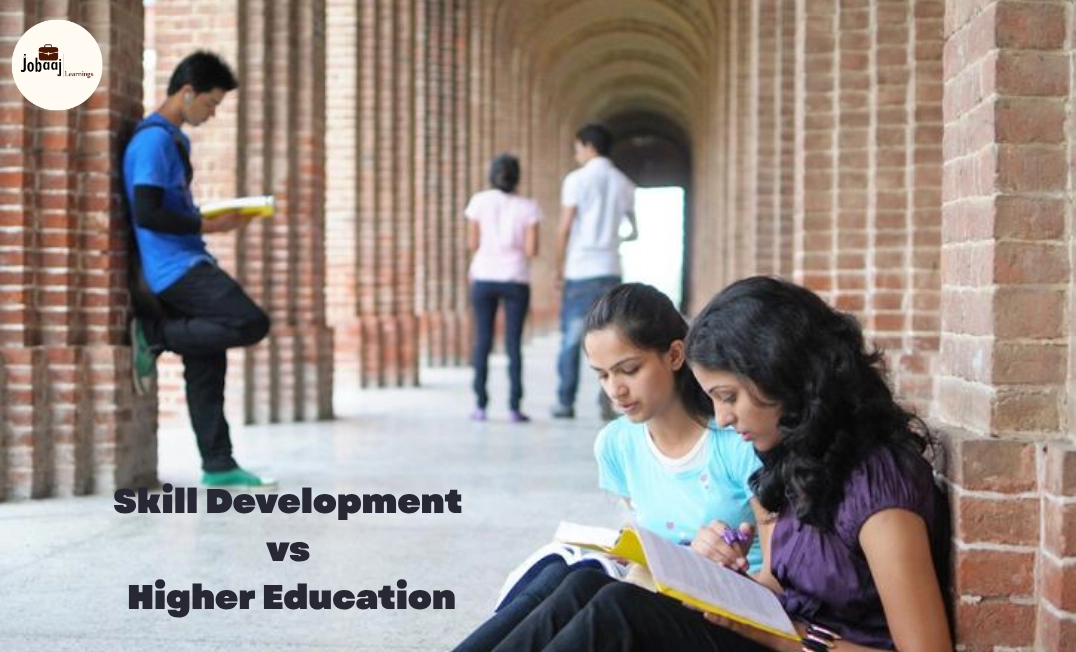
Imagine two candidates applying for the same job.
The first has a respected university degree but very little practical experience.
The second has completed several courses, built real projects and knows how to use the tools required for the job but does not have the same academic qualification.
Who gets hired?
Ten years ago, many people would have immediately chosen the degree holder.
Today, the answer is much less predictable.
Employers still value education, but they increasingly need people who can analyse problems, use technology, communicate effectively and produce results from day one.
The World Economic Forum's Future of Jobs Report 2025 estimates that around 39% of workers' existing skills could change or become outdated between 2025 and 2030. Analytical thinking remains employers' most sought-after core skill, while AI and big data, cybersecurity and technological literacy are among the fastest-growing skill areas.
Does that mean degrees are becoming useless?
Not at all.
In fact, India's higher-education framework itself is moving toward a model that combines academic knowledge with skill enhancement, internships, multidisciplinary study and practical learning. The UGC's undergraduate framework specifically includes Skill Enhancement Courses and summer internships within degree structures.
That tells us something important:
The future is probably not skills instead of education. It is education backed by usable skills.
What Higher Education Gives You That Short Courses Cannot Easily Replace
A university degree is not valuable merely because you receive a certificate at the end.
Done properly, higher education provides something harder to build through a collection of online courses:
depth.
A three- or four-year programme gives you time to understand:
- Fundamental concepts
- Theory
- Research
- Critical thinking
- Communication
- Subject-specific knowledge
- Teamwork
- Academic discipline
- Complex problem-solving
The UGC's undergraduate framework explicitly aims to develop capabilities such as critical thinking, creative thinking, communication and complex problem-solving alongside subject specialisation.
That foundation becomes especially important when your career gets more complex.
Learning Python syntax through a short course may help you start coding.
Understanding algorithms, databases, operating systems, mathematics and computer science principles can help you grow into more advanced technical work.
Similarly, learning Excel can help you analyse financial data.
A strong finance or commerce education can help you understand why the numbers behave the way they do.
Skills teach you how.
Education often helps explain why.
Some Careers Still Need Formal Education
This is where the popular statement “companies don't care about degrees anymore” becomes too simplistic.
There are careers where formal qualifications remain essential or extremely important.
Examples include areas such as:
- Medicine
- Law
- Architecture
- Scientific research
- Teaching and academia
- Engineering in certain specialised roles
- Regulated professional careers
You cannot replace years of structured medical education with a three-month healthcare certification and expect to become a doctor.
The same principle applies, to different degrees, across professions requiring deep technical knowledge, accreditation or regulatory eligibility.
For these careers:
Higher education comes first. Skills strengthen it afterward.
Where Skill Development Has the Advantage
Higher education has one major limitation:
The labour market can change faster than a university syllabus.
A technology that becomes important today may become a hiring requirement long before every college formally integrates it into its curriculum.
This is where skill development becomes powerful.
You can learn:
- Python
- SQL
- Power BI
- Financial Modelling
- Digital Marketing
- Cloud Computing
- Cybersecurity
- UI/UX Design
- Generative AI
- Data Analytics
- Video Editing
without completing another three-year degree.
India's Skill India Digital Hub itself is structured around skilling, upskilling, reskilling and lifelong learning, reflecting the growing importance of continuous learning throughout a career.
That flexibility matters because the skills employers value are changing quickly.
The World Economic Forum identifies AI and big data, networks and cybersecurity, and technological literacy among the fastest-growing skills through 2030. At the same time, human abilities such as creative thinking, resilience, leadership and lifelong learning are also becoming more important.
A person who stops learning immediately after graduating therefore risks becoming outdated even with an excellent degree.
Degree vs Skills: What Actually Gets You a Job?
Think about employability as three layers.
Layer 1: Qualification
This answers:
“Are you eligible to apply?”
Your degree may help you clear:
- Company eligibility rules
- Graduate recruitment criteria
- Entrance requirements
- Professional qualification requirements
- Higher-study admissions
Layer 2: Skills
This answers:
“Can you actually perform the work?”
For a Data Analyst role, that might mean:
Excel + SQL + Power BI + statistics
For Digital Marketing:
SEO + paid ads + analytics + content strategy
For Finance:
Excel + financial modelling + accounting + valuation
For Software Development:
Programming + DSA + databases + Git + projects
Layer 3: Evidence
This answers:
“Can you prove you have those skills?”
That evidence might be:
- Projects
- Internships
- Portfolio
- GitHub
- Case studies
- Freelance work
- Competitions
- Apprenticeships
- Previous job experience
This is where many students go wrong.
They collect qualifications but cannot demonstrate capability.
The strongest profile therefore looks more like:
Education + Skills + Evidence
rather than choosing only one of the three.
When Skills Can Matter More Than Another Degree
Suppose you already have a bachelor's degree and want to become a Data Analyst.
Would you necessarily need another three-year undergraduate programme?
Probably not.
A focused path covering:
Excel → SQL → Statistics → Power BI → Python → Projects
may improve your job readiness much faster.
The same principle can apply to careers such as:
- Digital Marketing
- UI/UX Design
- Web Development
- Data Analytics
- Sales
- Content
- Performance Marketing
- Video Production
- Certain cloud and IT roles
In such cases, a second general degree may provide less value than developing the specific skills employers are asking for.
This is where skill development wins on speed and relevance.
When Higher Education Is the Better Investment
Skill development should not become an excuse for skipping foundational education without thinking through the consequences.
Higher education is particularly useful when:
You Are Just Starting After Class 12
At 17 or 18, you probably do not know exactly what your career will look like at 30.
A degree gives you a broader foundation and keeps more pathways open.
You can specialise alongside it.
For example:
B.Com + Financial Modelling + CFA preparation
B.Tech + Cloud + AI projects
BBA + Digital Marketing + Analytics
BCA + DSA + Full-Stack Development
This is usually safer than betting your entire career on one short-term skill immediately after school.
Your Target Profession Requires Formal Qualifications
If your career has regulatory or academic entry requirements, skipping higher education may close the door completely.
You Want Postgraduate Education Later
Many master's programmes, MBAs and other postgraduate opportunities require a recognised bachelor's degree.
You Want Long-Term Career Flexibility
A particular software tool may disappear.
A strong understanding of mathematics, economics, computer science, management or another discipline can remain useful even as specific tools change.
The Problem With “Just Get a Degree”
The opposite mistake is equally common.
A student thinks:
“Once I finish B.Tech/BBA/B.Com/BCA, companies will hire me.”
Then placement season arrives.
The student has:
- No internship
- No portfolio
- No meaningful project
- Weak communication
- Limited software knowledge
- Little understanding of the role they are applying for
The degree may help them enter the recruitment process.
It cannot complete the interview for them.
The labour market increasingly rewards adaptable workers. The World Economic Forum reports that employers expect large-scale reskilling and upskilling needs through 2030 as technology changes job requirements.
This means graduation should not be viewed as the end of learning.
It is increasingly just the end of one phase.
The Problem With “Just Learn Skills”
There is another extreme on social media:
“Degrees are useless. Just learn skills online.”
That sounds attractive because it promises a faster route.
But it ignores several realities.
A six-week certification does not automatically make someone employable.
And completing 15 online certificates does not equal having 15 skills.
Employers can quickly discover whether you actually understand something.
The real value of skill development comes from:
Learn → Practise → Build → Apply → Receive feedback → Improve
not:
Watch videos → Download certificate → Add to LinkedIn
Skill development without practical application can become another form of theoretical education.
Certification Is Not the Same as Skill
This distinction deserves special attention.
Suppose two candidates both list:
Power BI
Candidate A completed a certificate but cannot create a dashboard independently.
Candidate B built three dashboards using real datasets and can explain:
- Data cleaning
- Relationships
- DAX
- Visualisation choices
- Business insights
Who actually has the skill?
Probably Candidate B.
So when learning any career skill, ask yourself:
“What can I build with this?”
not only:
“Which certificate will I receive?”
Which Is Better for Different Career Goals?
|
Career Goal |
Better Approach |
|
Doctor |
Higher education essential |
|
Lawyer |
Higher education essential |
|
Research scientist |
Higher education essential |
|
Software developer |
Degree + strong technical skills |
|
Data analyst |
Degree + analytics skills |
|
Digital marketer |
Skills and results matter heavily |
|
UI/UX designer |
Skills + portfolio matter heavily |
|
Chartered professional career |
Required professional education + skills |
|
Management/consulting |
Education + problem-solving + experience |
|
Finance |
Education/professional qualification + practical skills |
|
Entrepreneur |
Skills and execution can outweigh formal credentials |
|
Skilled technical trade |
Vocational/skill training may be more relevant |
|
Career switcher |
Targeted reskilling often makes more sense than another general degree |
The answer changes because different careers have different barriers to entry.
What If You Are Already a Graduate?
If you already hold a recognised degree but are struggling to find a job, immediately doing another general degree may not always solve the problem.
First identify the gap.
Ask:
What jobs am I targeting?
Then:
What are those job descriptions repeatedly asking for that I cannot currently demonstrate?
If ten Data Analyst vacancies mention SQL and Power BI and you know neither, the problem may not be that you need another degree.
You may need:
skill development + projects + internship exposure
Similarly, if you are working in finance but want FP&A roles, strengthening:
- Advanced Excel
- Financial modelling
- Budgeting
- Forecasting
- Power BI
may generate more immediate career value than collecting an unrelated academic qualification.
What If You Are a Working Professional?
For working professionals, continuous skill development becomes even more important.
You cannot return to university every time technology changes.
Instead, careers increasingly involve repeated cycles of:
Learn → Apply → Update → Reskill
This aligns with the broader labour-market shift identified by the World Economic Forum: workers are expected to experience substantial changes in the skills required for their jobs before 2030.
A degree may get older.
Your skills should not.
Higher Education Is Also Becoming More Skill-Based
One reason the “education vs skills” debate feels outdated is that modern higher education is gradually trying to combine the two.
UGC's undergraduate framework includes:
- Major subjects
- Minor subjects
- Multidisciplinary courses
- Ability Enhancement Courses
- Skill Enhancement Courses
- Value-added courses
- Summer internships
- Research components in applicable four-year programmes
In April 2025, UGC also asked universities to keep curricula updated and highlighted areas including skill modules, apprenticeships and internships as part of making education more responsive to changing needs.
That is probably where education is heading:
Less separation between learning and doing.
The Best Career Strategy: Build a T-Shaped Profile
A useful way to think about your career is to build both breadth and depth.
Your degree provides broader foundations.
Then develop deep practical capability in one valuable area.
For example:
Commerce Student
B.Com + Finance + Excel + Financial Modelling + Power BI
Computer Science Student
B.Tech/BCA + Programming + DSA + Cloud + Projects
Management Student
BBA + Excel + Analytics + Digital Marketing + Internship
Economics Student
Economics Degree + Statistics + Python + SQL + Data Analysis
Working Marketer
Experience + Performance Marketing + Analytics + AI tools
The goal is not to become average at 25 unrelated skills.
Build enough breadth to understand your field and enough depth to become valuable at something specific.
So, Should You Spend Money on a Degree or a Skill Course?
Before paying for either one, ask five questions:
1. Does my target career legally or practically require a degree?
If yes, higher education comes first.
2. Do employers in my target role demand specific practical tools?
If yes, add skill development.
3. Can I prove the skill through projects or work?
If not, the certificate alone may have limited value.
4. Will this course make me more employable or just add another credential?
There is a big difference.
5. Will the skill still be useful if one specific tool changes?
Prioritise transferable abilities such as analytical thinking, problem-solving, communication and learning ability alongside technical tools.
Final Verdict
If the question is: “Which is more important a degree or skills?”
the answer in 2026 is: Neither is enough in every situation.
Higher education provides: Foundation + credibility + structured knowledge + long-term options
Skill development provides: Practical ability + speed + specialisation + adaptability
For students just finishing school, a strong strategy is often: Degree + practical skill development from Year 1
Do not wait until your final semester to become employable.
For graduates struggling to enter the workforce: Targeted skills + projects + internships may matter more than collecting another general degree.
For experienced professionals: Continuous upskilling and reskilling become essential because the job itself will continue changing.
And for regulated professions: Formal education remains non-negotiable.
The strongest future career is therefore not built by choosing one side of the debate.
It is built by combining: Education → Skills → Experience → Continuous Learning
A degree can open the door.
Skills help you perform once you enter.
And the ability to keep learning is what helps you remain valuable when the job market changes again.
Frequently asked questions
Is skill development better than higher education?
Skill development can be more useful when you need practical, job-specific abilities quickly, while higher education provides deeper academic knowledge, formal credentials and broader long-term career options. For many careers, combining a recognised degree with relevant practical skills is the strongest approach.
Are skills more important than a degree for getting a job?
It depends on the profession. Skills and practical evidence can matter heavily in areas such as technology, digital marketing, design and analytics, while formal education remains essential or highly important in regulated and specialised professions. Many employers ultimately evaluate both eligibility and the ability to perform the job.
Is a degree still worth it in 2026?
Yes, a degree can still provide valuable subject knowledge, credibility, eligibility for postgraduate education and access to graduate recruitment. However, students should not rely on the degree alone. Internships, projects, communication abilities and relevant technical skills can significantly improve employability.
What skills should students learn alongside a degree?
The best skills depend on the intended career. Commonly valuable areas include Excel, data analysis, communication, AI tools, digital literacy, SQL, programming, financial modelling and presentation skills. Students should first identify their target role and then develop the skills employers repeatedly request for that role.
Should I do another degree or learn new skills after graduation?
If your target career requires an additional academic qualification, another degree may be necessary. If you already meet educational requirements but lack practical capabilities requested in job descriptions, targeted skill development, projects and internships may provide greater immediate value.
Can skill courses replace college degrees?
Skill courses can replace the need for additional formal study in some job-oriented areas, but they cannot universally replace higher education. Careers with professional, regulatory or advanced academic requirements still require formal qualifications. Even in skill-focused careers, a degree can provide broader foundations and additional career flexibility.

Join 5,00,000+ Subscribers
Be a part of our ever growing community.