Categories














/content/learnings/assets/header/ManagementConsulting.svg)
/content/learnings/assets/header/InvestmentBanking.svg)


























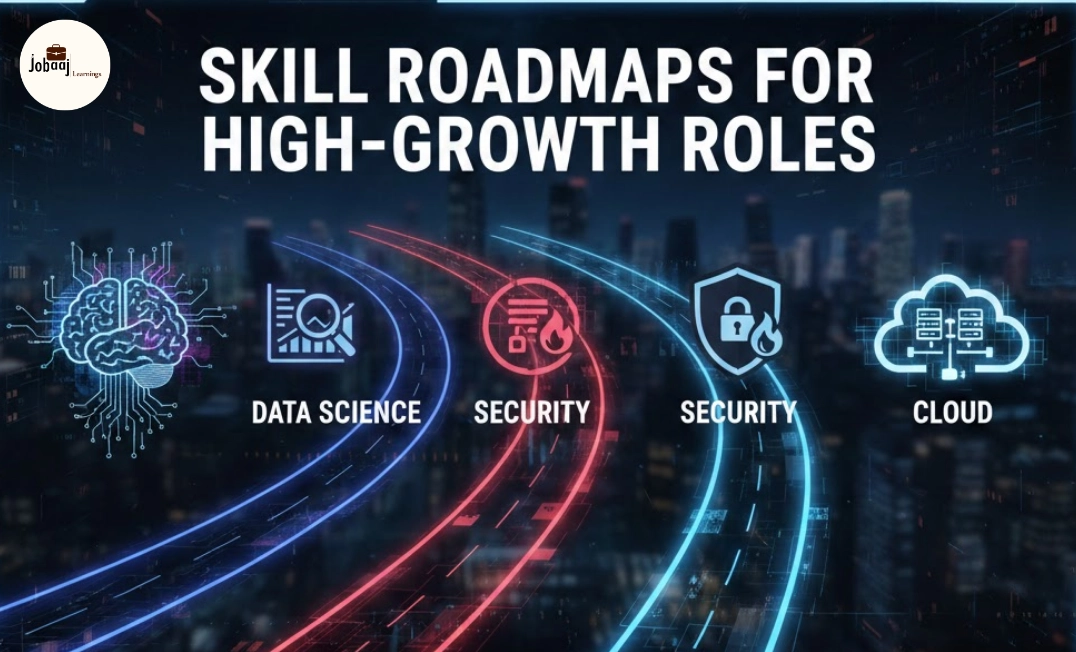
In 2026, the demand for professionals in data science, cybersecurity, and cloud computing is at an all-time high. These fields are not just growing they are transforming industries and shaping the future of technology. With businesses relying more on data, security, and cloud infrastructure, there has never been a better time to build a career in these high-growth areas.
Exploring a career in Web Development? Apply now!
If you're looking to make your mark in the tech industry, this blog will provide a detailed roadmap for developing the skills needed to succeed in data science, cybersecurity, and cloud computing. Whether you're just starting out or looking to upskill, these roadmaps will guide you through the essential competencies and certifications to help you advance in these high-demand roles.
Data Science
Data science continues to be one of the most sought-after fields in technology, and its applications span across almost every industry from healthcare to finance, retail, and beyond. As businesses increasingly rely on data-driven insights to make decisions, skilled data scientists are in high demand.
Key Skills for Data Science in 2026
-
Mathematics and Statistics:
-
Data science is grounded in strong mathematical and statistical knowledge. Understanding probability, linear algebra, calculus, and hypothesis testing is essential for analyzing complex datasets and building models.
-
-
Programming:
-
Python is the dominant language in data science. It’s essential for tasks such as data manipulation, statistical analysis, and machine learning. Familiarity with R and SQL is also beneficial for specific tasks like data querying and statistical modeling.
-
-
Data Wrangling and Preprocessing:
-
Before analyzing data, it must be cleaned and prepared. Skills in data wrangling using libraries like Pandas and NumPy are key for transforming raw data into usable formats.
-
-
Machine Learning and AI:
-
Knowledge of machine learning algorithms such as decision trees, support vector machines (SVM), and neural networks is essential. Being able to implement these algorithms using libraries like Scikit-learn, TensorFlow, and Keras is a must.
-
-
Data Visualization:
-
Visualization is key to communicating insights effectively. Proficiency in Matplotlib, Seaborn, and Tableau allows data scientists to present their findings in an understandable and visually appealing way.
-
-
Big Data Tools:
-
As datasets grow larger, experience with Hadoop, Spark, and SQL databases is increasingly important for managing and analyzing vast amounts of data.
-
-
Cloud Computing and Deployment:
-
Familiarity with cloud platforms like AWS, Google Cloud, and Microsoft Azure for deploying models and working with large datasets is essential.
-
Roadmap for Data Science Career:
-
Beginner: Learn basic statistics, Python programming, and data manipulation with libraries like Pandas. Start with online courses and beginner-level certifications.
-
Intermediate: Dive deeper into machine learning, AI models, and data visualization. Work on projects like predictive modeling and data analysis.
-
Advanced: Gain expertise in advanced machine learning algorithms, big data processing tools, and cloud-based data management. Pursue specialized certifications such as Certified Data Scientist or Google Cloud Professional Data Engineer.
Cybersecurity
Cybersecurity is critical as cyber threats become more sophisticated. In 2026, organizations are more focused on securing their data, systems, and networks from malicious attacks. This high-demand field offers a wide variety of roles, from security analysts to penetration testers and incident responders.
Key Skills for Cybersecurity in 2026
-
Networking and Protocols:
-
A strong understanding of network protocols, including TCP/IP, HTTP, and SSL/TLS, is essential. Network security knowledge, such as firewalls, VPNs, and intrusion detection/prevention systems (IDS/IPS), is key.
-
-
Encryption and Cryptography:
-
Understanding encryption algorithms (e.g., AES, RSA) is crucial for protecting sensitive data in transit and at rest.
-
-
Risk Management:
-
Knowing how to assess and mitigate risks is essential for creating secure systems. Familiarity with frameworks like NIST and ISO/IEC 27001 is valuable.
-
-
Ethical Hacking and Penetration Testing:
-
Knowledge of penetration testing tools such as Kali Linux, Metasploit, and Wireshark is critical for testing and identifying security vulnerabilities.
-
-
Incident Response and Forensics:
-
Cybersecurity professionals must be skilled in investigating security incidents, collecting evidence, and responding effectively. Knowledge of digital forensics tools such as EnCase or FTK is essential.
-
-
Security Compliance:
-
A thorough understanding of compliance regulations like GDPR, HIPAA, and PCI-DSS is important for ensuring organizations meet legal and regulatory requirements.
-
-
Cloud Security:
-
With more businesses moving to the cloud, knowledge of cloud security practices and tools like AWS Security, Google Cloud Security, and Azure Security is becoming increasingly important.
-
Roadmap for Cybersecurity Career:
-
Beginner: Gain foundational knowledge in networking and security principles. Consider certifications like CompTIA Security+ or Certified Ethical Hacker (CEH).
-
Intermediate: Focus on advanced security topics such as encryption, risk management, and ethical hacking. Aim for certifications like Certified Information Systems Security Professional (CISSP).
-
Advanced: Specialize in areas like penetration testing, incident response, or cloud security. Certifications like Certified Information Security Manager (CISM) or Certified Cloud Security Professional (CCSP) will help you stand out.
Cloud Computing
Cloud computing is the backbone of modern digital infrastructure. By 2026, nearly every organization will rely on cloud-based solutions for hosting applications, storing data, and running business operations. Cloud experts are in high demand as organizations seek professionals who can design, manage, and optimize their cloud environments.
Key Skills for Cloud Computing in 2026
-
Cloud Service Models:
-
Understand the differences between IaaS (Infrastructure as a Service), PaaS (Platform as a Service), and SaaS (Software as a Service). Being able to design and implement the right model for different business needs is essential.
-
-
Cloud Platforms:
-
Expertise in leading cloud platforms like AWS, Microsoft Azure, and Google Cloud is essential for configuring, managing, and optimizing cloud environments.
-
-
Virtualization and Containers:
-
Knowledge of virtualization technologies like VMware and containerization platforms such as Docker and Kubernetes is important for cloud infrastructure management.
-
-
Networking and Security in the Cloud:
-
Cloud security is critical. Understanding cloud security principles, encryption, identity management, and VPNs is essential for protecting cloud resources.
-
-
Automation and DevOps:
-
Proficiency in DevOps practices and tools like Terraform, Ansible, and CI/CD pipelines is crucial for automating cloud infrastructure management and deployments.
-
-
Serverless Computing:
-
Familiarity with serverless computing technologies like AWS Lambda and Azure Functions allows cloud engineers to build scalable applications without managing physical servers.
-
-
Cloud Monitoring and Optimization:
-
Expertise in cloud monitoring tools such as CloudWatch (AWS) or Azure Monitor is essential for ensuring the performance, availability, and cost efficiency of cloud environments.
-
Roadmap for Cloud Computing Career:
-
Beginner: Start with understanding the basic concepts of cloud computing, service models, and cloud platforms. Pursue certifications like AWS Certified Solutions Architect – Associate or Microsoft Certified: Azure Fundamentals.
-
Intermediate: Learn about advanced cloud architecture, networking, and security practices. Focus on certifications like Google Professional Cloud Architect or AWS Certified DevOps Engineer.
-
Advanced: Specialize in cloud security, serverless computing, or cloud optimization. Certifications like AWS Certified Solutions Architect – Professional or Certified Kubernetes Administrator (CKA) will help you become a cloud expert.
Conclusion
In 2026, data science, cybersecurity, and cloud computing will continue to be among the most high-demand fields in tech. Whether you’re just starting your career or looking to make a career switch, developing the right set of skills is crucial for success in these fast-growing industries.
By following these skill roadmaps, you can build a strong foundation in each of these fields and stay ahead of the curve. As technology evolves, so will the tools, platforms, and best practices, but with continuous learning and the right certifications, you’ll be well-positioned to thrive in the future job market.
Dreaming of a Web Development Career? Start with Web Development Certificate with Jobaaj Learnings.
Frequently asked questions
What are the key skills needed for a career in data science in 2026?
Key skills include programming (Python), data wrangling, machine learning, statistical analysis, and proficiency in data visualization tools. Certifications like Google Cloud Professional Data Engineer are also beneficial.
How long does it take to become proficient in cybersecurity?
It typically takes 6 months to 1 year to gain a solid understanding of cybersecurity fundamentals. To specialize, pursuing certifications like CISSP or CISM can take an additional 1-2 years of study.
What certifications are recommended for a career in cloud computing?
Certifications such as AWS Certified Solutions Architect, Microsoft Azure Fundamentals, and Google Professional Cloud Architect are excellent for starting a cloud computing career. Advanced certifications like AWS Certified DevOps Engineer can boost your expertise.
Which industry has the highest demand for data scientists in 2026?
Industries like finance, healthcare, e-commerce, and technology are the top sectors hiring data scientists in 2026 due to their reliance on data-driven insights for decision-making.
How can I transition into a cloud computing career from a different field?
Start by learning cloud basics and getting familiar with popular platforms like AWS, Azure, and Google Cloud. Consider certifications and hands-on projects to build practical skills in cloud architecture and management.

Join 5,00,000+ Subscribers
Be a part of our ever growing community.