Categories





































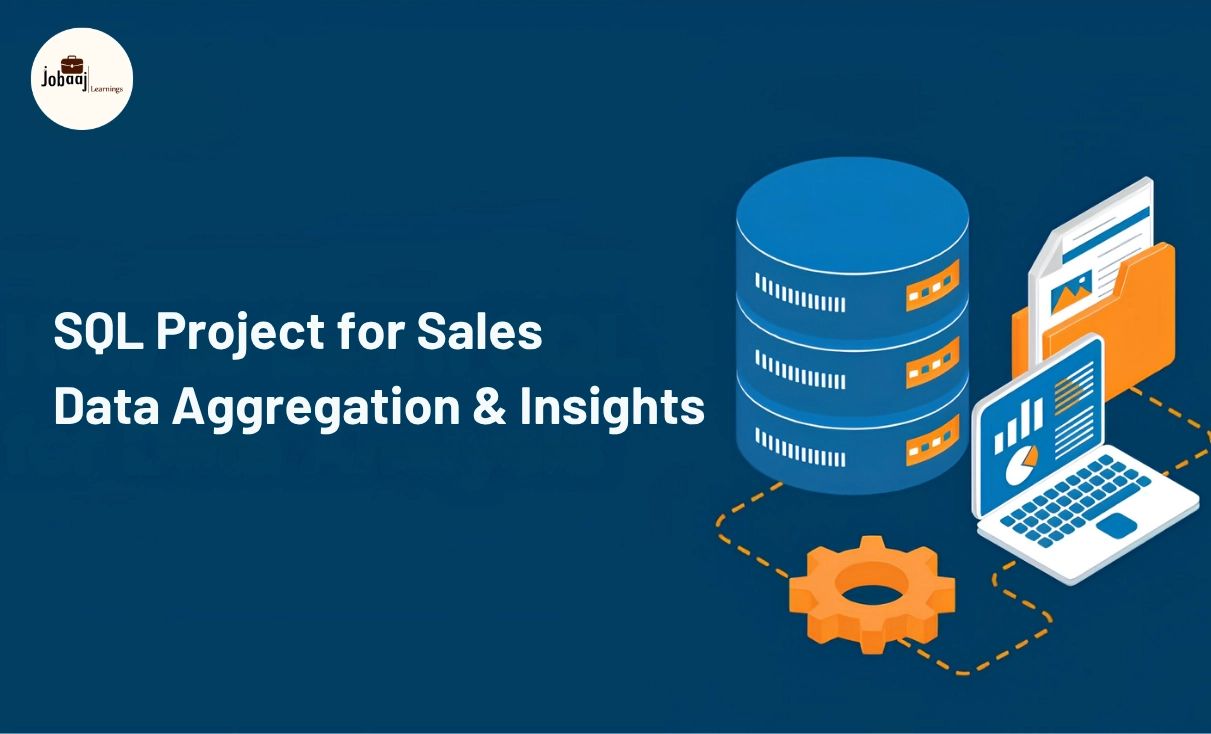
SQL Project for Sales Data Aggregation & Insights: Career Guide for Students

Picture this: a company sold 80,000 products last quarter - across 12 cities, 6 product lines, and 300 sales reps. Without SQL, that data is a wall of noise. With SQL? It becomes the story that drives next quarter's strategy.
That's exactly what a SQL Sales Data Aggregation project does - and it's one of the most employer-loved, portfolio-defining projects any data student can build. If you're figuring out whether data analytics is your career path, this guide will give you complete clarity.
What Is a SQL Sales Data Project?
A SQL Sales Data Aggregation & Insights project involves writing structured queries to pull, combine, filter, and summarize raw sales records from a database - turning thousands of rows into actionable business metrics.
Think of it as building the engine behind a sales dashboard. You're answering questions like: Which product sold the most in Q3? Which region underperformed? What's the month-on-month revenue trend? Who are the top 10 reps by conversion rate?
This type of project is not just academic. It mirrors exactly what data analysts, business intelligence engineers, and data scientists do every single day at companies like Amazon, Flipkart, Zomato, IBM, and TCS.
Data aggregation means collecting and computing summary statistics - totals, averages, counts, and rankings - across grouped records. In SQL, this is done primarily with GROUP BY, SUM(), AVG(), COUNT(), and window functions like RANK().
Why This Project Matters for Your Career
A lot of students learn SQL syntax but never build anything real. That's a missed opportunity. Recruiters and hiring managers aren't just looking for people who know commands - they want candidates who can solve business problems with data.
A well-executed SQL sales project checks every box on that list. It demonstrates technical depth, business thinking, and the ability to communicate findings - all in one deliverable.
How Sales Data Aggregation Actually Works
Let's break down the project workflow so you know exactly what's involved - from raw tables to final insight.
Step 1: Understanding the Schema
A typical sales database has tables like orders, customers, products, regions, and salespeople. Before writing a single query, you need to map how these tables relate to each other.
Step 2: Writing Aggregation Queries
This is the heart of the project. You use JOIN to combine tables and GROUP BY with aggregate functions to summarize data by category, region, time period, or product.
SQL - Monthly Revenue by Region
SELECT
  r.region_name,
  DATE_TRUNC('month', o.order_date) AS month,
  SUM(o.total_amount)              AS total_revenue,
  COUNT(o.order_id)               AS total_orders,
  AVG(o.total_amount)             AS avg_order_value

FROM   orders      o
JOIN   customers   c ON o.customer_id  = c.customer_id
JOIN   regions     r ON c.region_id    = r.region_id

WHERE  o.order_date BETWEEN '2024-01-01' AND '2024-12-31'

GROUP BY  r.region_name, 2
ORDER BY  month, total_revenue DESC;
Step 3: Using Window Functions for Rankings
Window functions like RANK(), DENSE_RANK(), and LAG() are where intermediate SQL becomes advanced. These let you rank sales reps, calculate running totals, or compare current vs. previous month revenue - without collapsing your data rows.
SQL - Top 5 Products by Revenue (Window Function)
SELECT *
FROM (
  SELECT
    p.product_name,
    SUM(oi.quantity * oi.unit_price) AS revenue,
    RANK() OVER (
      ORDER BY SUM(oi.quantity * oi.unit_price) DESC
    )                                AS revenue_rank
  FROM   order_items oi
  JOIN   products    p ON oi.product_id = p.product_id
  GROUP BY p.product_name
) ranked
WHERE revenue_rank <= 5;
Top SQL Skills You Must Master
The SQL skillset for a data analyst has a clear hierarchy. Here's what you need - and how important each skill is in real job descriptions:
- SELECT & Filtering
- JOIN (all types)
- GROUP BY + Aggregates
- Subqueries & CTEs
- Window Functions
- Date/Time Functions
- Query Optimisation
- Stored Procedures
Master Common Table Expressions (CTEs) using the WITH clause. Hiring managers consistently say CTEs separate candidates who truly understand SQL from those who only know the basics. They make complex queries readable and reusable.
Beyond SQL - Complementary Skills That Multiply Your Value
SQL gets you in the door. These skills get you promoted:
1. Python (Pandas): For data cleaning, statistical analysis, and automation. Python + SQL is the most common analyst stack in 2026.
2. Power BI / Tableau: Turn your SQL output into compelling dashboards stakeholders can actually read and act on.
3. Cloud Data Warehouses: Snowflake, BigQuery, and Redshift are where enterprise SQL lives. Even a basic certification here is huge.
4. Excel + DAX: Still widely used in mid-size companies. Combining SQL skills with Excel pivot fluency rounds out a strong junior analyst.
Tools & Software Used in Industry
Knowing which tools are actually used in industry - not just what's taught in courses - is a massive advantage when you're job hunting. Here's the real picture:
Most In-Demand
- PostgreSQL - open source, interview favourite
- MySQL - widely used in web & e-commerce
- Microsoft SQL Server - dominant in enterprise
- Google BigQuery - cloud-native, scales to petabytes
- Snowflake - hottest cloud DW right now
Complementary Stack
- dbt (data build tool) - SQL-based transformation
- Apache Spark SQL - big data SQL at scale
- Amazon Redshift - AWS data warehouse
- Metabase / Looker - BI on top of SQL
- DBeaver / DataGrip - query editors
Start with PostgreSQL - it's free, powerful, and closely matches what production systems use. Use DB Fiddle or Supabase to practice without any local setup. Once comfortable, create a free BigQuery account and practice on Google's public datasets (like the Chicago Taxi dataset).
Frequently asked questions
What is sales data aggregation in SQL?
Sales data aggregation is the process of summarizing raw sales data into meaningful insights using SQL. It involves calculations like total sales, average revenue, and product-wise or region-wise summaries, helping businesses make informed decisions.
Do I need prior experience to start SQL projects?
No, beginners can start with basic SQL queries. Focus on SELECT, JOIN, GROUP BY, and aggregation functions. Online datasets and practice exercises are enough to build foundational skills.
What career opportunities can SQL sales projects lead to?
SQL projects open roles like Data Analyst, Business Intelligence Analyst, Sales Operations Analyst, Marketing Analyst, and Product Analyst. These positions involve reporting, insights, and decision support across industries.
Which tools complement SQL in sales analytics?
Power BI and Tableau help visualize SQL data. Python or R can automate tasks and perform advanced analytics. Excel is useful for small datasets, but SQL scales better for large data.
What is the salary potential for entry-level SQL analysts?
Entry-level SQL-focused analysts can earn $45k–$65k annually (₹5–8 LPA in India). With experience, dashboards, and BI skills, senior roles can reach $80k+ or higher depending on location and industry.
Join 5,00,000+ Subscribers
Be a part of our ever growing community.