Categories








































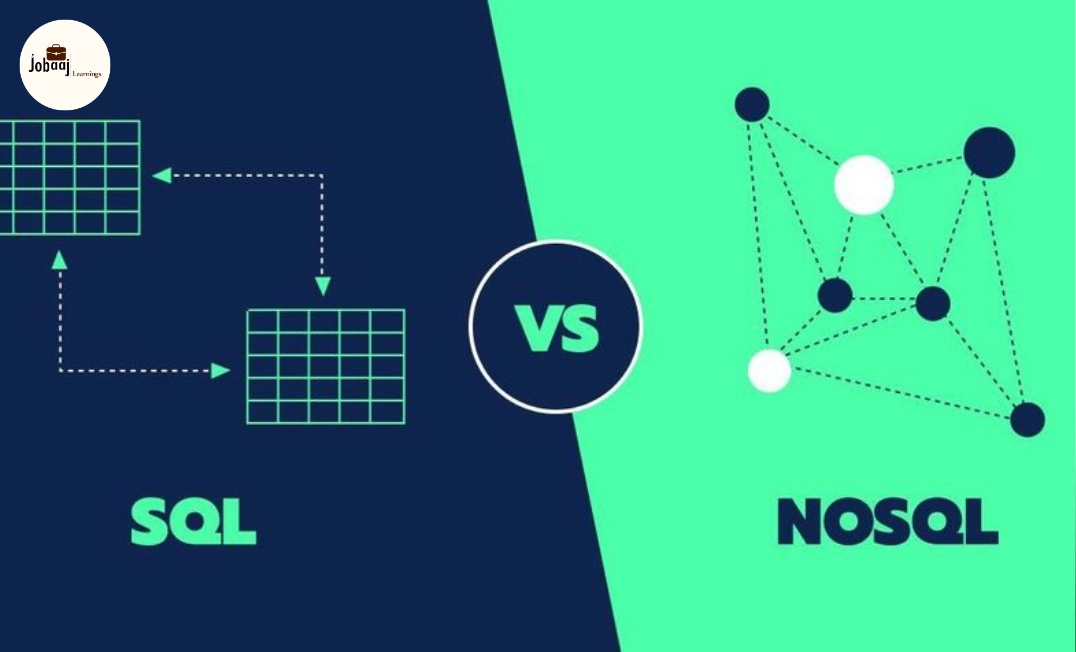
If you’ve just started learning about databases, one question almost always comes up early: what is the difference between SQL and NoSQL databases? On the surface, both are used to store data. That’s why many beginners assume they are almost the same. But the reality is a little deeper than that. The way they store information, manage changes, handle growth, and support applications is very different.
Exploring a career in Web Development? Apply now!
And this difference matters more than most people realize.
Every website, mobile app, business platform, and digital tool depends on data. A food delivery app stores your address and order history. A banking system stores transactions and account balances. A shopping site remembers products, prices, and customer preferences. The database sitting behind these platforms decides how efficiently all this information is stored and retrieved.
That is where SQL and NoSQL come in.
Understanding them is not just about clearing an interview question or finishing a chapter in a course. It actually helps you understand how real systems are built and why different companies choose different technologies.
Why This Comparison Confuses So Many Beginners
One reason this topic feels confusing is because both SQL and NoSQL solve the same big problem storing and managing data. So naturally, it feels like they should work in similar ways. But once you start looking closely, you realize they were designed with different priorities in mind.
SQL databases were created for structure, accuracy, and relationships between data. They work best when the information is clean, organized, and predictable.
NoSQL databases became popular because modern applications started generating huge amounts of data that didn’t always fit neatly into tables. Apps became faster, more dynamic, and more user-driven. That created a need for more flexibility.
So the difference between SQL and NoSQL is not just technical. It is also a difference in philosophy. One prefers order and rules. The other prefers flexibility and speed.
What Is SQL Database?
SQL stands for Structured Query Language. SQL databases store data in tables made up of rows and columns. If you have ever used Excel or looked at a spreadsheet, you already have a rough idea of how SQL data looks.
For example, imagine a student database. One table might contain student details like name, roll number, class, and age. Every row represents one student, and every column stores one specific type of information. The structure remains fixed.
That fixed structure is one of the biggest strengths of SQL.
It means the database knows exactly what kind of data belongs where. This makes it easier to manage large amounts of organized information. It also reduces confusion and helps maintain consistency across the system.
Popular SQL databases include MySQL, PostgreSQL, Oracle, and Microsoft SQL Server.
What Is NoSQL Database in Simple Words?
NoSQL stands for Not Only SQL. Unlike SQL databases, NoSQL databases do not always store data in tables. Depending on the type of NoSQL database, data can be stored as documents, key-value pairs, graphs, or wide-column structures.
The most beginner-friendly way to think about NoSQL is this: it allows data to be stored more flexibly.
Instead of forcing every record to look the same, NoSQL databases can handle records with different fields. One user profile may include name, email, and phone number. Another may also include social links, preferences, and purchase history. The system does not break just because the structure changes.
This flexibility is one of the main reasons NoSQL became so useful in modern applications.
Popular NoSQL databases include MongoDB, Cassandra, Redis, and Firebase.
The Core Difference Between SQL and NoSQL
At the heart of it, the biggest difference is structure.
SQL databases are structured. They expect data to follow a predefined format. Before storing information, you usually define the schema. That means you decide in advance what fields the table will contain and what kind of values are allowed.
NoSQL databases are more flexible. They do not always require a rigid schema before storing data. This makes them useful when data changes often or when the format is not completely predictable.
If SQL feels like a carefully designed spreadsheet, NoSQL feels more like a flexible digital notebook that can adapt as your needs grow.
Neither approach is automatically better. It depends on what kind of problem you are trying to solve.
SQL Databases Work Best When Structure Matters
SQL databases are ideal when your data has clear relationships and needs to remain highly accurate. For example, in a banking system, one customer may have multiple accounts, many transactions, and different linked services. These relationships need to be managed carefully and accurately.
SQL handles this well because it supports relational design. You can create multiple connected tables and use joins to pull related data together when needed.
This is a big reason SQL is still heavily used in industries like finance, healthcare, education, ERP systems, and enterprise reporting. In these environments, accuracy is not optional. Data must remain consistent, organized, and reliable.
If your system depends on transactional integrity, strong validation, and complex queries, SQL is often the safer and smarter choice.
NoSQL Databases Work Best When Flexibility and Scale Matter
NoSQL databases shine when applications need to move fast, handle massive volumes of data, or store information that changes often.
Think about a social media app. User posts, comments, likes, messages, uploaded media, and activity logs are constantly being created. Not every record looks the same. Some posts may include text only. Others may include images, videos, tags, reactions, and comments. Trying to force all of that into fixed relational tables can become difficult and slow.
This is where NoSQL helps.
Because it supports flexible data models, developers can build and modify applications faster. It is also easier to scale many NoSQL systems horizontally, which means spreading data across multiple servers instead of relying on one bigger machine.
That is why NoSQL is often seen in real-time apps, content-heavy platforms, big-data systems, and fast-growing tech products.
Schema Difference Between SQL and NoSQL
One of the most important practical differences between SQL and NoSQL is schema.
In SQL, schema is usually predefined. Before inserting data, you set up the table structure. You define column names, data types, constraints, and relationships. This is useful because it brings order from the beginning. But it also means changes later can be more controlled and sometimes slower.
In NoSQL, schema is often dynamic or flexible. You can insert records even if they do not all follow the exact same structure. This makes development easier in situations where data keeps evolving.
For a growing startup, this flexibility can be helpful. For a tightly regulated financial system, it might feel too loose.
So again, the better option depends on the use case, not on popularity alone.
How SQL and NoSQL Handle Scaling
Scaling is another major difference.
SQL databases traditionally scale vertically. That means when the system grows, you often increase the power of the existing server by adding more RAM, CPU, or storage. This works, but it can become expensive and has practical limits.
NoSQL databases are often designed to scale horizontally. That means data can be distributed across multiple servers more easily. This makes them attractive for applications that need to handle very high traffic or rapidly increasing data volumes.
For example, if millions of users are hitting a platform at the same time, horizontal scaling can make growth more manageable.
That said, modern SQL systems have also improved a lot in scaling capabilities. So this is not a black-and-white rule anymore. But in general, NoSQL gained early popularity because it matched the scaling needs of modern internet applications.
Querying Data Feels Different in SQL and NoSQL
SQL databases use SQL language to query data. This gives developers a very powerful and standardized way to retrieve, filter, group, join, and analyze data.
If you need reports, dashboards, or complex business analysis, SQL is extremely strong. It is one of the reasons SQL remains so valuable in analytics, reporting, and data-driven decision-making.
NoSQL databases do not all follow one common query language. Each database may have its own way of querying data depending on the model it uses. Some are simple and fast. Others are more specialized.
This means SQL is often easier when you need structured reporting and relational logic, while NoSQL is often faster when you need flexible reads and writes for large-scale operational systems.
SQL vs NoSQL in Terms of Data Relationships
SQL databases are relational by design. They are built to manage connections between different tables. For example, a company database might have separate tables for employees, departments, salaries, and projects. These can all be linked using keys and queried together.
NoSQL databases often avoid these traditional joins. Instead, related data may be stored together in one document or record. This can improve speed and simplicity in some use cases, but it changes how the system is designed.
So if your application has many structured relationships, SQL feels more natural. If your application needs fast, flexible records with fewer relational dependencies, NoSQL may be easier to work with.
SQL vs NoSQL Performance Difference
A lot of beginners ask which one is faster. The honest answer is that speed depends on what you are asking the database to do.
SQL can perform extremely well for structured queries, transactional systems, and relational data operations. It is strong when consistency and logic matter.
NoSQL can perform very well in systems that deal with massive write loads, flexible records, and distributed data. It is often preferred for real-time systems and high-scale apps.
So instead of asking which one is faster in general, it is better to ask which one is faster for your use case.
That question leads to a much more practical answer.
Real-World Example to Understand SQL and NoSQL Better
Let’s imagine two businesses.
The first is a bank. It needs to manage customers, balances, loans, and transactions. Every number must be accurate. Records must be consistent. A mistake cannot be ignored. This is a classic SQL environment.
The second is a social networking app. It stores user bios, posts, comments, likes, follows, messages, and media. New features keep getting added. User-generated content varies all the time. This is often where NoSQL becomes useful.
The first system values structure and reliability above everything. The second values speed, flexibility, and scale.
This is why both database types continue to exist. They solve different problems.
Can Companies Use Both SQL and NoSQL Together?
Yes, and many modern companies do exactly that.
A business might use SQL for billing, transactions, and reporting, while using NoSQL for session data, user activity feeds, caching, or content storage.
This hybrid approach is common because real applications rarely have only one kind of data need. Some parts of the system need structure and consistency. Other parts need speed and flexibility.
So SQL vs NoSQL is not always a battle where one wins and the other loses. In many real-world architectures, they work side by side.
Which One Should Beginners Learn First?
For most beginners, SQL is usually the better starting point.
The reason is simple. SQL teaches you how data is structured, how tables relate to each other, and how to think logically about storage and retrieval. It also has huge demand in analytics, backend development, reporting, business intelligence, and software engineering interviews.
Once you understand SQL well, learning NoSQL becomes much easier because you already understand the purpose of databases in general.
That said, if your goal is app development, cloud systems, or modern backend engineering, learning NoSQL after SQL is a smart move.
The best path for most learners is not SQL or NoSQL. It is SQL first, then NoSQL with context.
Final Thoughts
The difference between SQL and NoSQL databases is really a difference between two ways of thinking about data.
SQL is built for structure, relationships, consistency, and accuracy. It fits systems where data needs to stay clean and dependable.
NoSQL is built for flexibility, scale, speed, and evolving data formats. It fits applications where change is constant and growth is rapid.
Both are important. Both are widely used. And both solve real problems in the tech world.
If you are a student or beginner, the smartest thing you can do is stop looking at SQL and NoSQL as competing buzzwords and start seeing them as tools designed for different needs. Once that clicks, the whole topic becomes much easier to understand.
Frequently asked questions
What is the main difference between SQL and NoSQL databases?
The main difference is that SQL databases store data in structured tables with fixed schemas, while NoSQL databases store data in more flexible formats such as documents, key-value pairs, or graphs.
Which is better, SQL or NoSQL?
Neither is universally better. SQL is better for structured data, strong consistency, and complex queries, while NoSQL is better for flexible data models, rapid scaling, and applications with changing data structures.
Is SQL easier to learn than NoSQL?
For most beginners, SQL is easier to learn first because it follows a clear structure and uses a standard query language. It also helps build a strong database foundation.
Where is NoSQL commonly used?
NoSQL is commonly used in social media platforms, real-time applications, content-heavy systems, large-scale web apps, and products where data formats change frequently.
Can SQL and NoSQL be used in the same application?
Yes, many companies use both in the same application. SQL may be used for transactions and reports, while NoSQL may be used for caching, user activity, or flexible content storage.

Join 5,00,000+ Subscribers
Be a part of our ever growing community.