Categories








































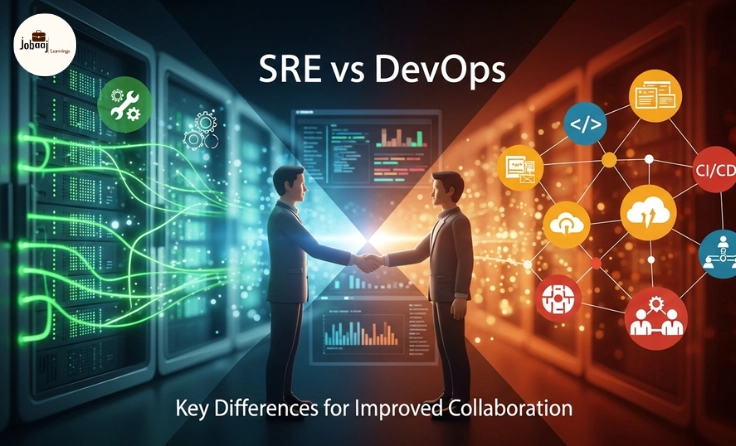
In the world of software development and IT operations, the terms SRE (Site Reliability Engineering) and DevOps are often mentioned together. While both aim to bridge the gap between development and operations, they do so in slightly different ways. Understanding the key differences between SRE and DevOps is crucial for organizations that want to build scalable, reliable, and efficient systems.
In this blog, we’ll dive into the core differences between SRE and DevOps, explore their unique approaches, and show how these two philosophies can work together to improve collaboration and enhance system reliability and performance. Whether you’re just starting to explore these concepts or you’re part of an established team looking to optimize your processes, this guide will provide valuable insights into both methodologies.
Exploring a career in Web Development? Apply now!
What is DevOps?
DevOps is a cultural and technical movement aimed at improving collaboration between development and operations teams. The goal of DevOps is to shorten the development lifecycle, increase the frequency of software releases, and improve the quality and reliability of software applications.
Key Characteristics of DevOps:
-
Collaboration: DevOps focuses on fostering a collaborative culture between developers, operations, and other teams to work toward common goals.
-
Automation: One of the core principles of DevOps is automation, especially for processes like testing, deployment, and monitoring.
-
Continuous Integration/Continuous Deployment (CI/CD): DevOps emphasizes the use of automated pipelines to ensure that code changes are tested and deployed frequently, allowing for faster software releases.
-
Agility: DevOps supports agile practices, allowing teams to be flexible and responsive to customer needs and changes in the market.
What is SRE?
SRE, or Site Reliability Engineering, is a discipline that incorporates aspects of software engineering to ensure that systems are scalable, reliable, and efficient. While it shares many similarities with DevOps, SRE places a strong emphasis on service reliability and performance.
Key Characteristics of SRE:
-
Reliability: SRE focuses on achieving and maintaining high system reliability by setting Service Level Objectives (SLOs) and Service Level Indicators (SLIs) to measure system performance and availability.
-
Monitoring and Incident Management: SRE teams build and maintain monitoring systems that track the health of services in real-time. When incidents occur, SREs are involved in quickly identifying the root cause and mitigating the issue.
-
Automation: Like DevOps, SRE also emphasizes automation. However, SREs go beyond CI/CD pipelines and automate manual operational tasks to improve system reliability.
-
Error Budgets: SREs use the concept of error budgets to balance the need for system reliability with the need for innovation. An error budget allows for a certain level of failure, encouraging teams to innovate while maintaining a reliable system.
Key Differences Between SRE and DevOps
While both DevOps and SRE aim to improve collaboration between development and operations, they have different approaches and focuses. Let’s explore the key differences:
1. Focus Areas
-
DevOps: Primarily focuses on improving collaboration between development and operations teams and streamlining the software delivery process.
-
SRE: Focuses on system reliability, performance, and scalability, ensuring that services are running smoothly and meet the set reliability objectives.
2. Approach to Reliability
-
DevOps: Reliability is a shared responsibility between development and operations teams, with an emphasis on automation to improve the software delivery process.
-
SRE: Reliability is a dedicated responsibility of the SRE team, who measure and track system reliability through SLOs, SLIs, and error budgets.
3. Automation
-
DevOps: Automation is a key principle, focusing on automating testing, deployment, and monitoring to speed up the development lifecycle.
-
SRE: Automation is also a key principle, but SREs focus more on automating manual operational tasks to improve system reliability and reduce human intervention in incident management.
4. Incident Management
-
DevOps: DevOps teams focus on improving software delivery and may involve some level of incident management, but it’s not their main focus.
-
SRE: SRE teams are directly responsible for incident management. They monitor systems 24/7 and work to quickly identify, troubleshoot, and resolve any system issues that arise.
5. Metrics and Measurements
-
DevOps: Focuses on metrics like deployment frequency, lead time for changes, and mean time to recovery (MTTR).
-
SRE: Focuses on reliability metrics such as SLOs, SLIs, and error budgets, which help track system performance and availability.
6. Service-Level Objectives (SLOs)
-
DevOps: While DevOps teams may use metrics to track performance, SLOs are not a formalized practice in DevOps.
-
SRE: SREs use SLOs to define measurable reliability goals, which serve as a guiding principle for decision-making and resource allocation.
7. Cultural Differences
-
DevOps: DevOps emphasizes cultural change, encouraging open communication and collaboration between teams that traditionally worked in silos (development and operations).
-
SRE: SRE emphasizes a more structured approach to reliability, with a dedicated team responsible for measuring and improving system performance.
How SRE and DevOps Can Work Together
While SRE and DevOps have distinct differences, they are not mutually exclusive. In fact, when combined, they can create a more efficient and reliable development and operational environment. Here’s how they can complement each other:
-
DevOps and SRE Collaboration: DevOps teams can focus on automating and optimizing the software delivery pipeline, while SRE teams focus on system reliability and incident management. The collaboration between these teams can lead to faster, more reliable software releases.
-
Shared Goals: Both DevOps and SRE aim to improve collaboration, efficiency, and reliability. By aligning their efforts, they can work toward achieving common goals like improving system uptime, reducing incidents, and delivering high-quality software quickly.
-
Continuous Improvement: While DevOps focuses on continuous integration and continuous delivery (CI/CD), SREs contribute by measuring system performance, making it easier for both teams to make data-driven decisions and continuously improve system reliability.
Conclusion
In conclusion, SRE and DevOps are both crucial in building and maintaining reliable, scalable, and efficient systems. While DevOps focuses on improving collaboration and streamlining software delivery, SREs take a more structured approach to ensure that systems are reliable, scalable, and performant. By understanding the differences between the two and leveraging the strengths of each methodology, organizations can build more robust systems that meet both business goals and customer expectations.
By fostering collaboration between DevOps and SRE teams, companies can achieve greater operational efficiency and deliver higher-quality software faster, while ensuring system reliability and performance are always top priorities.
Dreaming of a Web Development Career? Start with Web Development Certificate with Jobaaj Learnings.
Frequently asked questions
What is the main difference between SRE and DevOps?
The main difference is that DevOps focuses on the collaboration between development and operations teams, streamlining the software delivery process, while SRE focuses on ensuring system reliability, monitoring performance, and setting measurable goals for system uptime through SLOs and SLIs.
How does DevOps contribute to faster software delivery?
DevOps contributes to faster software delivery by emphasizing automation in the CI/CD pipeline, enabling more frequent and reliable software releases. This allows development teams to deploy code more quickly and efficiently, improving the overall speed of the development lifecycle.
What are SLOs and why are they important in SRE?
SLOs, or Service Level Objectives, are measurable goals for system reliability and performance. In SRE, they are used to set expectations for uptime and other service metrics, ensuring that systems are performing within acceptable limits. They help prioritize resources and guide decision-making in the face of potential issues or trade-offs.
Can DevOps and SRE work together in the same team?
Yes, DevOps and SRE teams can collaborate effectively. DevOps teams focus on the automation and efficiency of the development pipeline, while SRE teams ensure that the systems remain reliable and performant. By working together, they can deliver high-quality software quickly and ensure it meets reliability standards.
What tools are typically used by DevOps and SRE teams?
DevOps teams often use tools like Jenkins, Docker, Kubernetes, and Terraform for automation and deployment. SRE teams typically rely on monitoring tools like Prometheus, Grafana, and Datadog to track system performance and uptime. Both teams use collaboration tools like Slack and Git for communication and version control.
Which methodology, SRE or DevOps, is more focused on system reliability?
SRE (Site Reliability Engineering) is more focused on system reliability. It involves measuring system performance through Service Level Indicators (SLIs) and Service Level Objectives (SLOs), as well as implementing practices to maintain high uptime and system availability. DevOps, on the other hand, focuses more on optimizing the software delivery process.

Join 5,00,000+ Subscribers
Be a part of our ever growing community.