Categories












/content/learnings/assets/header/ManagementConsulting.svg)
/content/learnings/assets/header/InvestmentBanking.svg)

























/content/learnings/assets/header/programs/1.png)
/content/learnings/assets/header/programs/4.png)


Germany attracts international students with globally recognised universities, a large number of English-taught programmes and comparatively affordable public higher education.
But one question comes up repeatedly among Indian students:
Can you study in Germany without IELTS?
The answer is yes, in some cases.
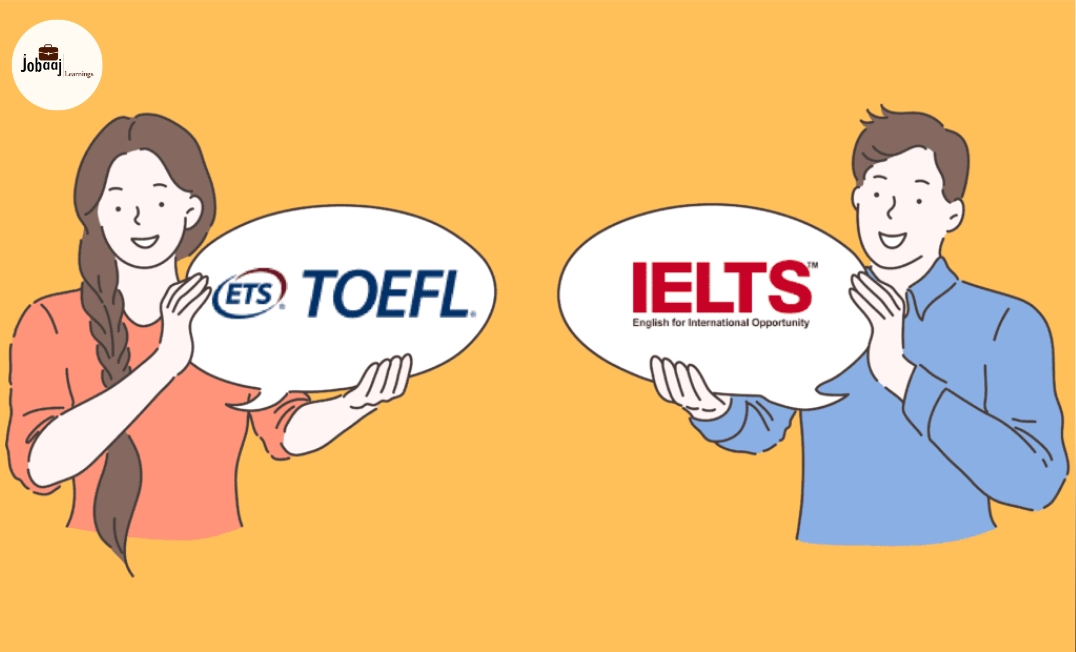
IELTS is not a universal requirement for every German university. Some universities accept TOEFL or Cambridge English qualifications, while certain programmes may accept proof that your previous education was taught in English.
However, there is an important catch.
Getting admission without IELTS and getting a German student visa without separate language proof are not necessarily the same thing. The university and the German visa authorities can apply different documentation requirements.
So before skipping IELTS, you need to understand exactly what your university accepts and what you may need during the visa process.
Can You Study in Germany Without IELTS?
Yes. You may be able to study in Germany without IELTS if your chosen university accepts another recognised form of English-language proof.
uni-assist, which processes applications for many German universities, lists several possible ways to demonstrate English proficiency, including TOEFL, Cambridge English certificates and proof that your previous university education was conducted in English. However, each university decides which proofs it accepts and what minimum level is required.
You may therefore avoid IELTS through options such as:
- TOEFL
- Cambridge English qualifications
- Proof of English as the medium of instruction
- A previous degree completed entirely in English
- A university-specific language exemption
- Studying a German-taught programme instead
The exact rule depends on the university and programme.
How Can You Study in Germany Without IELTS?
There are four common routes.
1. Use a Medium of Instruction Certificate
A Medium of Instruction certificate, commonly called an MOI certificate, confirms that your previous education was taught in English.
For example, if your bachelor’s programme was taught completely in English, your university may provide an official letter confirming this.
uni-assist states that English as the language of instruction can sometimes be proved through:
- A degree certificate or transcript confirming English as the teaching language
- Written confirmation from your previous university
- An official university webpage showing that the programme was taught in English
However, not every German university accepts MOI instead of IELTS.
Always check the exact language requirement on the programme page.
2. Take TOEFL Instead of IELTS
Many German universities accept TOEFL as an alternative English proficiency test.
This can be useful if you are more comfortable with TOEFL’s test format or already have a valid TOEFL score.
Minimum scores differ between universities and programmes.
3. Use a Cambridge English Certificate
Some institutions accept Cambridge qualifications such as:
- B2 First
- C1 Advanced
- C2 Proficiency
Again, the required certificate and score depend on the programme.
4. Choose a German-Taught Programme
If your programme is taught in German, IELTS may have no relevance to the admission requirement.
Instead, you will normally need proof of German proficiency through qualifications such as:
- TestDaF
- DSH
- Goethe certificates
- German Language Diploma
The required German level varies between universities.
Can Indian Students Get a Germany Student Visa Without IELTS?
This is where students need to be particularly careful.
For Indian student-visa applicants, the German mission requires proof of language ability when it is not confirmed through the university admission documentation.
The official student-visa checklist states that when language proficiency is not confirmed by the German university in the admission notification, applicants generally need recognised proof of proficiency in the language of instruction.
Accepted examples include:
- IELTS
- TOEFL
- Cambridge Assessment English
- Goethe-Institut certificates
- ÖSD for German
The German mission specifically warns applicants not to submit a simple language-exemption letter or Language of Instruction certificate as a substitute when separate language proof is required.
So an MOI may help you receive university admission, but you should not automatically assume that the same MOI will be enough for your visa.
The Safest Approach
Before relying on an IELTS exemption:
- Ask the university whether your English proficiency will be officially confirmed in the admission letter.
- Check the latest German student-visa checklist for India.
- If the language requirement is not clearly covered, use a recognised test such as IELTS, TOEFL or Cambridge English.
This can prevent problems later in the visa process.
English-Taught Programmes in Germany
Germany now offers a large number of programmes taught fully in English, particularly at the master’s level.
The DAAD International Programmes database currently lists more than 2,000 English-only international programmes, with especially strong availability in engineering, business, economics, mathematics and natural sciences.
Popular areas include:
- Computer Science
- Data Science
- Artificial Intelligence
- Engineering
- Business Administration
- Finance
- Economics
- Biotechnology
- Renewable Energy
- International Management
English-taught bachelor’s programmes are available too, but they are less common than English-taught master’s programmes.
Eligibility for Studying in Germany Without IELTS
Skipping IELTS does not remove the other academic requirements.
For Bachelor’s Programmes
Indian Class XII students should check whether their school qualification provides direct university admission or requires Studienkolleg.
For admissions beginning with Winter Semester 2026/27, APS India states that Indian applicants generally need at least 70% in Class XII for the relevant Studienkolleg or direct subject-restricted pathways.
Direct subject-restricted admission may also require one successful academic year in a recognised bachelor’s programme, depending on the route.
For Master’s Programmes
Applicants generally need:
- A recognised bachelor’s degree
- Required academic credits
- Relevant subject background
- Minimum grades specified by the programme
- Language proficiency
- APS certification where applicable
- Additional requirements such as GRE, GMAT or work experience for certain programmes
Admission requirements vary considerably, so students should evaluate individual programmes instead of applying based only on university reputation.
APS Certificate for Indian Students
APS stands for the Academic Evaluation Centre.
APS India verifies academic documents issued by Indian educational institutions and is generally part of the documentation required for Indian students applying for a German student visa.
The process is separate from university admission.
APS verifies your academic qualifications. It does not decide whether you are admitted to a German university or whether your visa is approved.
Important 2026 Update for Master’s Applicants
From the Summer Semester 2027 intake onward, selected master’s applicants may also need the new Digital Master Test, or dMAT, as part of their APS documentation.
It currently affects certain applicants whose previous degree falls within areas such as:
- Engineering
- Commerce
- Accounting
- Finance
- Economics
- Business
- Management
Specific transition rules and exemptions apply, so applicants planning for 2027 or later should check APS India before applying.
Documents You May Need
The exact list depends on your university and programme, but students commonly need:
- Passport
- Academic transcripts
- Degree or provisional certificate
- Class X and XII documents
- APS certificate
- Curriculum vitae
- Statement of purpose or motivation letter
- Letters of recommendation where required
- English or German language proof
- MOI certificate if accepted
- Entrance-test scores where required
- University admission letter
- Proof of finances for the visa
Always follow the university’s official checklist because some programmes require additional documents.
Cost of Studying in Germany
Germany is attractive because many public universities do not charge the high tuition fees common in destinations such as the United States or United Kingdom.
However, studying in Germany is not free.
Students may still need to budget for:
- Semester contributions
- Health insurance
- Accommodation
- Food
- Transportation
- Study materials
- Visa and residence costs
- Tuition where applicable
Some universities and federal states may also charge tuition for particular international students or programmes.
Blocked Account Requirement
For the German study visa, international students generally need to demonstrate sufficient funds to cover living expenses.
The official German government portal currently states a blocked-account requirement of at least €11,904 for 2026.
Students may also be able to prove their finances through an eligible scholarship or formal declaration of commitment.
Can International Students Work in Germany?
Yes.
Students from countries outside the EU and EEA can generally work up to:
140 full days or 280 half days per year
or, under the relevant rules, up to 20 hours per week during lecture periods.
Certain student-assistant jobs at universities may be treated differently.
Part-time work can help with everyday expenses and professional experience, but students should not depend entirely on future part-time earnings to finance their studies.
Career Opportunities After Graduation
Germany provides international graduates with a pathway to remain in the country after completing their studies.
Students from non-EU countries can generally obtain a residence permit for up to 18 months after graduation to search for qualified employment.
During this period, graduates can work while searching for an appropriate long-term role.
Popular employment sectors for international graduates include:
- Software and IT
- Engineering
- Data and artificial intelligence
- Automotive
- Manufacturing
- Renewable energy
- Finance
- Healthcare
- Research
- Supply chain and logistics
Learning German can significantly improve employment prospects even when your university programme is completely taught in English.
How to Apply to Germany Without IELTS
A practical application process looks like this:
Step 1: Find English-Taught Programmes
Use the DAAD International Programmes database, university websites or My GUIDE to identify suitable programmes.
Step 2: Check the Language Requirement
Look specifically for terms such as:
- English-language proficiency
- Medium of Instruction accepted
- Previous degree taught in English
- TOEFL accepted
- Cambridge certificate accepted
Never assume an MOI is accepted simply because another programme at the same university accepts it.
Step 3: Confirm Your Academic Eligibility
Check subject requirements, grades, credits and degree recognition.
Indian students should also review the relevant APS requirements.
Step 4: Obtain the Required Language Proof
If the university accepts your previous English-medium education, obtain an official MOI or equivalent documentation.
Otherwise, take an accepted language examination.
Step 5: Apply to the University
Applications may be submitted:
- Directly to the university
- Through uni-assist
- Through another application system specified by the institution
Step 6: Complete APS Requirements
Indian applicants should begin APS verification according to the procedure applicable to their academic background.
Step 7: Arrange Financial Proof
Prepare the blocked account, scholarship documentation or other accepted financial evidence.
Step 8: Apply for the Student Visa
Use your university admission, APS certificate, financial documents and required language proof to complete the visa application.
Common Mistakes to Avoid
Assuming All German Universities Accept MOI
They do not.
Language requirements are decided programme by programme.
Confusing Admission Rules With Visa Rules
A university may waive IELTS, while the visa authority may still require recognised language evidence if your admission documentation does not sufficiently confirm your proficiency.
Applying Only Because IELTS Is Not Required
Language exemption should not be your main criterion for selecting a university.
Look at curriculum, ranking, employment opportunities, tuition, location and programme quality first.
Ignoring German Language Skills
An English-taught degree may not require German for admission, but knowing German can make daily life, internships and job searches much easier.
Using Unofficial University Lists
Lists titled “10 German universities without IELTS” can quickly become outdated because requirements differ by programme and intake.
Always verify the information on the programme’s official page.
Is Studying in Germany Without IELTS a Good Idea?
Yes, if you have a legitimate alternative accepted by both your university and the relevant visa process.
Skipping IELTS simply to save examination fees is not worth risking an admission or visa problem.
For students whose previous degree was completely taught in English and whose university formally accepts that background, an IELTS waiver can make the application process simpler.
For students applying to multiple universities with different requirements, however, taking IELTS or TOEFL may actually provide more flexibility because one recognised score can support several applications.
Final Verdict
You can study in Germany without IELTS, but without IELTS does not mean without proof of language ability.
German universities may accept TOEFL, Cambridge English or previous English-medium education instead of IELTS. Some programmes may waive a separate English-language examination entirely.
Indian students must be more careful at the visa stage. If language proficiency is not properly confirmed by the German university in the admission documentation, the German mission may require an accepted language certificate rather than a simple MOI or exemption letter.
The best approach is therefore:
Choose the programme first, verify its language requirement, confirm the visa requirement, and only then decide whether skipping IELTS makes sense.
That is much safer than choosing a university simply because an online list claims it offers admission without IELTS.
Frequently asked questions
Can I study in Germany without IELTS?
Yes. Some German universities accept alternatives such as TOEFL, Cambridge English or proof that your previous degree was taught in English. However, language requirements vary by programme, so students should verify the exact admission criteria before applying.
Is an MOI certificate accepted in Germany?
Some German universities accept a Medium of Instruction certificate or other evidence showing that previous university education was completed in English. However, acceptance is programme-specific, and an MOI may not automatically replace recognised language proof during the German student-visa process.
Can Indian students get a Germany student visa without IELTS?
Yes, IELTS itself is not universally mandatory. However, if language proficiency is not confirmed by the German university in the admission documentation, the visa authorities may require recognised language proof such as IELTS, TOEFL, Cambridge English or an approved German-language certificate.
Is APS mandatory for Indian students studying in Germany?
APS certification is generally required for applicants whose relevant academic qualifications were issued by Indian educational institutions and is commonly part of the German student-visa documentation. Certain exemptions exist, so applicants should check the procedure applicable to their qualifications on the APS India website.
How much money is required to study in Germany?
Students need funds for accommodation, food, health insurance, semester contributions and other living expenses. For 2026, Germany currently requires proof of at least €11,904 for a standard blocked account for the study visa, unless another accepted form of financial proof is used.

Join 5,00,000+ Subscribers
Be a part of our ever growing community.