Categories






































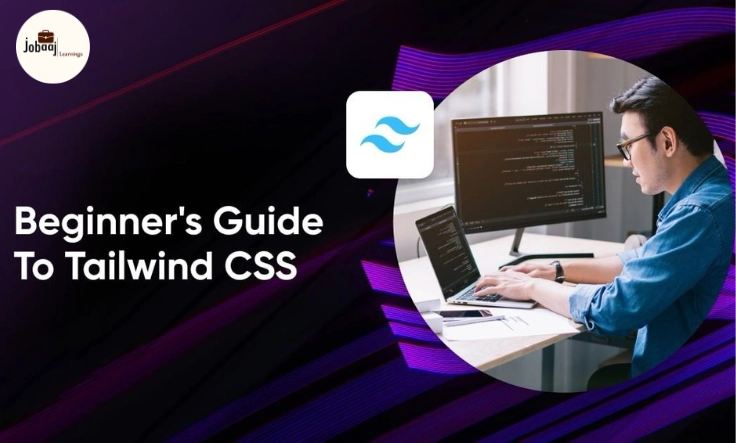
In the world of web development, design frameworks have always played an essential role in shaping how websites look and function. As technology evolves, so do design systems. Tailwind CSS is one of the newest frameworks that has quickly gained popularity in the developer community. But what is it about Tailwind CSS that makes it so effective and why is it dominating the web design space?
Exploring a career in Web Development? Apply now!
If you've spent any time in front-end development, you've probably heard of Tailwind CSS. It’s not just another CSS framework; it’s a game changer for developers and designers. In this blog, we’ll dive into what makes Tailwind CSS different, why it’s taking over the world of web design, and why it might just be the right choice for your next project.
What is Tailwind CSS?
Tailwind CSS is a utility-first CSS framework that allows you to design websites with pre-defined classes, all while maintaining complete control over your markup. Unlike traditional frameworks like Bootstrap or Foundation that come with a set of predefined components (buttons, navbars, etc.), Tailwind focuses on providing low-level utility classes to help you build custom designs quickly without writing a single line of CSS.
In other words, instead of spending hours writing custom CSS styles for different elements, Tailwind provides you with classes for everything you could possibly need—padding, margin, fonts, colors, borders, and much more. You apply these utility classes directly to HTML elements, and Tailwind will automatically apply the styling. This makes it incredibly flexible and customizable.
Why is Tailwind CSS So Popular?
-
Speed and Efficiency
Tailwind CSS drastically reduces development time. With its utility-first approach, developers can directly apply styles to HTML elements without needing to switch between files or create additional CSS rules. For instance, adding p-4 to an element adds padding of 1rem (based on the default configuration). No need to define custom classes or override existing styles—everything you need is at your fingertips.
With Tailwind, designers can implement changes on the fly and quickly see the results, making the design and development process smoother and faster.
-
Customization Without Overhead
One of the biggest advantages of Tailwind is its customizability. Tailwind gives you full control over the design system by allowing you to configure its settings through a single configuration file (tailwind.config.js). Want to change your color palette, spacing scale, or font families? Tailwind allows you to modify these settings according to your needs.
This flexibility makes it easy to adapt Tailwind to any project, ensuring that your designs are both unique and consistent across your website or application.
-
No More Fighting with CSS Specificity
One of the most tedious parts of working with traditional CSS is dealing with specificity issues. You know the scenario—trying to override default styles, only to have them not apply due to specificity conflicts. Tailwind eliminates this issue because its utility classes are atomic. Each utility class only applies to one specific style rule, so there’s no need to worry about overriding styles or dealing with unnecessary specificity.
How Tailwind CSS Works: The Utility-First Approach
At its core, Tailwind is based on a utility-first methodology. In contrast to frameworks like Bootstrap, where you build designs by using pre-made components, Tailwind gives you small, reusable utility classes that are designed to apply one specific style at a time. These classes are easy to mix and match, giving you total control over your design, without the need for custom CSS.
For example:
-
bg-blue-500applies a blue background. -
text-whitesets the text color to white. -
p-4adds padding around an element. -
roundedadds rounded corners to an element.
This approach allows you to style your HTML elements on the fly and make modifications directly in the HTML, making it faster to tweak designs without diving into a separate CSS file.
Benefits of Tailwind CSS
-
Mobile-First Responsive Design
In today’s mobile-first world, responsive design is more important than ever. Tailwind makes it incredibly easy to design for mobile, tablet, and desktop with its built-in responsive utility classes. You can adjust styles based on screen size by simply adding breakpoint prefixes, such as sm:, md:, and lg:. This makes it intuitive to create designs that are adaptable to any device without writing complex media queries.
-
Small File Sizes with PurgeCSS
One common issue with CSS frameworks is that they come with large file sizes, especially if you're only using a fraction of the framework’s components. Tailwind tackles this problem with a feature called PurgeCSS. PurgeCSS scans your HTML files and removes any unused CSS classes, ensuring that only the styles you need are included in your final stylesheet. This results in much smaller file sizes, which leads to faster page loads and better performance.
-
Consistency Across Projects
Consistency is key to great design. Tailwind's utility-first approach ensures that every element you create follows the same design system, making it easier to maintain consistency across your entire project. No more hunting down specific custom classes to ensure that different parts of your site match. With Tailwind, you simply use the same utility classes, ensuring a consistent style across all pages.
-
Great for Prototyping
Tailwind isn’t just for production-ready code; it’s also great for prototyping. Need to quickly mock up a page for a client or test an idea? Tailwind's utility-first approach allows you to build prototypes faster without worrying about customizing every single component. It’s all about getting the job done quickly and efficiently.
When Should You Use Tailwind CSS?
Tailwind CSS is particularly useful when:
-
You need complete control over your design: If you want to avoid the limitations of pre-made UI kits like Bootstrap, Tailwind lets you build your design from scratch, using small building blocks.
-
You’re building large-scale projects: The utility-first approach makes it easy to maintain consistent design across larger applications.
-
You want a faster development process: Tailwind allows you to quickly test different design ideas without needing to write custom CSS.
-
You’re working with a team: Since Tailwind encourages reusable utility classes, it becomes easier for teams to collaborate on front-end development.
Tailwind CSS vs. Other Frameworks
While Tailwind CSS is popular for its flexibility and efficiency, it’s important to understand how it compares to other frameworks like Bootstrap or Foundation.
-
Bootstrap: Provides ready-made components that you can use right away but lacks the customization flexibility that Tailwind offers. With Tailwind, you have more control over your design without having to deal with the limitations of predefined components.
-
Foundation: Similar to Bootstrap in terms of pre-designed components, but like Bootstrap, it might require more customization to achieve a unique look and feel. Tailwind, on the other hand, encourages a completely custom design from the ground up.
Conclusion
Tailwind CSS is revolutionizing web design by offering a utility-first approach that provides developers and designers with the freedom to create unique, responsive, and efficient websites with ease. By using utility classes, developers can quickly build custom designs while keeping the code clean and maintainable. Whether you're a beginner looking to quickly spin up a project or a seasoned developer aiming for greater flexibility, Tailwind CSS is a powerful tool to have in your development toolkit.
So, if you're ready to embrace the future of web design, give Tailwind CSS a try. With its ease of use, efficiency, and vast community support, it’s no wonder that it’s quickly becoming the go-to framework for web developers.
Dreaming of a Web Development Career? Start with Web Development Certificate with Jobaaj Learnings.
Frequently asked questions
What is Tailwind CSS?
Tailwind CSS is a utility-first CSS framework that allows you to design websites using pre-defined classes for common styling tasks, like padding, margin, and typography, directly in your HTML. It provides complete control over the design without the need for custom CSS.
Why is Tailwind CSS so popular?
Tailwind CSS has gained popularity because of its flexibility and efficiency. It helps developers build custom designs quickly using utility classes. It also allows for responsive design without writing media queries, offers easy customization, and has a very small file size when paired with PurgeCSS for unused CSS removal.
How does Tailwind CSS compare to other frameworks like Bootstrap?
Unlike Bootstrap, which offers pre-designed components, Tailwind CSS offers low-level utility classes that allow for complete customization. While Bootstrap comes with predefined components, Tailwind allows for more flexibility and control over the final design. Tailwind is also smaller in size, making it more efficient for modern web development.
Can I use Tailwind CSS with other CSS frameworks?
Yes, you can use Tailwind CSS alongside other frameworks, though it’s often recommended to use it exclusively to avoid conflicts in class naming conventions. Tailwind’s utility-first approach can complement other frameworks like Bootstrap for certain cases, but it works best as a stand-alone tool for building custom designs.
How do I make my website responsive with Tailwind CSS?
Tailwind CSS makes it easy to build responsive websites by using its built-in responsive utility classes. These classes are prefixed with breakpoints like `sm:`, `md:`, `lg:`, and `xl:`. This allows you to control how elements behave at different screen sizes without writing complex media queries.
How do I customize the design in Tailwind CSS?
Customization in Tailwind CSS is done through the configuration file (`tailwind.config.js`). You can modify the color palette, typography, spacing, and more, making Tailwind highly adaptable to any project. This flexibility ensures that you can maintain a unique design system while using the framework's utilities.

Join 5,00,000+ Subscribers
Be a part of our ever growing community.