Categories








































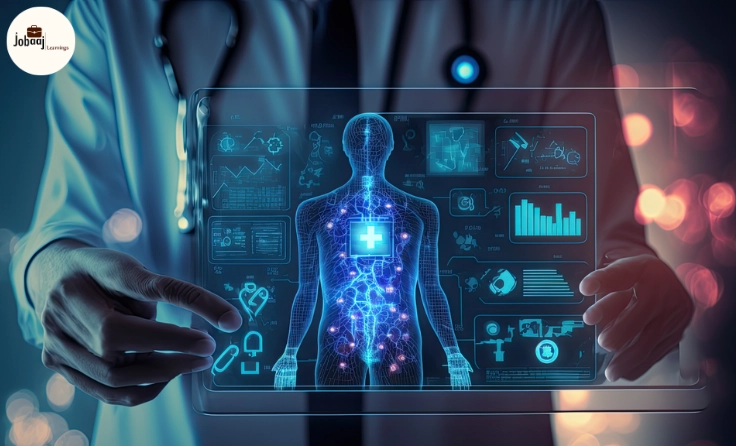
In healthcare, change has often been slow. Traditional methods of care long procedures, high costs, and complex systems have made improvements difficult. However, as we look ahead to 2026, artificial intelligence (AI) is emerging as a transformative force in healthcare. AI is beginning to revolutionize how we deliver healthcare, making it more efficient, personalized, and accessible.
Exploring a career in Performance Marketing? Apply Now!
AI isn't just about making things faster; it’s about helping healthcare professionals make better decisions, diagnosing conditions more accurately, and offering treatment that’s tailored to the individual. From faster diagnostics to more effective treatments, AI is already reshaping the healthcare landscape. Let’s explore how AI is making an impact in healthcare in 2026, the benefits it brings, and the challenges ahead.
AI in Diagnostics: Faster, More Accurate, and More Accessible
Getting the right diagnosis at the right time is crucial. In many cases, the difference between life and death depends on how quickly and accurately a condition is identified. Traditional diagnostic methods are often time-consuming, and human error can lead to missed diagnoses. This is where AI shines—by processing vast amounts of data quickly and accurately.
AI is especially powerful in medical imaging. It can analyze X-rays, MRIs, and CT scans to detect conditions like cancer, heart disease, and neurological disorders with higher accuracy than traditional methods. Some AI systems are even able to identify potential issues before symptoms appear, enabling earlier intervention.
AI also plays a role in personalized diagnostics, offering a more customized approach to patient care. By looking at a patient’s unique medical history, genetic data, and lifestyle, AI can help doctors determine the best treatment options for each individual. This is a big leap forward in providing care that truly fits the needs of the patient.
AI in Drug Discovery and Development
Developing new drugs has always been a long, expensive, and uncertain process. But AI is speeding things up. In fact, AI is already helping researchers discover new drugs in a fraction of the time it would normally take.
The key advantage of AI in drug development is its ability to analyze vast amounts of data quickly. AI algorithms can scan databases of medical research, clinical trials, and genetic information to predict how certain compounds will interact with the body. This allows researchers to identify promising drug candidates much earlier in the process, drastically shortening the timeline for bringing a drug to market. AI is also helping make drug development more personalized. By examining an individual’s genetic makeup, AI can suggest drugs that are more likely to work for that person, reducing the trial-and-error approach of traditional medicine.
The combination of AI's speed and precision is a huge breakthrough for the pharmaceutical industry and could ultimately lead to better, more effective treatments for patients worldwide.
Unlock the Power of Generative AI!
Join our crash course and master the future of AI. Limited seats, Enroll now!
AI in Patient Care: Virtual Health Assistants and Personalized Monitoring
AI is not just about helping doctors—it’s also changing the way patients experience healthcare. Virtual health assistants are becoming more common, helping patients manage their care in ways that were previously impossible. These AI-powered tools can schedule appointments, answer medical questions, and even guide patients through basic health assessments.
For doctors and healthcare professionals, this means less time spent on administrative tasks and more time dedicated to patient care. These virtual assistants can also triage patients, determining whether they need to be seen right away or can be treated later.
AI is also playing a role in personalized health monitoring. Devices like smartwatches and wearable sensors track everything from heart rate to sleep patterns. By analyzing this data, AI can alert patients and doctors about potential health risks before they become serious. This allows for more proactive care, reducing the need for emergency visits and hospital stays.
The integration of AI in patient care makes healthcare more personal and efficient, allowing people to take charge of their health in ways that weren’t possible before.
AI in Administrative Tasks: Streamlining Operations and Reducing Costs
Healthcare isn’t just about patient care—it also involves a lot of behind-the-scenes work. Managing patient records, processing insurance claims, and handling scheduling are all essential but time-consuming tasks. AI is helping to streamline these administrative functions, reducing the burden on healthcare providers and cutting costs.
AI can help automate the documentation process by analyzing patient records and filling out forms automatically. It can also manage billing and insurance claims, ensuring accuracy and reducing human errors that lead to costly mistakes. By automating these processes, hospitals and clinics can reduce operational costs and ensure they’re using their resources more efficiently.
AI is also improving overall hospital management. By analyzing past data, AI can predict when hospitals are likely to be busiest, helping them better allocate resources. This leads to shorter wait times, fewer bottlenecks, and better care for patients.
AI in Healthcare Accessibility: Expanding Care to Underserved Areas
One of the greatest promises of AI in healthcare is its ability to make care more accessible. Many people in remote or underserved areas don’t have easy access to doctors, clinics, or hospitals. AI is helping to change that.
Through telemedicine, patients in rural or hard-to-reach areas can connect with doctors virtually. AI tools can help doctors diagnose and treat patients without requiring an in-person visit. This is especially valuable for people who live far from medical facilities or who can’t afford traditional healthcare.
AI-powered diagnostic tools are also being used in mobile health clinics, helping healthcare workers diagnose diseases like malaria or tuberculosis in areas where medical professionals are scarce. These tools can provide instant feedback, making healthcare more accessible to people who might not otherwise receive it.
AI is truly expanding the reach of healthcare and making it more accessible to people everywhere.
Ethical Considerations and Challenges of AI in Healthcare
As AI becomes more integrated into healthcare, there are some challenges to consider. One major concern is data privacy. AI systems require access to large amounts of sensitive patient data, and it’s crucial that this data is kept secure. Without strict safeguards in place, the risk of data breaches or misuse is real.
Another challenge is bias in AI. If the data used to train AI systems is not diverse enough, the system might make biased decisions, which could lead to unequal care. It’s important for developers and healthcare professionals to ensure that AI systems are trained on data that represents a wide range of patients and conditions.
Despite these concerns, the potential benefits of AI in healthcare are immense. As long as ethical considerations are addressed, AI has the power to improve the quality of care for people around the world.
Conclusion
As we look to 2026, AI is set to play an even bigger role in the future of healthcare. From diagnostics to drug discovery and patient care, AI is already making healthcare smarter and more efficient. Its ability to process vast amounts of data and make real-time decisions is helping doctors deliver better care, while patients benefit from personalized treatment and faster access to care.
There are challenges ahead, especially when it comes to data privacy and ensuring that AI systems are unbiased, but the potential for AI to revolutionize healthcare is clear. With the right approach, AI will play a key role in transforming healthcare, making it more effective, affordable, and accessible for all.
Dreaming of a Performance Marketing Career? Start with Performance Marketing Certificate with Jobaaj Learnings.
Frequently asked questions
What is AI in healthcare?
AI in healthcare refers to the use of artificial intelligence technologies to improve medical processes, such as diagnostics, drug discovery, patient care, and administrative tasks. It involves systems that can analyze data, make predictions, and help healthcare professionals make informed decisions faster and more accurately.
How is AI improving diagnostics in healthcare?
AI improves diagnostics by analyzing medical images, such as X-rays, MRIs, and CT scans, with great accuracy. It can detect conditions like cancer, heart disease, and neurological disorders, often before symptoms appear. AI helps doctors make faster and more accurate diagnoses, leading to early intervention and better patient outcomes.
What role does AI play in drug discovery?
AI is speeding up the drug discovery process by analyzing vast amounts of data to predict how different compounds will interact with the body. It helps identify promising drug candidates more quickly, reducing the time and cost of developing new medications. AI is also helping personalize medicine, allowing for treatments tailored to an individual’s unique genetic makeup.
How is AI helping in patient care?
AI is making patient care more personalized and efficient. Virtual health assistants powered by AI can help patients schedule appointments, answer health-related questions, and even triage symptoms. AI is also used in wearable devices that monitor health in real-time, alerting patients and doctors to any concerning changes, which allows for proactive care.
Can AI improve administrative tasks in healthcare?
Yes, AI is helping streamline administrative tasks in healthcare. It can automate documentation, billing, and insurance claims, reducing the burden on healthcare providers. AI also helps manage hospital operations by predicting busy times and optimizing resource allocation, making healthcare services more efficient and cost-effective.
How is AI expanding access to healthcare?
AI is expanding healthcare access by enabling telemedicine, where patients in remote areas can have virtual consultations with doctors. AI-powered diagnostic tools are also being used in mobile health clinics to diagnose diseases in underserved regions. This makes healthcare more accessible to people who might otherwise lack resources or live too far from medical facilities.
What are the ethical concerns with AI in healthcare?
The main ethical concerns with AI in healthcare include data privacy and the potential for bias in AI algorithms. AI systems require access to large amounts of sensitive medical data, which must be securely protected. Additionally, if AI systems are trained on biased data, they could make inaccurate decisions, leading to unequal healthcare outcomes.
How will AI impact the future of healthcare?
AI is expected to play a major role in the future of healthcare by making it more efficient, personalized, and accessible. From improving diagnostic accuracy to reducing healthcare costs and expanding access to care, AI has the potential to transform how we approach healthcare and improve patient outcomes globally.

Join 5,00,000+ Subscribers
Be a part of our ever growing community.