Categories








































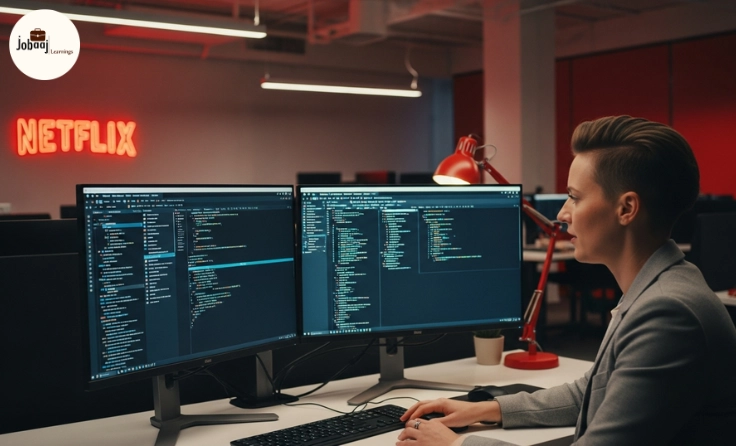
Securing an interview as a Full-Stack Developer at Netflix is an exciting opportunity to work at the cutting edge of technology. As one of the world’s leading streaming platforms, Netflix requires developers with a strong understanding of both front-end and back-end technologies, along with problem-solving skills and the ability to work in a fast-paced, collaborative environment.
Exploring a career in Web Development? Apply now!
The interview process at Netflix is thorough, assessing both technical knowledge and your fit within the company culture. It’s essential to be prepared for a mix of technical questions, coding challenges, and behavioral interviews.
In this blog, we’ve compiled the top 30 interview questions for Full-Stack Developers at Netflix, along with helpful tips on how to answer each one effectively.
1. Tell Me About Yourself
This classic icebreaker is your chance to highlight your strengths and set the tone for the rest of the interview. Focus on your technical skills, relevant experience, and key accomplishments related to Full-Stack Development. Don’t go into personal details—keep it professional and concise.
Tailor your response to emphasize your experience with both front-end and back-end technologies, highlighting projects that are relevant to Netflix’s tech stack.
2. What Full-Stack Technologies Are You Most Comfortable With?
Netflix uses a variety of technologies across its tech stack. This question helps interviewers understand which tools you’re already familiar with and where your expertise lies.
Be honest about your experience with technologies like React.js, Node.js, Express, MongoDB, JavaScript, and Python. If you’re not familiar with specific tools, express your willingness to learn them.
3. How Do You Ensure the Performance of Web Applications?
Performance is critical at Netflix, especially since millions of users access the platform at once. Interviewers will want to understand how you optimize web applications for speed and efficiency.
Discuss methods like code splitting, lazy loading, and caching. Mention performance tools like Lighthouse or WebPageTest, and how they help identify performance bottlenecks.
4. How Would You Handle Cross-Browser Compatibility?
Ensuring that a web application works seamlessly across different browsers is essential. Netflix’s app should work flawlessly, whether on Chrome, Safari, or Firefox.
Explain strategies like feature detection, using tools like Modernizr, and testing with BrowserStack or Sauce Labs to ensure cross-browser compatibility.
5. Explain the Difference Between RESTful APIs and GraphQL.
As Netflix evolves, its API structure may include GraphQL for more efficient data fetching. This question tests your understanding of two popular API architectures.
Compare both technologies, focusing on how GraphQL allows clients to request exactly the data they need and reduce over-fetching, while REST typically has a fixed set of data per endpoint.
6. What Is the Role of Middleware in Web Applications?
Middleware is a crucial part of server-side development, particularly in handling requests and responses.
Explain that middleware processes incoming requests before they reach the core business logic of the application, such as for authentication, logging, and error handling.
7. Describe Your Experience with Front-End Frameworks Like React or Angular.
Netflix uses React extensively for building interactive user interfaces. This question helps assess your experience with front-end libraries.
Share specific projects where you used React or Angular. Explain how you leveraged their features, such as component-based architecture, state management, and hooks in React.
8. How Do You Ensure the Security of a Full-Stack Application?
Security is paramount, especially for a company like Netflix that deals with sensitive user data.
Discuss best practices like input validation, OAuth2, JWT (JSON Web Tokens), HTTPS, and data encryption. Mention how you mitigate common vulnerabilities such as SQL injection or cross-site scripting (XSS).
9. What Are Some Key Challenges You’ve Faced with Database Management?
Database management can be challenging, especially in full-stack development. This question evaluates your experience working with databases and solving related problems.
Share specific challenges you’ve faced, whether it’s scaling databases, ensuring data consistency, or optimizing queries for performance. Discuss your experience with both SQL and NoSQL databases, and mention how you’ve handled issues like database indexing or sharding.
10. How Would You Approach Building a Scalable Web Application?
Scalability is essential for an application like Netflix that needs to handle millions of simultaneous users. This question evaluates your understanding of how to design scalable systems.
Explain how you would use microservices to break down a large application into smaller, independently deployable services. Discuss how you would implement load balancing, auto-scaling in cloud environments, and caching strategies to handle massive traffic volumes without compromising performance.
11. What Is the Difference Between Synchronous and Asynchronous Programming?
Asynchronous programming is key to web development, especially in applications like Netflix, where streaming, real-time updates, and background tasks must run simultaneously.
Explain the differences between synchronous programming (where tasks are executed in sequence) and asynchronous programming (where tasks can run concurrently). Share how you’ve used callbacks, Promises, and async/await to handle asynchronous tasks.
12. How Do You Debug and Troubleshoot Issues in Your Code?
Debugging is a key skill for any developer. Netflix’s tech stack is large, and knowing how to troubleshoot efficiently is essential.
Share your process for debugging, such as using Chrome DevTools, Postman for API testing, and logging tools like Winston. Talk about a specific instance where you debugged an issue and how you approached resolving it.
13. How Would You Implement a Search Feature for a Web Application?
A search feature is vital in any content-heavy platform like Netflix.
Describe how you would build a search feature using Elasticsearch or Solr for fast searching. Discuss how you would implement indexing, query optimization, and pagination to ensure scalability and performance.
14. What Is Continuous Integration and Continuous Deployment (CI/CD), and Why Is It Important?
Netflix frequently deploys new features and updates. Understanding CI/CD is essential.
Explain how CI/CD automates the process of testing, integrating, and deploying code. Mention tools like Jenkins, GitLab CI, and CircleCI, and how they help ensure quicker deployments and fewer bugs in production.
15. How Do You Manage Version Control Using Git?
Version control is essential when working with teams on large codebases. This question gauges your familiarity with Git and collaboration tools.
Describe how you use Git for version control, including branching, merging, and resolving conflicts. Mention how you’ve collaborated with teams using GitHub, GitLab, or Bitbucket for version management.
16. How Would You Explain Complex Financial Information to Non-Financial Stakeholders?
As a Full-Stack Developer, you might need to present technical details to stakeholders who don’t have a technical background. This question evaluates your communication and presentation skills.
Focus on simplifying the information and using visual aids, like charts or diagrams, to make complex data more understandable. Show how you break down technical concepts into simpler terms.
17. How Do You Ensure Data Integrity in Your Web Applications?
Data integrity is a key concern for any application, especially for one handling personal or sensitive user information, like Netflix.
Discuss practices like input validation, sanitization, and encryption to ensure data accuracy and security. Mention using secure connections (HTTPS) and techniques for preventing data corruption during transmission.
18. What Are Some Best Practices for Handling State Management in React?
State management is crucial for building scalable React applications, particularly in complex systems like Netflix.
Discuss state management techniques such as useState, useContext, or Redux. Share examples of when you used each method in different situations, explaining why one might be preferred over the other.
19. How Would You Build a Scalable Video Streaming Service?
Given that Netflix is a video streaming platform, this question assesses your understanding of scalability, especially for media-heavy applications.
Discuss how you would design a scalable video streaming system using tools like AWS S3 for storage, CDN for fast delivery, and microservices for scaling specific parts of the system independently. Talk about load balancing and ensuring low latency for global users.
20. What Is Your Experience with Containerization and Docker?
Containerization is essential for ensuring that applications run consistently across different environments, which is especially important in complex systems like Netflix.
Share your experience with Docker, explaining how you’ve used it to containerize applications for development, testing, and production. Mention tools like Docker Compose for managing multi-container applications and how it helps with scalability and deployment.
21. What Are the Advantages of Using Serverless Architectures?
Serverless architectures can reduce operational complexity, which is essential for large-scale applications.
Discuss the benefits of serverless computing, such as reduced overhead, auto-scaling, and simplified management of application logic. Mention tools like AWS Lambda and how it helps with cost efficiency and faster deployment cycles.
22. How Do You Handle and Optimize Large Datasets?
Working with large datasets is common in applications like Netflix, especially when managing content libraries or user data.
Discuss strategies like pagination, data streaming, and batch processing for handling large volumes of data. Mention tools like Hadoop, Spark, or Kafka for big data processing.
23. What Is Your Experience with Cloud-Native Applications?
Netflix heavily relies on cloud computing to handle its massive user base. Cloud-native applications are built to take full advantage of the cloud environment.
Share your experience with cloud-native application development. Talk about designing and deploying applications using microservices and containers. Mention your use of cloud services like AWS, Azure, or Google Cloud.
24. How Would You Optimize an Application for Mobile Users?
Since Netflix is used across multiple devices, including mobile platforms, optimizing for mobile users is critical.
Discuss techniques like responsive design using media queries, mobile-first CSS, and optimizing images and assets for faster load times. Share an example of how you’ve optimized an application for mobile users, ensuring a seamless experience.
25. How Do You Ensure High Availability in a Distributed System?
High availability is essential for applications like Netflix that need to be always on for users worldwide.
Explain techniques for ensuring redundancy, such as replicating databases, using load balancing, and auto-scaling. Mention failover strategies and how you use tools like AWS or Kubernetes for high availability.
26. What Is the Role of Caching in Web Development?
Caching is critical for improving the performance of web applications, especially in platforms like Netflix with millions of users.
Explain how caching can reduce server load and improve response times. Discuss caching mechanisms like Memcached, Redis, and browser caching to reduce server load and improve user experience.
27. How Do You Handle Asynchronous Operations in Web Development?
Asynchronous operations are common in web development, especially when dealing with APIs or external services.
Discuss techniques for managing asynchronous operations using Promises, async/await, or callbacks. Explain how you handle error management and ensure data consistency during asynchronous processes.
28. What Are SQL and NoSQL Databases?
Understanding the difference between SQL and NoSQL is fundamental for a Full-Stack Developer.
Explain the differences between the two types of databases, focusing on how SQL databases use structured data while NoSQL databases are more flexible and scale better for large, unstructured datasets.
29. What Are Your Favorite Tools for Development?
Netflix developers rely on a variety of tools for efficient development.
Mention your favorite tools for version control, testing, debugging, and project management. Highlight tools like VS Code, GitHub, Postman, and JIRA.
30. How Would You Design a Scalable System for Netflix’s Streaming Service?
Scalability is critical for a service like Netflix, which handles millions of users.
Discuss your approach to building scalable architectures using microservices, cloud computing, and load balancing. Mention how you would ensure the system handles growth without affecting performance.
Dreaming of a Web Development Career? Start with Web Development Certificate with Jobaaj Learnings.
Frequently asked questions
What is the most important skill for a Full-Stack Developer at Netflix?
As a Full-Stack Developer at Netflix, the most important skills are strong technical knowledge in both front-end and back-end technologies, problem-solving abilities, and the ability to collaborate with cross-functional teams. Familiarity with scalable system design, cloud computing, and efficient coding practices are also essential.
What technologies does Netflix use for Full-Stack development?
Netflix uses a wide range of technologies, including **React.js** for front-end development, **Node.js** and **Express** for back-end, **MongoDB** and **PostgreSQL** for database management, and **AWS** for cloud services. Full-Stack Developers should have experience with these or similar technologies.
How can I prepare for my Full-Stack Developer interview at Netflix?
To prepare for an interview at Netflix, focus on improving your technical skills in both front-end and back-end development. Practice coding problems, review **React.js**, **Node.js**, and **database management** concepts, and be ready for behavioral questions about teamwork, problem-solving, and leadership. Research Netflix’s culture and values to ensure you align with their mission and goals.
What is the difference between SQL and NoSQL databases?
SQL databases are relational, meaning they store data in tables with rows and columns, while NoSQL databases are non-relational, allowing for more flexibility in how data is stored and queried. SQL is used for structured data, while NoSQL is often better for handling large volumes of unstructured or semi-structured data.
What is the role of caching in web development?
Caching is used to store frequently accessed data temporarily, reducing the time it takes to retrieve it and improving the performance of the application. This is particularly important in high-traffic applications like Netflix, where reducing latency and improving response time can significantly enhance the user experience.
What are the key principles of building scalable systems for applications like Netflix?
To build a scalable system, key principles include using **microservices** to separate concerns, **load balancing** to distribute traffic evenly, **auto-scaling** to accommodate traffic spikes, **caching** to reduce data retrieval times, and using a **content delivery network (CDN)** to speed up content delivery globally. It's also essential to design for fault tolerance and redundancy to ensure high availability.

Join 5,00,000+ Subscribers
Be a part of our ever growing community.