Categories













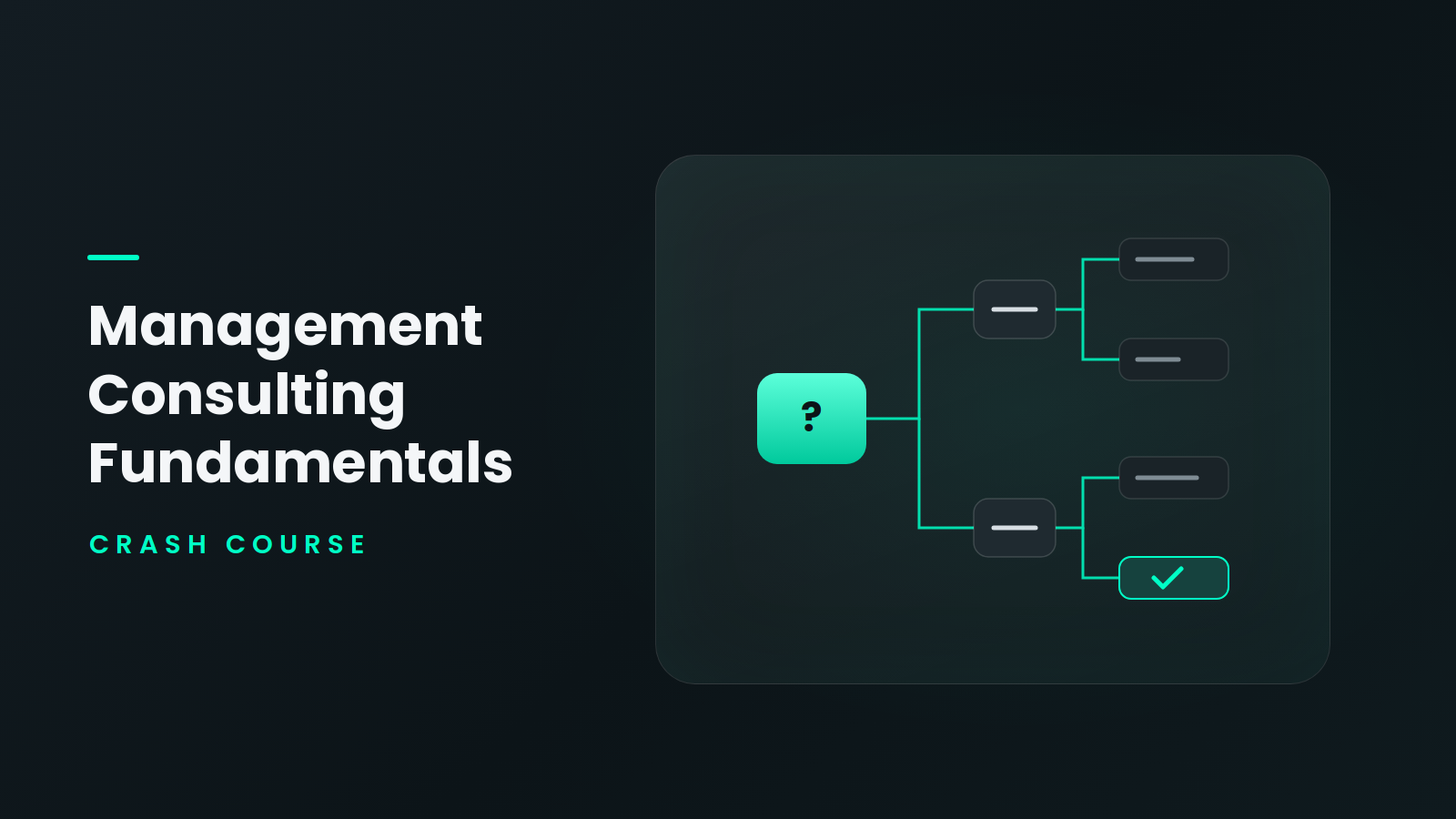


























Most people think case interviews are about getting the “right answer.”
That’s not true.
Interviewers are not checking your math skills alone. They are checking how you think when a business problem has no clear path.
That’s why business case study examples for interviews matter so much. They show how real companies break down messy problems like falling profits, new market entry, or product failure.
If you can think clearly in those situations, you’re already ahead of most candidates.
What is a Business Case Study Interview?
A business case study interview is a structured problem-solving exercise used by consulting firms, product companies, and analytics roles.
You are given a real-world business situation and asked to solve it live.
For example:
- Why are profits dropping in a retail company?
- Should a company enter a new market?
- How should a startup price its product?
It’s not about memorizing answers. It’s about structured thinking.
Why Companies Use Case Studies in Interviews
Companies like McKinsey, BCG, Bain, Amazon, and top analytics firms use case interviews for one reason:
They want to see how you think under uncertainty.
They are testing:
- Logical reasoning
- Structured thinking
- Business intuition
- Communication clarity
- Data interpretation ability
Even if you don’t get the final answer right, a strong structure can still get you selected.
Top Business Case Study Examples for Interviews
Let’s break down the most common types of case study examples you’ll face.
1. Profitability Case Study
This is the most common interview case.
Example:
A retail company’s profit has dropped by 20% in the last 6 months. Why?
How to approach it:
Break it into:
Profit = Revenue – Cost
Now go deeper:
Revenue side:
- Price drop?
- Lower customer demand?
- Competitor pressure?
Cost side:
- Supplier cost increase?
- Logistics issues?
- Operational inefficiency?
What interviewer checks:
- Structured breakdown
- Ability to isolate problem areas
- Logical elimination of causes
2. Market Entry Case Study
Example:
Should a food delivery company enter a new city like Pune or Jaipur?
Key structure:
Market Attractiveness:
- Market size
- Customer demand
- Competition level
Company Fit:
- Logistics capability
- Brand strength
- Cost to enter
Risk factors:
- Regulations
- Local competition
Weakest point candidates miss:
They assume every big market is good. Interviewers expect you to question feasibility, not just opportunity.
3. Pricing Strategy Case Study
Example:
How should a SaaS company price its subscription model?
Key approach:
- Cost-based pricing
- Competitor-based pricing
- Value-based pricing
Then refine:
- Customer willingness to pay
- Tiered pricing models
- Freemium vs premium strategy
What matters most:
They want to see if you understand customer psychology, not just numbers.
4. Product Launch Case Study
Example:
Should a fintech app launch a credit card feature?
Breakdown:
- Target audience
- Revenue potential
- Cost of implementation
- Risk (fraud, regulation)
Strong answers include:
- User segmentation
- MVP strategy
- Go-to-market plan
5. Growth Strategy Case Study
Example:
How can an e-commerce company increase revenue by 30%?
Possible directions:
- Increase customer base
- Improve retention
- Increase order value
This is where creativity matters.
But creativity without structure = weak answer.
Case Interview Frameworks You Must Know
Good answers always follow structure.
1. Profitability Framework (Revenue – Cost)
2. 4P Framework (Product, Price, Place, Promotion)
3. Market Entry Framework (Market – Company – Competition – Risk)
4. Growth Framework (Acquire – Retain – Expand)
5. MECE Principle (Mutually Exclusive, Collectively Exhaustive)
If your answer overlaps categories or misses areas, interviewers notice immediately.
Skills Required for Case Study Interviews
- Analytical Skills: You must break problems into smaller parts quickly.
- Business Awareness: Understanding how companies actually make money matters more than theory.
- Structured Thinking: Random answers fail. Structure wins.
- Communication Skills: You must explain thinking clearly, not just calculate.
- Quantitative Ability: Basic math, percentages, and estimation are enough.
Tools & Techniques Used in Case Prep
Even though interviews are verbal, these tools help practice:
- Excel (for practice calculations)
- Power BI (for business understanding)
- Case interview frameworks sheets
- Market sizing practice sheets
- Mock interview platforms
Real preparation is less about tools and more about repetition.
Frequently asked questions
What are business case study examples for interviews?
Business case study examples are real-world business problems like profit decline, market entry, or pricing strategy. Candidates are asked to analyze and solve them using structured thinking rather than memorized answers or formulas.
How do I prepare for a case study interview?
Start with basic frameworks like profitability and market entry. Practice 1–2 cases daily, focus on structuring answers, and do mock interviews. Consistency matters more than cramming multiple theories at once.
Are case study interviews difficult?
They are challenging at first because they test thinking, not knowledge. But with practice, patterns become familiar. Most candidates struggle due to lack of structure rather than difficulty of questions.
What skills are tested in case interviews?
Interviewers test analytical thinking, business understanding, structured problem-solving, communication clarity, and basic numerical ability. They also observe how logically you approach unclear or incomplete information.
Which careers use case study interviews?
Case interviews are common in consulting, business analyst roles, product management, and strategy positions. Companies like McKinsey, BCG, Amazon, and fintech firms frequently use them during hiring.

Join 5,00,000+ Subscribers
Be a part of our ever growing community.
Related reads

Business Analyst Salary in India 2026: Fresher Salary, Experience and Career Growth

Consultant Salary in India 2026: Average Salary, Roles, Experience and Career Growth