Categories





































If you’re preparing for a frontend developer interview, you already know how important it is to demonstrate not only your technical knowledge but also your ability to problem-solve and communicate effectively. Whether you’re just starting your career or looking to make the next step, having a strong understanding of the most commonly asked interview questions and knowing how to answer them can make all the difference.
In this article, we’ve compiled some of the top interview questions for frontend developers along with sample answers to help you prepare. From technical skills to problem-solving and design patterns, these questions cover everything you need to show that you’re the right fit for the job.
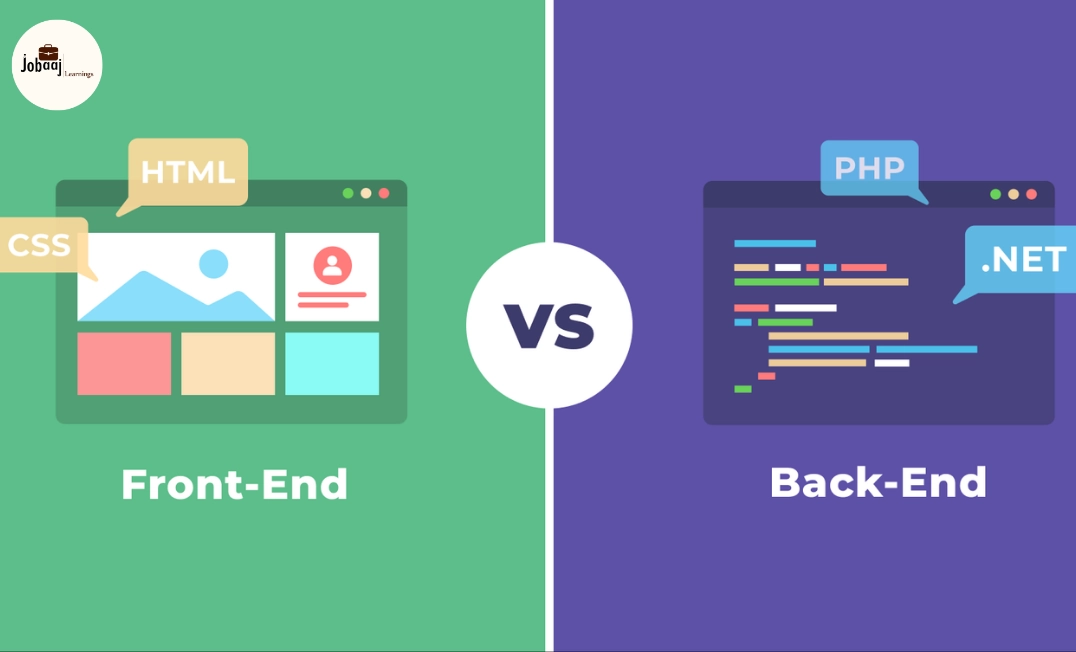
1. What is the difference between HTML, CSS, and JavaScript?
Sample Answer:
HTML (HyperText Markup Language), CSS (Cascading Style Sheets), and JavaScript are the three core technologies used in frontend development:
-
HTML is the structure of a webpage. It defines the content and layout of the page, including elements like headings, paragraphs, links, images, and forms.
-
CSS is used to style the content that HTML creates. It controls the layout, colors, fonts, and overall appearance of the webpage. With CSS, you can make your website visually appealing and responsive.
-
JavaScript is the programming language that adds interactivity to the webpage. It allows you to manipulate the DOM (Document Object Model), handle events like clicks, and dynamically change content on the page.
In summary, HTML is the structure, CSS is the styling, and JavaScript is the behavior.
2. What are the differences between "let", "const", and "var" in JavaScript?
Sample Answer:
In JavaScript, let, const, and var are used to declare variables, but each has its own characteristics:
-
var: This is the oldest way to declare a variable. It has function scope, meaning it is only available within the function where it was declared. var also has issues with hoisting, where the variable is accessible before it is declared.
-
let: Introduced in ES6 (ECMAScript 2015), let is block-scoped, meaning it is available only within the block (enclosed by
{}) where it is defined. let can be reassigned, but it cannot be redeclared in the same scope. -
const: const is also block-scoped like let, but it cannot be reassigned after being initialized. It is used for variables that should not change once they are set, such as configuration values.
3. Can you explain the concept of the Virtual DOM in React?
Sample Answer:
The Virtual DOM (VDOM) is a concept used in React (and other modern frontend frameworks) to optimize performance when updating the user interface.
When a change occurs in a React component, the Virtual DOM is first updated rather than directly modifying the actual DOM. The VDOM is a lightweight, in-memory representation of the actual DOM. React compares the updated VDOM with the previous version (this process is called diffing) and calculates the most efficient way to update the real DOM.
This process minimizes the number of direct manipulations to the real DOM, improving performance, especially in larger applications. The Virtual DOM makes React apps faster by batching DOM updates and reducing unnecessary reflows and repaints in the browser.
4. What are the differences between responsive design and adaptive design?
Sample Answer:
Both responsive design and adaptive design are approaches to making websites work well on different screen sizes, but they differ in how they achieve this:
-
Responsive Design: This approach uses fluid grids, flexible layouts, and CSS media queries to create a design that adapts seamlessly to any screen size. It’s a single design that adjusts its layout based on the device's screen size and orientation. The content adjusts proportionally, which makes the website look good on any device, from desktop to mobile.
-
Adaptive Design: This approach uses multiple fixed layouts that are tailored to specific screen sizes (e.g., desktop, tablet, mobile). When a user visits the site, the server detects the screen size and serves the appropriate layout. It’s a bit more rigid compared to responsive design, as it doesn't rely on flexible layouts.
5. What is the CSS Box Model?
Sample Answer:
The CSS box model is the fundamental concept behind how elements are structured and sized on a webpage. Every HTML element can be thought of as a rectangular box, and the box model consists of the following parts:
-
Content: The actual content of the box, such as text or images.
-
Padding: The space around the content, inside the border, that adds space between the content and the border.
-
Border: The edge of the box, surrounding the padding (if any). The border’s thickness and style can be customized.
-
Margin: The space outside the border, between the element and its surrounding elements. Margins push other elements away from the box.
By understanding the box model, you can control how much space an element takes up and how it interacts with other elements on the page.
6. What are CSS Flexbox and Grid, and when should you use them?
Sample Answer:
Both Flexbox and CSS Grid are modern layout systems that allow for responsive design, but they serve different purposes:
-
CSS Flexbox: Flexbox is designed for one-dimensional layouts (either rows or columns). It is ideal for distributing space within a container and aligning items along a single axis (horizontally or vertically). Flexbox makes it easy to create complex layouts with minimal code, and it’s great for smaller components like navigation bars, lists, and buttons.
-
CSS Grid: CSS Grid is a two-dimensional layout system, meaning it can handle both rows and columns at the same time. It’s perfect for larger, more complex layouts, such as entire page layouts where you want more control over how items are arranged in both directions. Grid allows for precise control over placement and alignment of items.
You would use Flexbox for simpler, one-dimensional layouts, and CSS Grid for more complex, two-dimensional structures.
7. What is the purpose of the "this" keyword in JavaScript?
Sample Answer:
In JavaScript, "this" refers to the context in which a function is called. The value of this depends on how the function is invoked:
-
In a regular function call, this refers to the global object (in browsers, it’s the window object).
-
In an object method, this refers to the object that owns the method.
-
In arrow functions, this is lexically bound, meaning it refers to the this value in the surrounding context (usually the object in which the function is declared).
The this keyword allows for dynamic behavior, and understanding it is crucial for working with JavaScript functions and objects.
8. What is a promise in JavaScript?
Sample Answer:
A promise is an object in JavaScript that represents the eventual completion (or failure) of an asynchronous operation and its resulting value. Promises are used to handle asynchronous operations like API calls, timeouts, or file reading.
A promise can be in one of three states:
-
Pending: The operation is still ongoing.
-
Fulfilled: The operation was successful and returned a value.
-
Rejected: The operation failed and returned an error.
Promises provide methods like .then(), .catch(), and .finally() to handle the outcome of asynchronous operations in a cleaner and more manageable way than using callbacks.
9. How does event delegation work in JavaScript?
Sample Answer:
Event delegation is a technique in JavaScript where you attach a single event listener to a parent element rather than to individual child elements. This approach takes advantage of event propagation, specifically bubbling, which allows events to be handled by parent elements even when they originate from child elements.
For example, if you have a list of items and want to add a click event to each item, you can attach the event listener to the parent of the list rather than each list item. When an item is clicked, the event bubbles up to the parent, and you can handle the event based on the target element.
This technique is efficient, especially when dealing with dynamic content where elements are added or removed frequently.
10. What are web performance optimization techniques you use for a website?
Sample Answer:
Web performance is critical for user experience and SEO. Some common techniques to optimize web performance include:
-
Minifying CSS, JavaScript, and HTML: Reducing the size of your code files to improve load time.
-
Image Optimization: Compressing images without losing quality, and using responsive images for different screen sizes.
-
Lazy Loading: Loading images or content only when they’re needed (e.g., when they come into view on the screen).
-
Caching: Implementing browser and server-side caching to reduce the load time for returning users.
-
Content Delivery Network (CDN): Using a CDN to serve static files from servers closer to the user to reduce latency.
-
Code Splitting: Breaking down large JavaScript bundles into smaller pieces, only loading the necessary code when needed.
Conclusion
By understanding these common interview questions and practicing your responses, you can be well-prepared to impress your future employer. Frontend development is not only about knowing the technical concepts but also about demonstrating your ability to solve real-world problems and communicate effectively. Practice answering these questions, and remember to stay confident in your skills.
Good luck on your frontend developer interview, and we hope this guide helps you secure that dream role!
Dreaming of a Web Development Career? Start with Web Development Certificate with Jobaaj Learnings.
Frequently asked questions
What are the most common interview questions for frontend developers?
Some of the most common interview questions for frontend developers include questions about **HTML**, **CSS**, **JavaScript**, and **web performance**. Expect to discuss topics like the differences between **let**, **const**, and **var**, **CSS Flexbox vs Grid**, **JavaScript promises**, and how you would optimize a website’s performance.
What is the best way to prepare for a frontend developer interview?
To prepare for a frontend developer interview, you should review key concepts such as **HTML/CSS** basics, **JavaScript fundamentals**, and modern web frameworks like **React** or **Vue.js**. Practice coding challenges, read through common interview questions, and familiarize yourself with **responsive design**, **cross-browser compatibility**, and **performance optimization techniques**.
How do you explain Flexbox vs Grid in an interview?
In an interview, explain that **Flexbox** is a one-dimensional layout system that works on rows or columns, ideal for simpler layouts. **CSS Grid**, on the other hand, is a two-dimensional layout system that handles both rows and columns, making it better suited for more complex page layouts. Provide examples to show how both can be used and when to choose one over the other.
What is the importance of knowing JavaScript in frontend development?
JavaScript is essential for frontend development as it enables interactivity on web pages. It allows developers to manipulate the **DOM**, handle user events (like clicks or form submissions), and dynamically update content on the page. Understanding JavaScript is crucial for building modern, interactive web applications and enhancing user experience.
How should I approach explaining a complex technical concept in a frontend interview?
When explaining a complex technical concept, start by breaking it down into simple terms. Use analogies or visual aids to make it easier for the interviewer to understand. Don’t rush through your explanation—give clear, concise examples, and make sure the interviewer is following along. If they ask clarifying questions, be prepared to dive deeper into the topic.
What is the difference between React and Vue.js?
Both **React** and **Vue.js** are popular **JavaScript frameworks**, but they differ in several ways. React is more focused on the **view layer** of the application and is more flexible in terms of configuration and integration with other libraries. **Vue.js**, on the other hand, provides more **out-of-the-box solutions** and is easier to integrate with existing projects. Discuss the benefits of each and when to use them based on project requirements.

Join 5,00,000+ Subscribers
Be a part of our ever growing community.