Categories














/content/learnings/assets/header/ManagementConsulting.svg)
/content/learnings/assets/header/InvestmentBanking.svg)


























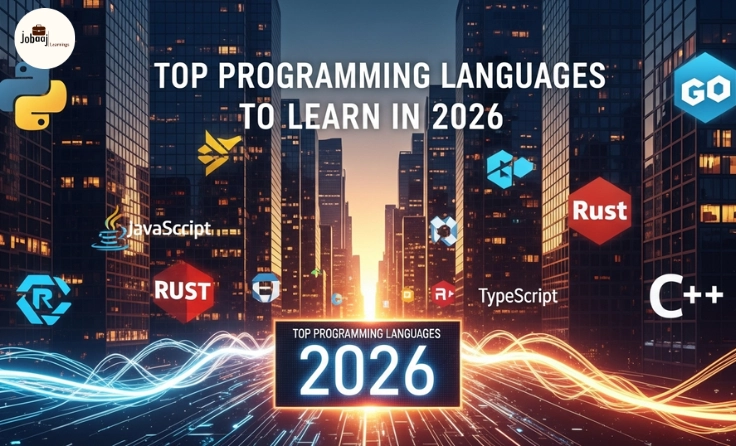
The world of technology is constantly evolving, and as we approach 2026, the demand for skilled programmers continues to rise. Whether you are a beginner looking to start your coding journey or a seasoned developer seeking to expand your skill set, it’s essential to stay updated on the programming languages that are shaping the future. With new technologies emerging, artificial intelligence, data science, cloud computing, and web development are taking center stage, making it crucial to learn the right programming languages for the years ahead.
Exploring a career in Web Development? Apply now!
In this article, we will explore the top programming languages to learn in 2026, helping you stay ahead of the curve and make informed decisions about your career in technology.
1. Python
Python has consistently been one of the most popular programming languages for years, and its growth shows no signs of slowing down. It is a go-to language for anyone interested in fields like data science, artificial intelligence, machine learning, automation, and web development.
Python’s simplicity and ease of learning make it a top choice for beginners, but its power and versatility also make it indispensable for professionals. Its vast ecosystem of libraries and frameworks, like TensorFlow for AI and Flask for web development, make Python one of the most versatile languages available today.
With its widespread use in various industries and continuous demand in emerging fields like AI and data science, Python is a must-learn language for 2026 and beyond.
Key Areas: Data Science, Machine Learning, AI, Web Development, Automation
Popular Frameworks: Django, Flask, TensorFlow
2. JavaScript
If you’re interested in web development, then JavaScript is a language you cannot ignore. As the backbone of interactive websites and web applications, JavaScript is an essential skill for front-end and back-end developers. Its popularity continues to grow, thanks to Node.js, which allows JavaScript to run on the server side as well.
JavaScript’s ability to create dynamic, responsive user interfaces has made it the go-to language for developing modern web applications. Additionally, with frameworks like React.js and Vue.js, JavaScript is continuously evolving to meet the demands of developers building scalable, high-performance applications.
JavaScript remains the most used programming language for web development, making it a key skill for anyone looking to build a career in the web development industry.
Key Areas: Web Development, Front-end, Back-end (Node.js)
Popular Frameworks: React.js, Vue.js, Angular, Node.js
3. Go (Golang)
Developed by Google, Go (or Golang) has rapidly gained popularity due to its efficiency and scalability, especially in the realm of cloud computing, distributed systems, and microservices. Go’s clean syntax, strong concurrency support, and performance make it an excellent choice for developing high-performance applications.
Go is especially suited for building backend services where speed and scalability are crucial. It is also the language behind modern cloud platforms such as Docker and Kubernetes, which are essential tools for containerization and orchestration in cloud environments.
With the growth of cloud-based applications and the shift toward microservices architectures, Go is quickly becoming a top language for backend development.
Key Areas: Cloud Computing, Backend Development, Distributed Systems, Microservices
Popular Frameworks: Gin, Echo
4. Rust
Rust is a systems programming language that’s gaining a lot of attention for its focus on memory safety, performance, and concurrency. It’s designed to eliminate common bugs found in low-level programming, such as null pointer dereferencing and buffer overflows, making it ideal for systems programming.
Rust has seen a surge in popularity, especially in industries that require high-performance software, such as gaming, embedded systems, and blockchain. Its increasing adoption in open-source projects and large companies like Mozilla and Microsoft indicates its growing influence in the tech world.
As the demand for reliable and secure software grows, Rust’s emphasis on safety and performance makes it an essential language for developers working on performance-critical systems.
Key Areas: Systems Programming, Blockchain, Game Development, Embedded Systems
Popular Frameworks: Actix, Rocket
5. Swift
For those interested in developing applications for Apple’s ecosystem, Swift is the language to master. Swift is Apple’s programming language for building apps on iOS, macOS, watchOS, and tvOS. Its syntax is easy to read and write, making it a popular choice for developers who want to create seamless apps for iPhones, iPads, and MacBooks.
With the continuous growth of the iOS app market, Swift remains a key language for anyone interested in mobile app development. Additionally, Swift’s use in machine learning and server-side development has expanded its scope beyond just mobile applications.
As Apple’s ecosystem continues to dominate the tech world, Swift remains an essential skill for anyone interested in iOS development and Apple software development.
Key Areas: iOS Development, macOS Development, Mobile App Development
Popular Frameworks: SwiftUI, Vapor
6. Kotlin
Kotlin has quickly become the preferred language for Android app development, thanks to its compatibility with Java and its modern features. Google officially endorsed Kotlin as the preferred language for Android development, making it a must-learn language for mobile developers.
Kotlin is known for its concise syntax, strong integration with Java, and interoperability with Android’s extensive libraries and tools. Kotlin is also gaining traction in areas like backend development and web development, expanding its usage beyond mobile apps.
With Google’s endorsement and the increasing demand for Android apps, Kotlin is a key language for developers looking to build the next generation of mobile applications.
Key Areas: Android Development, Mobile App Development, Backend Development
Popular Frameworks: Ktor, Spring Boot
7. SQL
While SQL may not seem as glamorous as newer languages, it remains an essential skill for anyone working in data analysis, data engineering, or database management. SQL is the standard language used to interact with relational databases, making it the foundation for most data-driven applications.
As businesses increasingly rely on data to drive decisions, understanding how to query and manage large datasets with SQL is more important than ever. Whether you’re working with big data, cloud databases, or traditional systems, SQL is indispensable in the world of data science and data engineering.
As data-driven decision making continues to rise across industries, SQL remains the go-to language for managing and querying data, making it an essential skill for anyone in the tech industry.
Key Areas: Data Science, Data Engineering, Database Management
Popular Databases: MySQL, PostgreSQL, Oracle, SQL Server
Conclusion
As we look toward 2026, the technology landscape in India is evolving at a rapid pace. The programming languages discussed above will not only help you stay ahead in the ever-changing tech world but also equip you with the tools needed to build the next big thing. Whether you’re focusing on mobile app development, data science, cloud computing, or AI, there’s a language for every interest and career path.
Choosing the right programming language depends on your goals, the industry you want to work in, and the specific problems you want to solve. As the tech industry continues to grow, mastering these languages will position you for success and make you a sought-after talent in 2026 and beyond.
Dreaming of a Web Development Career? Start with Web Development Certificate with Jobaaj Learnings.
Frequently asked questions
Which programming language should I learn in 2026?
The top programming languages to learn in 2026 include Python, JavaScript, Go, Rust, Swift, Kotlin, and SQL, depending on your area of interest, such as web development, mobile apps, or data science.
Is Python still relevant in 2026?
Yes, Python is expected to remain highly relevant in 2026 due to its use in AI, data science, machine learning, and automation. Its versatility and ease of learning continue to make it a top choice.
What is the future of Kotlin in 2026?
Kotlin will continue to be a dominant language for Android development and may expand into other domains like backend development. With Google’s endorsement, its demand is expected to rise.
Why should I learn SQL in 2026?
SQL remains the foundation of data management, crucial for data engineers, analysts, and scientists. With the rise of data-driven businesses, SQL continues to be an essential skill.
What programming language is best for mobile app development in 2026?
Kotlin for Android apps and Swift for iOS apps are the most recommended languages for mobile app development in 2026. Both languages offer modern features and strong developer support.

Join 5,00,000+ Subscribers
Be a part of our ever growing community.