Categories








































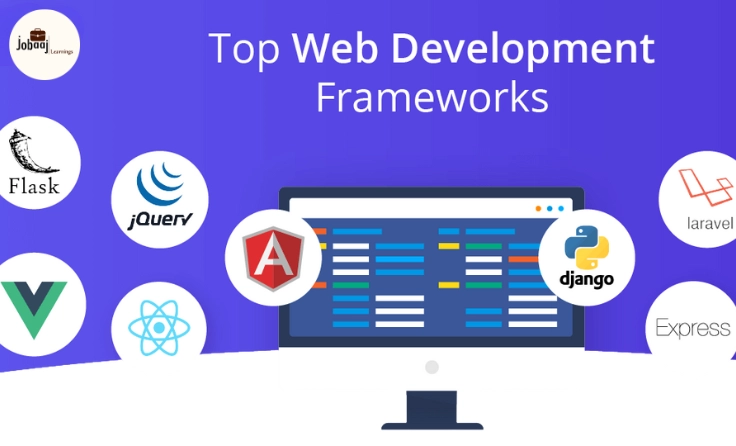
The world of web development is constantly evolving. What was cutting-edge just a few years ago might already be outdated today. As technology continues to advance, developers are faced with the challenge of staying ahead of the curve. Web development is no longer just about writing code; it's about understanding new technologies, meeting changing user expectations, and adapting to shifting business needs.
Exploring a career in Web Development? Apply now!
Looking toward the future of web development, several key trends are emerging that will shape how developers work. These trends are not only important to keep an eye on but are also critical for staying relevant in the industry. In this blog, we’ll explore the most important web development frameworks you should be learning in 2025, focusing on their strengths, features, and why they’re shaping the future of web development.
1.React
It’s no surprise that React continues to dominate the front-end development scene in 2026. Developed by Facebook, React has remained one of the most popular frameworks due to its simplicity, performance, and flexibility. Whether you’re building single-page applications (SPAs), interactive UIs, or mobile apps, React offers the tools you need to get the job done efficiently.
React’s component-based architecture allows developers to break down complex UIs into manageable, reusable components, making it easier to maintain and scale. Moreover, React’s virtual DOM ensures high performance by only re-rendering components when necessary. Its large ecosystem, with tools like React Router and Redux, makes it the go-to framework for many developers.
Why You Should Learn React:
-
It is highly efficient for building dynamic and interactive UIs.
-
A large community with abundant resources and tutorials.
-
Seamless integration with other frameworks and libraries, making it highly versatile.
2. Vue.js
If you’re looking for a framework that is both powerful and easy to learn, Vue.js should be at the top of your list. Vue has grown exponentially in popularity over the years and is highly favored for its flexibility and simplicity. It’s perfect for building modern web applications while being gentle on developers who are just starting out.
Vue is lightweight and focuses on the view layer of an application, making it easier to integrate with other libraries or existing projects. One of its biggest advantages is its reactivity system, which automatically updates the UI when the data changes, providing a seamless experience for both developers and users.
Why You Should Learn Vue.js:
-
Beginner-friendly, making it ideal for new developers.
-
Flexibility to integrate with other projects or frameworks.
-
Reactive data-binding, which makes updating the UI easy.
3. Angular
For those who want a complete and robust solution for building large-scale enterprise web applications, Angular is the framework to focus on. Developed by Google, Angular provides a comprehensive toolkit for building powerful, maintainable, and scalable applications.
Angular uses two-way data binding and a modular architecture, enabling developers to organize their code effectively and keep it scalable. It also includes features like dependency injection, directives, and RxJS, which make building complex applications more manageable. Plus, Angular has excellent support for building mobile apps with tools like Ionic.
Why You Should Learn Angular:
-
It’s perfect for enterprise-level applications with complex features.
-
Includes everything you need in one package—no need for third-party libraries.
-
Strong community support and regular updates from Google.
4. Next.js
For web developers interested in server-side rendering (SSR) and static site generation, Next.js is a must-learn framework. Built on top of React, Next.js allows developers to build optimized and fast web applications with ease. It provides automatic server-side rendering and static site generation out of the box, giving websites a performance boost and improving SEO.
Next.js also simplifies routing and provides powerful tools for API routes and image optimization, which are essential for building fast, dynamic websites. The framework also has a strong focus on developer experience, with built-in TypeScript support and fast refresh for instant feedback during development.
Why You Should Learn Next.js:
-
Optimized for performance, offering server-side rendering and static site generation.
-
Easy integration with React, making it great for building modern web apps.
-
Built-in features like API routes and image optimization simplify the development process.
5. Django
If you’re familiar with Python and want to build powerful back-end systems, Django is the framework to dive into. Django is a high-level Python web framework that encourages rapid development and clean, pragmatic design. It comes with a built-in admin panel, authentication system, and ORM (Object-Relational Mapping), making it a great choice for developers looking to build robust back-end systems quickly.
Django follows the “batteries-included” philosophy, meaning it provides a lot of the essential features you need for web development right out of the box. It’s highly secure, with built-in protections against common security threats, and it supports everything from small-scale applications to large enterprise solutions.
Why You Should Learn Django:
-
Great for building full-stack applications with Python.
-
Built-in security features to protect your application.
-
Easy to scale and maintain, even with large-scale projects.
6. Laravel
If you’re a fan of PHP or working with legacy systems, Laravel is the modern framework that can help you build stunning, scalable web applications. Laravel provides an elegant syntax and a range of features, including routing, authentication, and database migrations. It also includes Eloquent ORM, making database operations seamless and intuitive.
One of the standout features of Laravel is Blade, a simple yet powerful templating engine that lets you create dynamic web pages with ease. Laravel also comes with a built-in task scheduler and queue system, which helps manage background tasks efficiently.
Why You Should Learn Laravel:
-
It offers a clean and elegant syntax that makes it easy to learn.
-
Comes with essential tools like authentication, routing, and ORM.
-
Scalable and secure, perfect for building modern web apps.
7. Svelte
In the world of modern web development, Svelte is quickly gaining popularity as a next-generation front-end framework. Unlike traditional frameworks like React or Angular, Svelte compiles your code to vanilla JavaScript at build time, meaning the browser gets pure JavaScript with no framework overhead. This results in faster loading times and better performance.
Svelte’s reactivity is another standout feature, allowing for smooth transitions and dynamic updates without needing a virtual DOM. For developers looking to create lightweight and high-performance applications, Svelte is definitely a framework to consider in 2026.
Why You Should Learn Svelte:
-
Highly efficient, offering fast load times and smooth performance.
-
No framework overhead, compiling code into vanilla JavaScript.
-
A reactive approach that makes dynamic updates easy to implement.
8. Flutter
While Flutter is known primarily as a framework for mobile app development, its capabilities extend to web development as well. Built by Google, Flutter allows developers to write code once and run it on multiple platforms, including iOS, Android, and the web. This makes it a game-changer for anyone looking to build cross-platform applications.
Flutter uses a unique approach to rendering, using its own widgets rather than relying on native UI components. This gives developers complete control over the look and feel of their application. In 2026, as Flutter continues to mature, it’s becoming one of the top choices for cross-platform development.
Why You Should Learn Flutter:
-
A single codebase for multiple platforms, including mobile and web.
-
Customizable widgets that provide a high level of control over design.
-
Great for rapid prototyping and building cross-platform applications.
9. ASP.NET Core
If you’re a C# developer, ASP.NET Core is the framework to learn for back-end development in 2026. Microsoft’s ASP.NET Core is a cross-platform framework that is known for its high performance, scalability, and security features. It is perfect for building web APIs, enterprise-level applications, and dynamic websites.
ASP.NET Core is designed to work seamlessly with modern cloud applications and microservices, which makes it ideal for large-scale and high-performance applications. Moreover, its integration with Microsoft Azure and its robust ecosystem provide developers with everything they need to build powerful, data-driven applications.
Why You Should Learn ASP.NET Core:
-
Great for back-end development and building secure web APIs.
-
Cross-platform compatibility makes it versatile.
-
High performance and scalability for large applications.
10. Express.js
When it comes to building web applications and APIs with Node.js, Express.js is the framework of choice. Known for its simplicity and minimalism, Express is used by developers to create fast and scalable back-end applications. It’s especially popular for building RESTful APIs and single-page applications (SPAs).
Express.js is a minimal framework, which means it doesn't come with a lot of built-in functionality, leaving developers the freedom to structure their applications as they see fit. However, its simplicity doesn’t mean it lacks power—Express is highly extensible, with a rich set of middleware that allows developers to add custom functionality easily.
Why You Should Learn Express.js:
-
Minimalist and flexible, great for building custom web applications.
-
Ideal for creating RESTful APIs with Node.js.
-
High performance and easy scalability.
Conclusion
As we step into 2026, the world of web development continues to evolve with new frameworks and innovations that are making the development process faster, smoother, and more efficient. Whether you’re building dynamic web apps with React, creating SEO-friendly sites with Next.js, or developing powerful back-end systems with Django, the frameworks mentioned above are the tools you’ll want to learn in 2026.
Each of these frameworks has its unique strengths, and knowing which one to focus on depends on the type of projects you want to work on and the skills you want to build. The web development landscape is more exciting than ever, and with the right tools in your hands, you can create incredible applications that shape the digital world of tomorrow.
Dreaming of a Web Development Career? Start with Web Development Certificate with Jobaaj Learnings.
Frequently asked questions
What are the top web development frameworks to learn in 2025?
The top web development frameworks to learn in 2025 include React, Vue.js, Svelte, Next.js, Tailwind CSS, and Django. These frameworks offer great flexibility, performance, and ease of use for building modern web applications.
Why is React so popular in web development?
React is popular because it allows developers to build fast, interactive user interfaces using a component-based architecture. Its virtual DOM and performance optimization make it ideal for creating dynamic web applications.
Is Vue.js easier to learn than React or Angular?
Vue.js is often considered easier to learn than React or Angular, particularly for beginners. Its simplicity and flexibility make it an attractive choice for developers who want a lightweight, scalable solution for building modern web apps.
What is WebAssembly and why should I learn it?
WebAssembly allows you to run high-performance code directly in the browser. It’s particularly useful for performance-intensive applications like games and simulations, and learning it will give you the ability to build fast, interactive web apps.
How does Tailwind CSS differ from other CSS frameworks?
Tailwind CSS is a utility-first CSS framework, meaning you can apply utility classes directly in your HTML to style elements, giving you more control and flexibility over your design without writing custom CSS.
Should I learn Django if I am a Python developer?
Yes! Django is a great choice for Python developers looking to build web applications. It’s a high-level framework that makes development easier with built-in features like authentication, routing, and an admin interface, saving time on repetitive tasks.

Join 5,00,000+ Subscribers
Be a part of our ever growing community.