Categories








































Imagine you’re sitting in front of your computer screen, eager to start your next big web development project. Whether you’re dreaming of building a personal website, a dynamic e-commerce platform, or an interactive social networking site, there’s one key thing you know: you need a solid framework to get things done effectively.
Exploring a career in Web Development? Apply now!
For many web developers, frameworks are like a trusty toolkit—helping speed up development, ensuring your project is organized, and allowing you to focus on creating stunning features rather than reinventing the wheel. But with so many options out there, it can feel overwhelming to pick the right one.
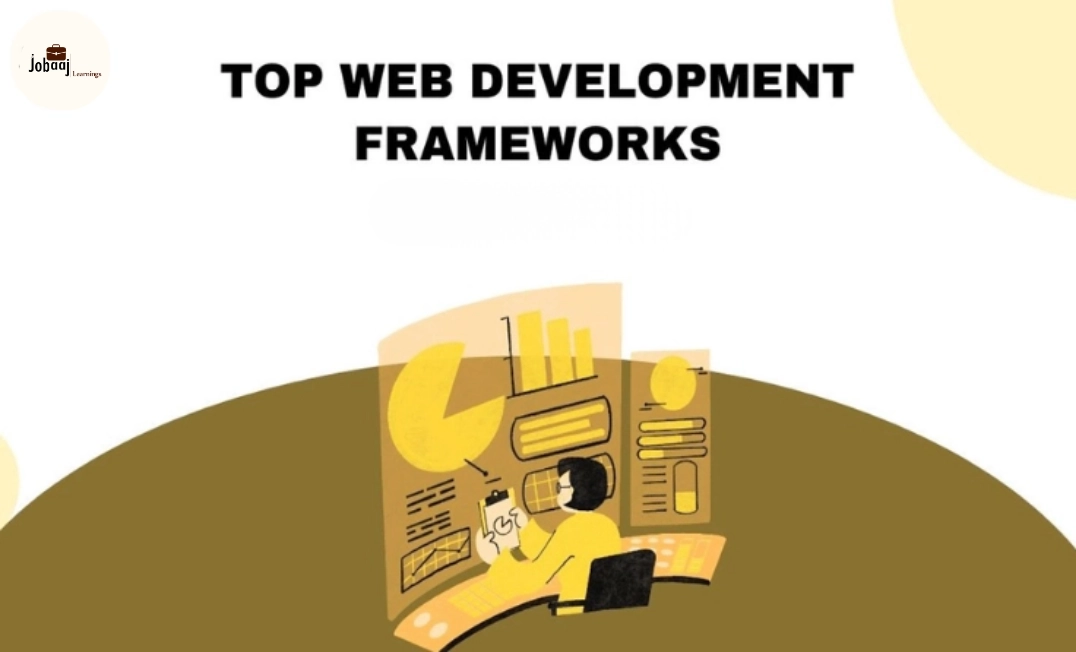
As we approach 2026, certain frameworks are standing out, helping developers build faster, more scalable, and secure applications. In this blog, we’re going to explore the top web development frameworks you should learn in 2026. Whether you're just starting or looking to advance your skills, this guide will help you navigate through the options and choose the right path for your development career.
1. React.js
If there’s one framework that has been making waves in recent years, it’s React.js. Developed by Facebook, React has become synonymous with building interactive, real-time user interfaces (UIs). What makes React so special is its component-based structure, which allows developers to break down complex UIs into smaller, reusable parts.
This architecture not only makes your code cleaner but also speeds up the development process. The ability to manage real-time data efficiently with its virtual DOM makes it one of the best frameworks for creating dynamic, high-performance applications.
As we head into 2026, React remains a top choice for developers across industries, from startups to major tech giants. If you’re aiming for a career in web development, mastering React is practically a must.
Why Learn React?
-
Highly demanded in the job market – Many companies, both large and small, rely on React for their web applications.
-
Reusable components – Simplifies development and maintenance by allowing components to be used across different projects.
-
Huge ecosystem – Libraries like Redux for state management and React Router for navigation make your life easier.
React continues to dominate in web development because of its flexibility and scalability, so mastering it will definitely give you an edge in the competitive job market.
2. Vue.js
If React feels like a bit too much or you want something lighter and easier to learn, then Vue.js is the perfect alternative. It’s a progressive framework, meaning you can use it for everything from adding small interactive elements to your website to building full-fledged single-page applications (SPAs).
What sets Vue apart is its simplicity and gentle learning curve, which makes it perfect for beginners. At the same time, its flexibility allows advanced developers to get as deep as they want. Vue allows you to gradually scale your project as it grows, making it a great choice for developers who want flexibility and control over their projects.
Why Learn Vue?
-
Great for all skill levels – Whether you’re just starting out or are an advanced developer, Vue allows you to adapt it to your needs.
-
Simple and flexible – Focuses on the view layer, making it easy to integrate with other projects.
-
Easy integration – Works seamlessly with existing projects and can be incrementally adopted.
For developers looking to build modern websites with minimal complexity, Vue.js is a fantastic tool to learn in 2026. Its simplicity and ease of integration make it a rising star in the web development community.
3. Angular
For developers who want to build large-scale, enterprise-level applications, Angular is an essential framework to master. Developed and maintained by Google, Angular is a full-fledged framework that provides everything you need to develop, test, and deploy complex applications.
Angular has a steeper learning curve compared to React and Vue, but its comprehensive set of tools, such as built-in form management, HTTP client, and routing, makes it the perfect choice for enterprise solutions. With its strong architecture and two-way data binding, Angular provides a powerful structure for building applications with a lot of moving parts.
Why Learn Angular?
-
Built-in solutions – Offers a complete package with everything from form validation to routing and HTTP handling.
-
Two-way data binding – Automatically updates the view and model, making it easier to work with dynamic data.
-
Enterprise-ready – Angular is great for developing large, scalable applications, particularly for corporate environments.
Learning Angular will open up job opportunities in enterprises and large organizations that require reliable, high-performance applications. Whether you’re building a CRM system or a large web platform, Angular provides the tools to manage complex projects efficiently.
4. Node.js
If you want to become a full-stack developer in 2026, then learning Node.js should be at the top of your list. Unlike other frameworks, Node.js is a runtime environment that allows you to run JavaScript on the server-side. It allows developers to use a single language, JavaScript, for both client and server, making it an ideal tool for full-stack development.
Node.js is known for its speed and scalability, particularly when handling real-time applications. Whether you’re building messaging apps, live chat systems, or online games, Node.js can handle high volumes of data with minimal delay.
Why Learn Node.js?
-
Asynchronous, event-driven – Handles I/O-bound tasks efficiently, which is essential for real-time applications.
-
Full-stack JavaScript – Allows developers to use JavaScript for both client-side and server-side development.
-
Vibrant ecosystem – npm (Node Package Manager) has a huge collection of packages, making it easy to extend functionality.
For any developer who wants to work on scalable, real-time applications, Node.js is a must-learn framework.
5. Django
Django, built with Python, is known for its “batteries-included” philosophy, which means it comes with a lot of built-in features for rapid development. Django simplifies the web development process by providing pre-built modules for handling common tasks such as authentication, database management, and URL routing.
If you’re already familiar with Python and want to build secure and scalable web applications, Django is the perfect framework to learn. It’s especially useful for back-end development and allows you to build applications quickly and efficiently.
Why Learn Django?
-
Fast development – Includes everything you need to get a project off the ground quickly, saving you time.
-
Built-in security – Django includes security features to help protect your applications from common vulnerabilities.
-
Great for back-end development – Python developers will find Django particularly useful for creating back-end systems and APIs.
Django is the go-to framework for building secure and scalable web applications in Python, and it remains popular in industries that prioritize rapid development and high security.
Conclusion
The world of web development is constantly evolving, and choosing the right framework can be the key to your success. As we move into 2026, frameworks like React, Vue, Angular, Node.js, and Django are shaping the way we build websites and applications. By mastering one or more of these frameworks, you'll not only improve your skills but also position yourself as a valuable asset in the ever-growing web development job market.
Whether you’re focused on building dynamic user interfaces, scalable back-end systems, or real-time applications, there’s a framework suited for every need. Start by learning the frameworks that align with your goals, and keep practicing to stay ahead in this fast-paced field.
Mastering these frameworks will help you create the kind of powerful, scalable applications that companies are demanding in 2026. With the right tools in your toolkit, the future of web development is in your hands.
Dreaming of a Web Development Career? Start with Web Development Certificate with Jobaaj Learnings.
Frequently asked questions
What are the best frameworks for web development in 2026?
The top frameworks to learn in 2026 include React.js, Vue.js, Angular, Node.js, Django, and Ruby on Rails. These frameworks are ideal for various web development needs, from dynamic UIs to enterprise-level applications.
Is React or Angular better for building dynamic web applications?
Both React and Angular are excellent for dynamic web applications. React is more focused on building interactive UIs, while Angular is a comprehensive solution for building larger-scale applications.
Which framework is best for full-stack development?
Node.js is an excellent choice for full-stack development, as it allows you to use JavaScript for both front-end and back-end development, making it easier to manage both aspects of a project.
What makes Django a great choice for web development?
Django is great for rapid development and comes with many built-in features, such as security and database management. It is ideal for developers who want to quickly build and deploy web applications.
Can I use Vue.js with other frameworks?
Yes, Vue.js is highly flexible and can be integrated with other frameworks like React or Angular. It can also be used on its own for smaller, more specific projects.
Is it necessary to learn multiple frameworks?
It’s not strictly necessary, but learning multiple frameworks gives you flexibility and the ability to choose the right tool for different projects. Each framework has its strengths depending on the project’s scope and requirements.

Join 5,00,000+ Subscribers
Be a part of our ever growing community.