Categories







































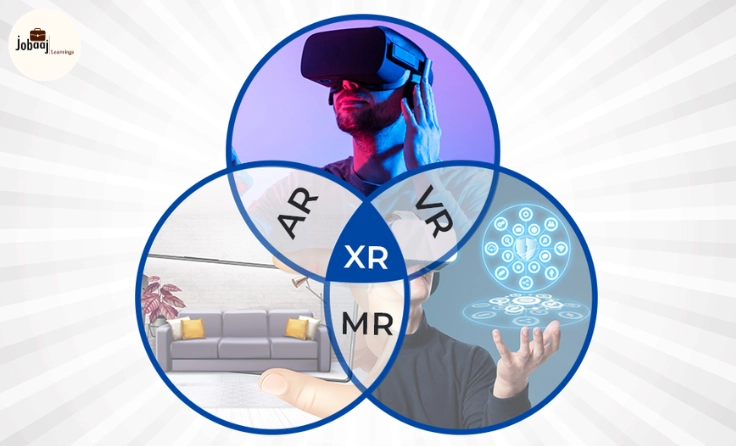
Have you ever imagined stepping into a different world, one where the boundaries between the real and virtual blur together? In today’s world, immersive technology is bringing that imagination to life. From exploring outer space in your living room to designing your dream home through your phone screen, the possibilities of Augmented Reality (AR), Virtual Reality (VR), and Mixed Reality (MR) are limitless. These technologies are changing the way we interact with the world around us.
Exploring a career in Performance Marketing? Apply Now!
Whether you’ve tried a VR headset or marveled at an AR app on your phone, these technologies are no longer just fantasies in movies or games. They are now part of our everyday lives and have been transforming industries like education, healthcare, entertainment, and business. But with all the buzz, what’s the difference between AR, VR, and MR, and how do they each contribute to the world of immersive experiences? Let’s dive into the magic behind these revolutionary technologies.
What is Augmented Reality (AR)?
Imagine this: you’re looking at your phone’s camera and the real world around you. Suddenly, a virtual character or an object appears on your screen. That’s Augmented Reality (AR)—a technology that enhances your view of the real world by overlaying digital elements onto it.
With AR, virtual elements aren’t replacing the world around you, they’re adding to it. It’s like looking through a window where the real world and virtual objects coexist seamlessly.
Common Examples of AR:
-
Pokemon Go: The popular game allows players to catch virtual creatures in real-world locations.
-
Snapchat Filters: A fun AR application where virtual makeup or objects appear over your face in real-time.
-
IKEA Place: An app that lets you see how furniture would look in your space before buying.
What is Virtual Reality (VR)?
Now, picture this: you put on a headset, and suddenly, you’re in a completely different world. This is Virtual Reality (VR)—a technology that immerses you fully into a virtual environment, shutting out the real world around you. Unlike AR, VR doesn’t just overlay digital elements, it replaces the real world entirely with a simulated one.
VR typically requires special hardware such as headsets and controllers to create an immersive experience. Whether you’re exploring the surface of Mars, fighting in a futuristic battlefield, or even attending a virtual concert, VR takes you to places you could only dream of.
Popular VR Examples:
-
Oculus Quest: A VR headset that allows you to dive into interactive experiences, from gaming to virtual tours.
-
VR Gaming: Fully immersive games like Beat Saber or Half-Life: Alyx take players into interactive worlds.
-
Medical Training: VR is increasingly used to train doctors and surgeons by simulating real-life scenarios.
What is Mixed Reality (MR)?
Mixed Reality (MR) takes the best of both worlds—AR and VR—and combines them into a cohesive experience. In MR, virtual objects can interact with the real world, and the real world can interact with virtual objects. It creates an experience where physical and digital worlds blend seamlessly, allowing objects in the real world to have an effect on virtual elements and vice versa.
Imagine a virtual object that responds to the real world—like placing a virtual table in your room, and it behaves as if it were actually there. MR is designed for deeper interaction between virtual content and physical objects.
Example of MR:
-
Microsoft HoloLens: A device that allows users to interact with holograms that can be manipulated in real space, like moving objects around or altering their properties.
-
Magic Leap: Another MR tool that merges the digital and physical realms, used for everything from entertainment to training simulations.
How AR, VR, and MR are Transforming Industries
These immersive technologies aren’t just about fun and games. They’re paving the way for innovative applications across several sectors:
-
Healthcare: MR and VR are revolutionizing medical training, allowing students and doctors to practice complex surgeries in a virtual environment.
-
Education: AR is being used to bring textbooks to life, making learning interactive and fun. VR offers virtual classrooms where students can experience historical events or travel the world.
-
Retail and Real Estate: AR apps let customers visualize products in their homes before purchasing, while VR lets potential homebuyers take a virtual tour of properties.
-
Entertainment and Gaming: VR offers fully immersive experiences that transport players into digital worlds, while AR enhances reality by adding interactive elements to games and movies.
The Future of AR, VR, and MR
Looking ahead, AR, VR, and MR are only going to become more advanced. With the introduction of 5G networks, the potential for faster, more seamless experiences is limitless. Wearable tech will become smaller, more comfortable, and even more integrated with our daily lives. This could lead to innovations like real-time language translation via AR glasses or fully immersive entertainment experiences that blur the line between virtual and real.
As we move forward, the metaverse, a shared virtual world, is likely to become a part of everyday life, with AR, VR, and MR leading the way. The possibilities are endless, and we’re just getting started.
Dreaming of a Performance Marketing Career? Start with Performance Marketing Certificate with Jobaaj Learnings.
Frequently asked questions
What is the difference between AR, VR, and MR?
AR adds digital elements to the real world; VR immerses you completely in a virtual environment; MR blends the two by allowing interaction between the physical and virtual worlds.
How do AR and VR impact industries?
AR enhances real-world experiences, making it ideal for retail, education, and healthcare. VR is perfect for training, gaming, and entertainment, while MR brings more interactivity and realism to both virtual and physical environments.
Can I use AR on my phone?
Yes, AR can be accessed through apps on smartphones, like Snapchat or Pokémon Go, that overlay digital images on the real world using your camera.
What equipment do I need for VR?
To experience VR, you typically need a headset, like the Oculus Quest or PlayStation VR, along with optional controllers to interact with the environment.
Is Mixed Reality the same as Virtual Reality?
No, MR combines the real and virtual worlds, allowing them to interact. In contrast, VR completely immerses you in a virtual environment, cutting off the real world entirely.
What are the future trends in AR, VR, and MR?
The future holds advanced wearables, faster connections with 5G, and the metaverse. These technologies will offer even more seamless, immersive experiences across multiple sectors.

Join 5,00,000+ Subscribers
Be a part of our ever growing community.