Categories














/content/learnings/assets/header/ManagementConsulting.svg)
/content/learnings/assets/header/InvestmentBanking.svg)



























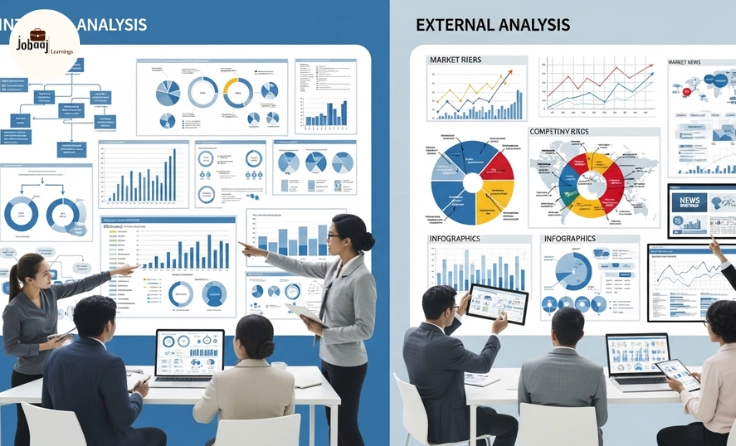
In the world of business strategy, one of the most fundamental steps to gain a competitive edge is conducting a thorough internal and external analysis. Whether you're starting a new business, planning for growth, or trying to improve your existing strategies, understanding these analyses can help you make informed decisions.
Exploring a career in Data and Business Analytics? Apply Now!
In this blog, we will break down what internal and external analysis are, why they are important, and how they can be effectively used to improve your business strategy. We'll also dive into some popular frameworks and tools used for each type of analysis to give you a comprehensive guide on how to apply them.
What is Internal Analysis?
Internal analysis refers to the process of evaluating your own company’s strengths, weaknesses, resources, capabilities, and overall performance. It helps businesses understand their internal environment to leverage strengths and address weaknesses.
Why is Internal Analysis Important?
The purpose of internal analysis is to gain a clear understanding of where your business stands and what factors influence your internal success. By conducting internal analysis, you can identify:
-
Your core competencies and unique selling propositions (USPs)
-
Key resources like human capital, technology, and financial assets
-
Internal processes and systems that are working well or need improvement
-
The organizational structure and how well teams collaborate
-
Cultural aspects that drive or hinder performance
Key Components of Internal Analysis
-
Resources and Capabilities: These refer to what your company has (e.g., capital, technology, talent) and how effectively those resources are being utilized.
-
SWOT Analysis: A widely used tool in internal analysis, SWOT (Strengths, Weaknesses, Opportunities, and Threats) helps identify both the positive aspects (strengths) and areas of improvement (weaknesses) within the company.
-
Value Chain Analysis: This framework breaks down each step in your business’s process, from product development to customer delivery, helping you identify areas where you can create more value or improve efficiency.
-
Benchmarking: This involves comparing your company’s performance against industry best practices or competitors to see where you stand.
How to Perform Internal Analysis
Performing an internal analysis begins with gathering relevant data about your organization. It can include:
-
Financial data (revenues, profits, cash flows)
-
Employee feedback and productivity metrics
-
Operational efficiency metrics
-
Customer satisfaction surveys
-
Market share and positioning
By reviewing these data points, you can generate insights into what is working and where improvements can be made.
What is External Analysis?
External analysis involves examining factors outside your company that influence the market, industry, and general business environment. This helps you understand the external forces and trends that could affect your organization’s performance and strategies.
Why is External Analysis Important?
External analysis helps businesses identify opportunities and threats in the market. It provides insights into the competitive landscape, emerging trends, and shifts in consumer behavior, making it essential for developing strategies that are adaptable and proactive. Key factors external analysis addresses include:
-
Changes in consumer behavior and preferences
-
Technological advancements and innovations
-
Market trends and shifts in demand
-
The competitive environment and industry dynamics
-
Political, economic, social, and legal factors (PESTEL analysis)
Key Components of External Analysis
-
PESTEL Analysis: This analysis looks at the Political, Economic, Social, Technological, Environmental, and Legal factors that impact the industry. By assessing these forces, businesses can better anticipate market changes and adjust their strategies accordingly.
-
Porter’s Five Forces: This framework helps evaluate the competitive environment in an industry by examining the following forces:
-
Threat of new entrants
-
Bargaining power of suppliers
-
Bargaining power of customers
-
Threat of substitute products or services
-
Industry rivalry
-
-
Market Trends and Consumer Insights: Identifying current and future market trends helps businesses stay ahead of the competition by adapting their products or services to meet evolving customer needs.
-
Competitor Analysis: Understanding your competitors’ strengths, weaknesses, strategies, and market positioning can help you identify opportunities to outperform them.
How to Perform External Analysis
-
Monitor Industry Reports and Market Research: Stay updated on the latest industry reports, competitor analysis, and market trends to understand what’s happening outside your organization.
-
Conduct Surveys and Gather Customer Feedback: By directly engaging with customers, you can understand their evolving needs, preferences, and expectations.
-
Study PESTEL Factors: Use PESTEL analysis to assess how macro-environmental factors such as technology, politics, or the economy could impact your industry.
-
Use Porter's Five Forces: Apply this framework to understand how competitive forces affect your business and identify strategic advantages or threats.
How Do Internal and External Analysis Work Together?
While internal analysis focuses on your business's internal strengths and weaknesses, external analysis looks at the broader market environment. Combining both analyses gives you a comprehensive view of your business’s position in the market and how it can respond to challenges.
-
Internal analysis identifies areas of improvement and core strengths you can leverage to compete effectively.
-
External analysis helps you spot emerging trends, threats, and opportunities to adapt your strategy to changing market conditions.
For example, if your internal analysis reveals that your company has a highly skilled sales team, and your external analysis shows that there is growing demand for a particular product category, you might decide to leverage your sales team to capitalize on that demand.
Key Benefits of Internal and External Analysis
-
Better Decision Making: By understanding your strengths, weaknesses, and the external environment, you can make more informed, data-driven decisions.
-
Strategic Planning: Both analyses give you a clear understanding of the factors at play within your industry, which can help in crafting actionable, forward-thinking strategies.
-
Competitive Advantage: Combining insights from both analyses helps you stay ahead of competitors by identifying untapped opportunities or mitigating risks early on.
-
Adaptability: With a solid understanding of both internal and external factors, your business can quickly adapt to market changes and new challenges.
Conclusion
Internal and external analyses are essential tools for any business seeking to build a strong, sustainable strategy. By continuously evaluating both your internal capabilities and the external forces shaping your industry, you can make better decisions, identify growth opportunities, and stay ahead of your competition. Remember, a thorough analysis provides not just a snapshot of your business today, but also the insight to navigate future challenges and opportunities effectively.
By implementing the right frameworks and consistently staying engaged with both internal and external factors, you’ll be in a better position to shape your business’s future and adapt to an ever-changing market environment.
Aspiring for a career in Data and Business Analytics? Begin your journey with a Data and Business Analytics Certificate from Jobaaj Learnings.
Frequently asked questions
What is internal analysis in business strategy?
Internal analysis is the process of evaluating your company's strengths, weaknesses, resources, and capabilities. It helps you understand what is working well and what needs improvement within your organization, providing insights into how to leverage strengths and address weaknesses.
Why is external analysis important for businesses?
External analysis is important because it helps businesses understand the market and the forces outside their control, such as consumer behavior, competition, and industry trends. By identifying external opportunities and threats, businesses can adapt their strategies to stay competitive and capitalize on emerging trends.
How do internal and external analysis work together?
Internal and external analysis work together by providing a **complete picture** of your business environment. Internal analysis helps identify strengths and weaknesses, while external analysis highlights market trends, threats, and opportunities. Together, they help businesses make more informed, data-driven decisions and create effective strategies.
What are some tools used in internal analysis?
Popular tools for internal analysis include **SWOT analysis**, **value chain analysis**, and **benchmarking**. These tools help businesses assess their resources, capabilities, and performance in comparison to competitors or industry standards.
What is the PESTEL analysis used for in external analysis?
PESTEL analysis is used to evaluate the **Political**, **Economic**, **Social**, **Technological**, **Environmental**, and **Legal** factors that affect an industry or market. It helps businesses anticipate market changes and adapt their strategies to evolving external conditions.
How does Porter’s Five Forces framework help in external analysis?
Porter’s Five Forces framework helps businesses understand the competitive forces at play in their industry. By analyzing the **threat of new entrants**, **bargaining power of suppliers and customers**, the **threat of substitutes**, and **industry rivalry**, businesses can develop strategies to improve their competitive position.

Join 5,00,000+ Subscribers
Be a part of our ever growing community.