Categories








































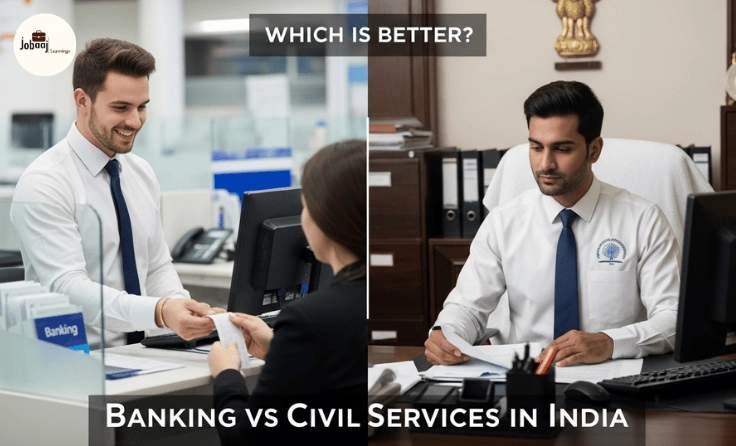
You’re standing at a crossroads in life, trying to figure out which path to take. One path leads to a career in banking, with its potential for growth, financial rewards, and corporate stability. The other path takes you to civil services, where you could be working as an Indian Administrative Service (IAS) officer, solving societal issues, and shaping the country’s future. Both are esteemed careers, each with its own set of challenges, rewards, and opportunities. But which one is better?
This is a question many students and professionals ask themselves when they’re contemplating their futures. While both careers offer prestige and job security, they differ in terms of the lifestyle, responsibilities, and personal growth they offer. In this blog, we’ll compare banking and civil services in India, highlighting the key differences to help you make an informed choice.
Banking Career: The World of Finance and Opportunities
If you’ve ever dreamed of working with money, building financial strategies, or ensuring businesses stay afloat, a career in banking might be the right fit. A job in banking offers an exciting environment where you’ll be dealing with high-profile clients, making important financial decisions, and driving economic growth.
1.Scope and Growth
Banking in India has seen tremendous growth over the last few decades. From traditional public sector banks to rapidly growing private sector institutions, there are plenty of opportunities across various sectors corporate banking, investment banking, retail banking, and more. You can start your career as a probationary officer (PO) and work your way up to managerial or executive positions.
As the economy continues to grow, the banking sector will need more professionals to manage an increasingly complex financial landscape. So, whether you’re working in retail banking or dealing with large corporations, banking offers multiple avenues for growth. The financial rewards in banking are also among the best.
2.Work-Life Balance
One of the significant advantages of a career in banking is the work-life balance. Most banking jobs involve regular office hours, typically 9 AM to 5 PM, with weekends off. While this can vary depending on the specific role and institution, it’s far less demanding than the unpredictable hours and intense pressure that comes with many civil services roles.
If you’re someone who values a stable routine and the time to pursue personal interests, banking could be the right choice for you.
3.Skill Development
In banking, you’ll gain valuable skills related to finance, risk management, and client relations. With the rise of digital banking, there's also a growing need for tech-savvy professionals who understand the intersection of finance and technology. The sector demands constant learning and upskilling, which can be exciting for those who thrive in fast-paced, ever-evolving environments.
Civil Services: Serving the Nation and Shaping the Future
On the other side of the spectrum, civil services in India represent a prestigious and deeply impactful career. When you become part of the Indian Administrative Service (IAS), Indian Police Service (IPS), or Indian Foreign Service (IFS), you’re not just taking up a job. You’re taking on a duty to serve the country. The responsibilities can be immense, but so are the rewards.
1.The Prestige and Impact
One of the biggest draws of a career in civil services is the prestige it brings. IAS officers, for example, have the authority and the responsibility to make important decisions that affect millions of lives. Whether it’s policy-making, law enforcement, or international diplomacy, civil servants have the opportunity to influence India’s direction.
Unlike banking, where your work mainly revolves around financial growth, civil services allow you to directly impact the lives of the citizens. If you’re passionate about public service, solving societal problems, and contributing to the development of the nation, civil services might offer a more fulfilling career.
2.Challenges and Responsibility
The responsibility in civil services is immense. From law and order to policy implementation, the tasks an officer handles can sometimes be overwhelming. Unlike banking, where your work primarily focuses on financial targets and profits, civil services demand much more. It’s about making decisions that affect public welfare and the national landscape. The work is often unpredictable, involving long hours, fieldwork, and constant challenges.
While it can be incredibly rewarding, it’s also a high-pressure environment. The lifestyle can be more demanding, and you might find yourself constantly balancing complex issues, politics, and public expectations.
3.Job Security and Benefits
A career in civil services offers unmatched job security. As a government employee, you’ll enjoy a lifetime job with perks like pensions, healthcare, and housing. Even with the rise of private sector opportunities, government jobs remain highly respected and secure. Civil servants also receive numerous benefits like paid leave, travel allowances, and more.
Moreover, civil services roles come with a sense of fulfillment that’s hard to match. If you enjoy making a difference in the world and working for the greater good, civil services can provide that sense of purpose.
Banking vs Civil Services: Which Is Better for You?
Let’s break down the key differences between banking and civil services in India. Here’s a simple comparison to help you weigh your options:
|
Aspect |
Banking |
Civil Services |
|
Career Scope |
Broad growth opportunities in finance sectors like corporate, investment, and retail banking. |
Focus on administrative roles, law enforcement, policy-making, or foreign services. |
|
Work-Life Balance |
Generally 9 AM - 5 PM, weekends off, good work-life balance. |
Often long working hours, unpredictable schedules, and high-pressure responsibilities. |
|
Salary and Perks |
High salary, financial rewards, bonuses, but performance-driven. |
Stable salary, generous benefits like pension, housing, and allowances, but salary often lower than banking. |
|
Job Security |
Secure but less stable compared to government jobs, depends on the bank’s health. |
Excellent job security with lifetime tenure in government services. |
|
Prestige |
Respected, especially in higher positions like branch managers or executives. |
High prestige, especially in roles like IAS, IPS, and IFS. |
|
Impact |
Focused on financial growth, less direct impact on society. |
Direct influence on public policies, governance, and social welfare. |
|
Skill Development |
Opportunities to learn finance, tech, and management skills. |
Learning in law, governance, administration, and policy management. |
Conclusion
Choosing between banking and civil services depends on what you value most. If you’re looking for a well-compensated career with good work-life balance and the opportunity to grow in a fast-paced environment, banking might be the right fit for you. However, if you’re passionate about serving the public, having a meaningful impact on national policies, and embracing the challenges of leadership, civil services could be your calling.
Both careers offer immense opportunities, but your choice should align with your values, ambitions, and work-life preferences. Ultimately, whichever path you choose, both will provide a rewarding and fulfilling career that can help shape not just your future but the future of India.
Frequently asked questions
What are the key differences between banking and civil services in India?
Banking offers high salary potential, work-life balance, and growth opportunities, while civil services provide prestige, job security, and the chance to directly impact national policies and public welfare.
Which career offers better job security—banking or civil services?
Civil services offer unmatched job security, with government jobs providing a lifetime tenure and various benefits. Banking also offers good job security, but it is less secure compared to government jobs.
Is work-life balance better in banking or civil services?
Banking typically offers a better work-life balance with regular office hours, while civil services often involve long working hours, fieldwork, and unpredictable schedules.
Can you switch from banking to civil services or vice versa?
Yes, it is possible to switch between the two fields, but it typically requires a change in career focus. Moving from banking to civil services may involve passing exams like the UPSC, and vice versa may require transitioning to a financial role within a government organization.
Which career has higher growth potential—banking or civil services?
Banking offers multiple growth avenues across sectors such as corporate banking, investment banking, and more. Civil services provide growth within the administrative framework, with opportunities to rise through positions like IAS, IPS, or IFS, but the growth is more limited compared to the diverse career paths in banking.
Are civil services roles more impactful than banking jobs?
Yes, civil services offer direct involvement in policy-making, governance, and public welfare, which can feel more impactful on a societal level. Banking roles, while financially rewarding, might not have the same level of societal impact.

Join 5,00,000+ Subscribers
Be a part of our ever growing community.