Categories














/content/learnings/assets/header/ManagementConsulting.svg)
/content/learnings/assets/header/InvestmentBanking.svg)


























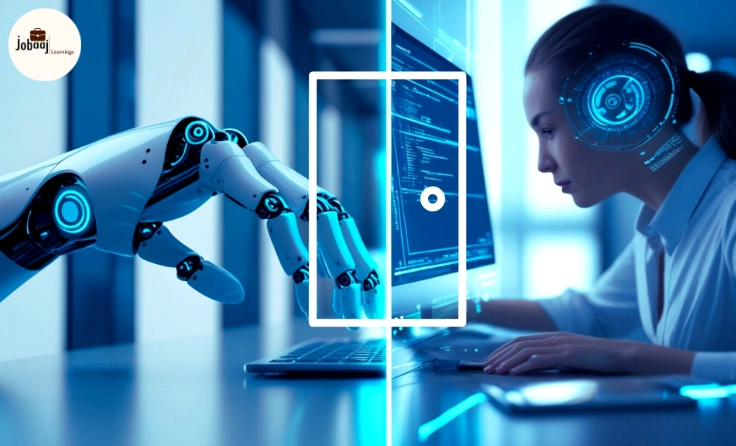
It’s 2026. You’re a business leader trying to solve a complex problem—perhaps entering a new market or optimizing your operations. In the past, you would have turned to a team of experienced consultants, experts who’d pour over data, conduct interviews, and deliver a comprehensive strategy. But now, there’s a new player in town: Artificial Intelligence. With algorithms capable of analyzing data at lightning speed and predicting outcomes with precision, the question arises: Will AI replace management consultants?
Exploring a career in Management Consulting? Apply Now!
As AI continues to evolve, businesses are increasingly using it to make data-driven decisions, automate routine tasks, and uncover insights that would take humans much longer to discover. But, while AI has shown remarkable advancements, can it truly replace the strategic, human-driven consulting expertise that has been the cornerstone of the industry for decades? Let’s dive into the role of AI in management consulting, its current capabilities, and what the future holds.
The Rise of AI in Management Consulting
AI is already changing the way businesses operate, and management consulting is no exception. From automating administrative tasks to conducting advanced data analysis, AI is enhancing the efficiency of consultants and helping them make smarter decisions faster. Consulting firms are increasingly investing in AI-driven tools to analyze big data, predict market trends, and even suggest strategies for clients. AI-powered platforms can now process vast amounts of data and identify patterns that would take human consultants weeks or even months to uncover.
For example, AI algorithms can sift through large datasets to highlight inefficiencies in a business’s operations or suggest market opportunities that may have gone unnoticed. Additionally, AI-driven tools can assist consultants in creating financial models, conducting risk assessments, and designing strategic roadmaps.
Can AI Replace Human Consultants?
While AI is making significant strides in the consulting world, there are several reasons why human consultants remain irreplaceable:
-
Emotional Intelligence and Relationship Building:
One of the key aspects of management consulting is building strong relationships with clients. Consultants aren’t just problem-solvers—they are trusted advisors who need to understand their clients’ unique cultures, values, and challenges. AI, as advanced as it may be, lacks the emotional intelligence and empathy that human consultants bring to the table. -
Strategic Thinking and Creativity:
AI excels at analyzing data and identifying patterns, but it struggles with the creative and strategic thinking that human consultants provide. Consultants are not just following data—they use their expertise, intuition, and experience to craft innovative strategies and approaches that AI cannot replicate. The human element is essential for thinking outside the box, challenging assumptions, and proposing bold new ideas. -
Complex Problem Solving:
While AI can handle data-driven tasks efficiently, it often falls short when it comes to complex, multi-faceted problems that require a deep understanding of human behavior, organizational dynamics, and market trends. Consultants bring an integrated approach, combining data analysis with real-world experience and judgment, which AI lacks. -
Ethical and Contextual Decision Making:
AI systems are designed to make decisions based on data, but they do not account for ethical considerations or contextual nuances in the same way humans do. In management consulting, decisions often need to be made in the context of cultural, legal, and ethical frameworks. Human consultants can navigate these gray areas and offer solutions that align with clients' values and goals.
The Future of AI in Management Consulting
Rather than replacing management consultants, AI is likely to augment their capabilities. In the future, consultants and AI will work hand-in-hand, each bringing their strengths to the table. AI will take on more of the data-heavy, routine tasks, freeing up human consultants to focus on higher-level strategic thinking, relationship-building, and creative problem-solving.
Here’s how the future might unfold:
-
Automation of Routine Tasks:
AI will handle administrative tasks, data analysis, and report generation, allowing consultants to focus on providing more value to their clients. This automation will speed up processes and improve efficiency. -
Enhanced Data Analysis and Insights:
AI tools will help consultants extract deeper insights from data, enabling them to make better-informed decisions faster. This will lead to more accurate recommendations and strategies for clients. -
Collaboration Between Humans and Machines:
The most successful consulting firms will likely adopt a hybrid model, where AI tools and human consultants collaborate to deliver optimal results. Consultants will use AI-driven insights to inform their strategies, while adding their own expertise to tailor solutions to clients' unique needs.
Conclusion
In 2026, AI will play a pivotal role in shaping the future of management consulting, but it is unlikely to replace human consultants entirely. AI will enhance the industry by automating routine tasks, providing deeper data insights, and improving efficiency. However, the core value of management consulting lies in human expertise—empathy, creativity, strategic thinking, and the ability to navigate complex business challenges. The future of management consulting will be a partnership between AI and consultants, combining the best of both worlds to solve problems and create value for clients. As businesses continue to embrace technology, those who harness the power of AI alongside their human expertise will lead the way in consulting.
Dreaming of a Management Consulting Career? Start with Management Consulting Certificate with Jobaaj Learnings.
Frequently asked questions
Will AI replace management consultants in the future?
While AI is transforming the consulting industry by automating data analysis and routine tasks, it is unlikely to fully replace human consultants. Human expertise, creativity, and emotional intelligence remain essential in management consulting.
What role does AI play in management consulting?
AI plays a significant role in management consulting by automating administrative tasks, analyzing data at scale, and providing insights that consultants can use to create more effective strategies for their clients.
What are the limitations of AI in consulting?
AI lacks emotional intelligence, creativity, and the ability to navigate complex, multi-dimensional problems that require human judgment. AI also cannot make decisions based on ethical considerations or contextual nuances in the same way that human consultants can.
How will AI and consultants work together in the future?
In the future, AI will work alongside human consultants by automating routine tasks, analyzing data, and providing insights. Consultants will use AI-driven tools to enhance their decision-making and strategy development while leveraging their own expertise for creative problem-solving.
Can AI provide the same level of strategic advice as human consultants?
AI can analyze data and offer recommendations based on patterns, but it cannot replicate the strategic thinking, creativity, and relationship-building that human consultants bring to the table. Strategic advice still requires human expertise and intuition.
Will AI disrupt the management consulting industry?
AI will undoubtedly disrupt the management consulting industry by automating certain aspects of the work. However, human consultants will continue to play a critical role, especially in areas that require creativity, leadership, and a deep understanding of human behavior.

Join 5,00,000+ Subscribers
Be a part of our ever growing community.