

 Categories



































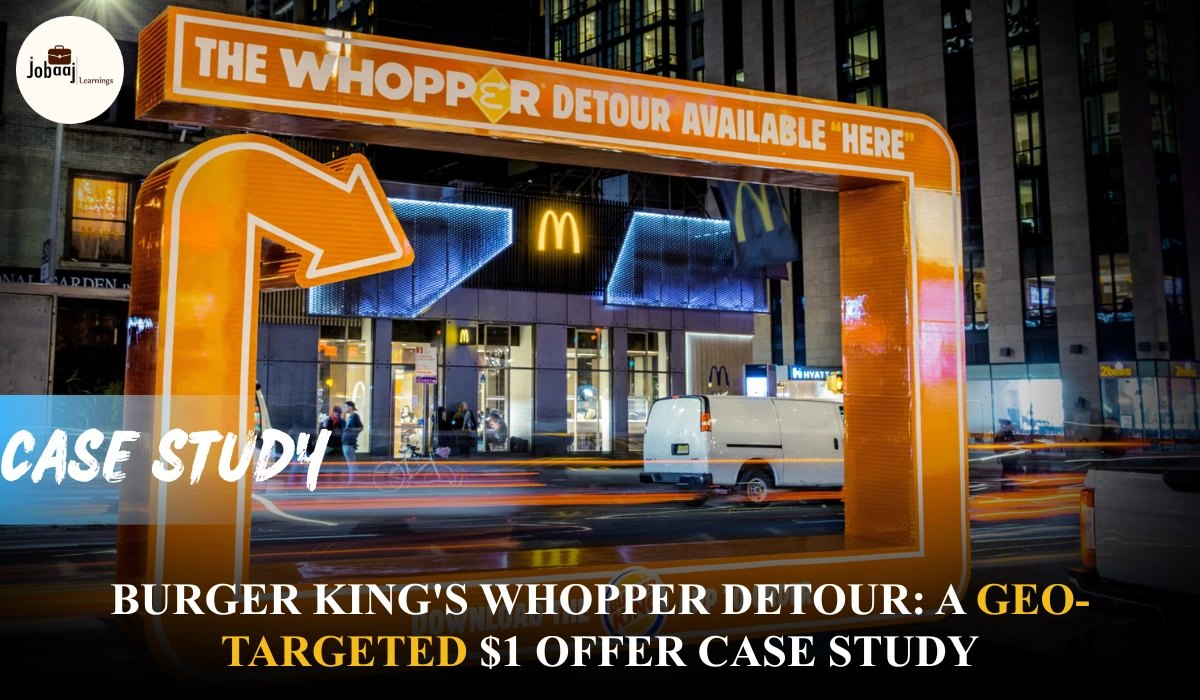
Imagine being on your way to your favorite fast-food joint, when suddenly your phone buzzes. A notification appears: “Get a Whopper for just $1! But there’s a catch — you’ll need to go to the nearest Burger King… which happens to be right across from a McDonald’s.”
This wasn’t some random app offer — it was Burger King’s “Whopper Detour” campaign, a clever marketing stunt that caught the attention of millions. In December 2018, Burger King turned the geofencing technology and mobile apps into tools for a humorous yet strategic rivalry. It was all about using McDonald’s locations to boost their own sales and drive new customers to Burger King. And it wasn’t just a fun idea; it worked wonders.
But what made this campaign so powerful? How did a simple offer turn into a marketing phenomenon? Let’s dive into the details and see why this campaign not only grabbed headlines but also set a new benchmark for digital and mobile marketing.
Problem: The Challenge Burger King Faced
Before we get into the fun part, let’s first look at why Burger King needed something as bold and disruptive as this campaign.
-
App Engagement Was Low: While Burger King had a mobile app, user engagement was far below expectations. The app wasn’t getting the traction it needed to make a lasting impact. Customers weren’t downloading or interacting with it the way Burger King had hoped.
-
Fierce Competition: The fast-food industry is crowded with heavyweights like McDonald’s, making it hard for any brand to stand out. While McDonald's is famous for its global presence and brand loyalty, Burger King struggled to break through the noise.
-
Lack of Immediate Impact: Traditional marketing methods — TV ads, billboards, and flyers — had limited success in increasing footfall and driving app downloads. Burger King needed something different, something that would force people to stop, think, and act.
Burger King was in a position where they needed a game-changer, and it had to be bold, digital, and interactive.
Strategy: The Genius of Geofencing and Humor
Burger King’s solution? The Whopper Detour. Instead of relying on standard discounts or ads, they decided to turn their biggest competitor’s presence into a marketing advantage. The campaign combined geo-targeting, real-time app engagement, and humor into one perfect storm.
Here’s how it worked:
-
The Geo-Targeting Hook: Burger King used geofencing technology to create virtual boundaries around over 14,000 McDonald’s locations. If a customer was within 600 feet of a McDonald’s, they could unlock a $1 Whopper offer in the Burger King app. All they had to do was make the “detour” to the nearest Burger King to get their Whopper.
-
The App: Burger King’s mobile app wasn’t just a means to offer discounts. It became the gatekeeper to access the offer. This ensured customers not only downloaded the app but also used it — driving up app installs and user engagement significantly.
-
The Humorous Brand Tone: Burger King didn’t shy away from mocking its rival. The campaign was playful and cheeky, embracing the rivalry with McDonald’s. By using humor to make a statement, Burger King broke the mold of traditional ads, ensuring it became a conversation starter.
-
Increased Visibility: The campaign was designed to be highly visible in digital media. Burger King used digital ads, social media promotions, and even billboards near McDonald’s stores to amplify the message. It wasn’t just an app offer; it was a movement that drew people in from all corners.
Findings: What Made the Whopper Detour Work?
The results of the campaign were staggering, and they showed us some valuable lessons. Here’s what we learned:
-
Geofencing + Mobile = A Winning Combo: The campaign’s geo-targeting component made it personal. People were receiving an offer based on where they were at that exact moment, making it highly relevant. Instead of just sending a generic app notification, Burger King made the offer location-based and time-sensitive.
-
Simplicity = High Conversion: The process was clear: get close to McDonald’s, open the app, order the Whopper, and pick it up at Burger King. This frictionless user journey is what made the offer so successful. No complex steps. Just a few taps and a $1 Whopper.
-
The Power of Humor: People love a brand that doesn’t take itself too seriously, and Burger King nailed it with the humorous rivalry. Not only did it grab attention, but it made the brand seem bold and fun, creating memorable interactions with their audience.
-
Effective Use of Mobile Technology: Burger King didn’t just use geo-targeting for the sake of it. They incorporated mobile-first technology in a way that felt natural. Push notifications, in-app purchases, and real-time tracking made the experience smooth and easy for customers.
Results: The Whopper Detour’s Impact
The numbers tell the full story of how successful this campaign was:
-
1.5 million app downloads in 9 days. This resulted in Burger King’s app reaching the #1 spot in both the iOS and Google Play stores during the campaign period.
-
Foot Traffic Increased: There was a massive increase in foot traffic to Burger King locations, especially those near McDonald’s. The campaign turned McDonald’s proximity into an advantage.
-
Earned Media Value: The campaign didn’t just rely on paid ads. It generated over 3.5 billion media impressions, with news outlets and influencers covering it. The buzz created organic traction, amplifying the campaign’s reach at no extra cost.
-
ROI: Burger King reportedly saw a 37:1 return on investment, with millions in additional sales driven by the offer and mobile app usage.
Conclusion
The Whopper Detour campaign worked because it combined creativity, technology, and humor in a way that was both relevant and practical. Burger King didn’t just promote a product; they created a memorable experience that leveraged location-based data and mobile technology to make their offer irresistible.
The campaign turned McDonald’s presence into an opportunity. It showed how geo-targeting and location-based marketing could drive real engagement and sales, while also improving brand visibility and user experience. And it did all of this in a way that felt fresh and exciting, setting a new standard for creative digital marketing.
For marketers, startups, and businesses everywhere, the Whopper Detour teaches us that thinking outside the box — or in this case, outside the McDonald's — can lead to incredibly impactful results. Sometimes, the best ideas are the simplest ones: use what’s already around you, give people what they want at the right time, and do it in a way that makes them smile.
Burger King took a $1 Whopper offer and turned it into a viral phenomenon, showing the power of geofencing, digital tools, and bold creativity. The campaign remains one of the most brilliant examples of modern marketing done right.
Was that tough?
Think you won't make it in the field of Digital Marketing?? Don't worry, we got you!
Click Here to join hundreds of other aspiring individuals who aim to become Performance Marketers and help mega-corporations run their next successful marketing campaign!
Join our latest cohort NOW!!






