

 Categories











































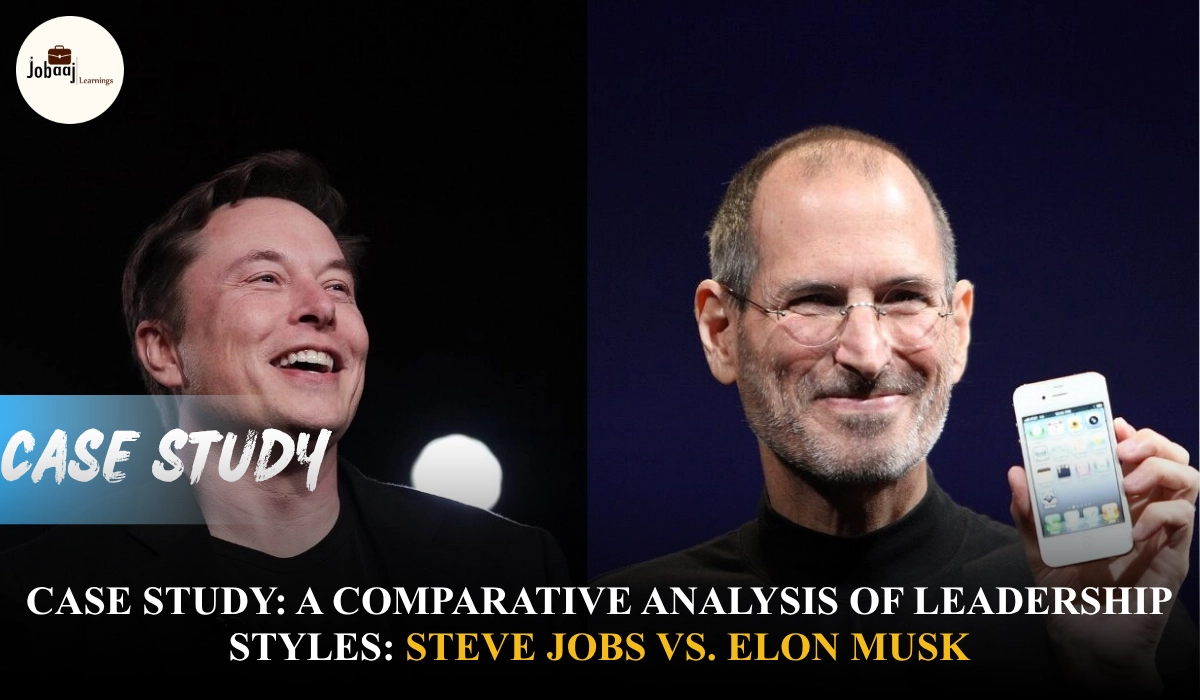
Steve Jobs and Elon Musk are two of the most well-known and influential leaders of the modern tech era. Both have been responsible for creating world-changing companies Apple and Tesla and have become cultural icons in their own right. Despite their similar success in the tech industry, their leadership styles couldn’t be more different.
This case study compares the leadership approaches of Steve Jobs and Elon Musk, focusing on how each leader shaped their respective companies, influenced their teams, and impacted the world at large. By analyzing their strengths, weaknesses, and key moments in their careers, we gain valuable insights into what makes a successful leader in today’s business environment.
The Problem
While both Jobs and Musk are visionary leaders with exceptional track records of innovation, they employed vastly different leadership styles. Understanding these differences is crucial for both businesses and individuals looking to develop effective leadership strategies in the modern age.
Some key differences between Jobs and Musk’s leadership approaches include:
- Leadership Focus: Jobs was famously detail-oriented, often micromanaging aspects of product design and marketing. Musk, on the other hand, is more hands-off with the day-to-day operations but highly involved in the technical and engineering aspects of his companies.
- Leadership Temperament: Jobs was known for his intense, sometimes abrasive personality, which could create friction with employees. Musk, while intense, maintains a more open-door policy and is known for his willingness to be approachable and collaborative.
- Innovation and Risk: Jobs believed in creating “magical” products that consumers didn’t even know they needed. Musk, conversely, takes huge risks by tackling complex problems with high stakes, like colonizing Mars or transitioning the world to electric vehicles.
Findings: Steve Jobs’ Leadership Style
- Visionary Leadership and Product Obsession
Jobs was a quintessential visionary, obsessed with creating exceptional products that could change the world. His leadership style was centered around design perfectionism and an unyielding commitment to quality. He believed that the product experience should be the centerpiece of the company and that all efforts should align toward this vision. - Autocratic and Micromanaging
Jobs was also known for being a highly autocratic leader who didn’t shy away from micromanaging. He made key decisions, particularly in product design and marketing, and often pushed his teams to their limits to meet his high expectations. His drive for perfection led to groundbreaking products like the iPhone, iPod, and MacBook, but also caused high turnover and stress among employees. - Inspiring but Demanding
While his demanding style was not without controversy, it often resulted in incredible outcomes. Jobs inspired his team to push boundaries and think differently. However, his volatile personality sometimes made it difficult for employees to meet his exacting standards without feeling intense pressure.
Findings: Elon Musk’s Leadership Style
- Mission-Oriented Leadership
Musk is driven by missions his goal is not just building a successful company but making a lasting impact on humanity. Whether it’s space exploration through SpaceX or sustainable energy through Tesla, Musk’s leadership is firmly focused on achieving grand, world-altering objectives. - Hands-Off in Operations, Hands-On in Innovation
Musk believes in empowering his team members to run the day-to-day operations while he focuses on driving the company’s technical and engineering innovations. He is actively involved in engineering decisions, especially those related to product development and design, but leaves the business management side to his trusted executives. - Open, Transparent Communication
Unlike Jobs, Musk is more open and transparent with his employees. He fosters an environment where team members feel free to express ideas and debate solutions. This open-door policy has enabled innovation to thrive within his companies, although it has also resulted in instances where Musk’s public statements or actions have led to controversy (e.g., his Twitter use).
Results
- Apple Under Steve Jobs
Jobs' leadership turned Apple into one of the most successful companies in the world. Under his leadership, Apple introduced revolutionary products that changed entire industries. His visionary approach and uncompromising standards made Apple a household name, but the company also experienced periods of turmoil due to his autocratic style. Still, by the time of his passing in 2011, Jobs had transformed Apple into a $350 billion company, recognized globally for its innovation and brand loyalty.
Key Results:
- Introduction of the iPhone, iPad, and MacBook, which reshaped the tech landscape.
- Apple became one of the highest-valued companies globally.
- A company culture that thrives on product obsession, perfectionism, and innovation.
- Tesla and SpaceX Under Elon Musk
Musk’s leadership, while controversial at times, has propelled Tesla to the forefront of the electric vehicle revolution and helped SpaceX become the first privately funded company to reach space. Unlike Jobs, Musk’s leadership is deeply intertwined with big-picture goals, such as making humanity multi-planetary and accelerating the transition to sustainable energy.
Key Results:
- Tesla became a leader in the electric vehicle market and achieved a market capitalization over $1 trillion.
- SpaceX achieved several milestones in space travel, including launching the first private manned mission to the International Space Station.
- Musk's reputation for risk-taking and failure recovery led to massive breakthroughs in both industries.
Conclusion
Steve Jobs and Elon Musk are two sides of the same coin: both are exceptional innovators who have changed the world, but their approaches to leadership are drastically different. Jobs’ visionary and often demanding leadership pushed his teams to innovate in ways they never thought possible, while Musk’s mission-oriented and empowering leadership has made room for bold, ambitious projects that could reshape humanity's future.
While both leaders share the ability to inspire and push for the impossible, their unique styles demonstrate that effective leadership doesn’t follow a one-size-fits-all formula. Jobs’ intensity and attention to detail created breakthrough products and a loyal customer base, while Musk’s focus on monumental goals and transparency has sparked global innovation.
For entrepreneurs and business leaders today, there’s much to learn from both approaches. The key takeaway from this case study is that leadership effectiveness depends on how well a leader’s style aligns with their company’s mission, culture, and goals. Jobs and Musk’s differing paths show that there are multiple routes to entrepreneurial success, and the best leadership style is one that works within the context of the company’s vision and market demands.
Was that difficult?
Think being a Management Consultant is too hard?? Fear not.
Click on the link here to join our program where Shubham Agarwal, a professional management consultant, will teach you all about the exciting field of Management Consultancy and make sure simple case studies like these never scare you!
Join our latest cohort NOW!!
[Disclaimer: This case study is entirely hypothetical and unrelated to real-world situations. It's designed for educational purposes to illustrate theoretical concepts and potential scenarios within a given context. Any similarities to actual events or individuals are purely coincidental.]





