

 Categories










































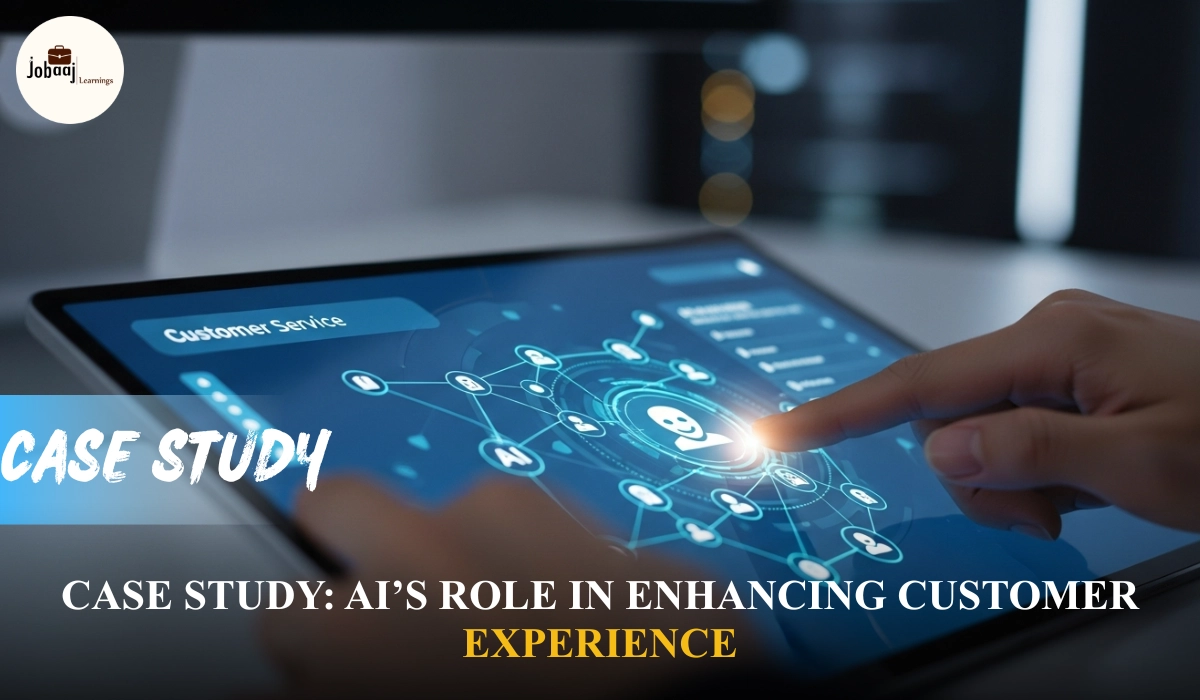
In today’s fast-paced world, every business faces a fundamental challenge: how to stay connected with customers in a way that’s efficient, personal, and meaningful. Think about the last time you had a great experience with a company. Was it a smooth online transaction? A helpful chatbot that solved your issue instantly? Or maybe a recommendation that seemed so tailored to your needs, you couldn’t help but click “buy”?
These moments aren’t by accident—they’re the result of Artificial Intelligence (AI) working behind the scenes. AI is reshaping the way businesses connect with customers, offering a level of personalization and responsiveness that was once thought impossible.
In this case study, we’ll explore how AI is transforming customer experience, the benefits it brings to businesses and consumers alike, and how some of the world’s top companies are leading the charge. Let’s dive into the ways AI is not just an addition but a game changer for customer service and experience.
The Problem
For decades, businesses relied on in-person service, phone support, and email exchanges to handle customer issues. While these methods worked to some extent, they were limited by time, availability, and the ability to personalize interactions. As companies grew and customer demands increased, traditional service models began to show their age. The pain points were clear:
-
Long wait times: Customers were forced to wait for hours or even days for a response, leading to frustration.
-
Inconsistent service: Whether a customer interacted with a live agent or a chatbot, the level of service was often inconsistent and lacked personalization.
-
Limited availability: Traditional customer service couldn’t be available 24/7, leaving customers unable to get assistance outside of business hours.
-
High operational costs: Managing a large customer service team, dealing with repetitive queries, and ensuring quality took up significant resources.
In a world where immediacy and personalization were increasingly expected by customers, these limitations became glaring problems.
The AI Solution
Enter AI—specifically, tools like chatbots, machine learning algorithms, and predictive analytics—which have revolutionized the way businesses interact with customers. The solution was simple: instead of relying on human agents to manage all tasks, AI could automate repetitive processes, personalize interactions at scale, and predict what customers needed before they even asked.
This transformation didn’t happen overnight. In fact, the early years of AI in customer service were more about experimentation and refinement. Companies like Amazon, Netflix, and Spotify pioneered the use of AI by offering personalized recommendations based on data analysis. This not only boosted customer satisfaction but also increased revenue by driving customers toward products and services they were likely to love.
Here’s how AI is enhancing customer experience in key areas:
1.Personalized Customer Interactions
One of the standout features of AI in customer service is its ability to create highly personalized experiences. AI tools track and analyze a customer’s behavior, past interactions, and preferences to recommend products or offer solutions that meet their exact needs.
For instance, Amazon’s recommendation engine uses AI to suggest products based on previous purchases and browsing history. By leveraging machine learning, Amazon ensures that customers receive suggestions that are relevant and timely, boosting conversion rates and customer satisfaction.
2.24/7 Customer Support with AI Chatbots
AI-powered chatbots have become an essential part of modern customer service. Unlike traditional customer service that’s limited to business hours, AI-driven chatbots can engage with customers at any time of day, solving queries, processing transactions, and even addressing complaints instantly.
These chatbots can handle a wide variety of tasks, from answering frequently asked questions to processing orders. And when necessary, they can seamlessly hand off the interaction to a human agent for more complex issues. For example, companies like Sephora use chatbots to assist with beauty product recommendations, making the shopping experience more engaging and interactive.
3.Predicting Customer Needs
AI doesn’t just react to customer queries—it can predict them. By analyzing historical data and customer behavior, AI systems can anticipate what a customer might need next. This predictive capability is transforming industries like retail, banking, and healthcare.
Take Netflix for example. The streaming service uses AI algorithms to recommend shows and movies based on users' watching patterns, helping to increase user engagement by offering highly relevant content. Similarly, banks use AI to predict when a customer may need assistance with a financial product based on their spending behavior, offering personalized financial advice before the customer even asks.
4.Streamlined Customer Feedback
AI tools have also streamlined the way businesses collect and analyze customer feedback. Gone are the days of manually combing through thousands of survey responses. With the help of natural language processing (NLP) algorithms, businesses can now analyze customer sentiment and identify patterns in feedback much more efficiently.
For example, hotels use AI-powered sentiment analysis tools to monitor customer reviews, providing real-time insights into customer satisfaction and areas for improvement. This immediate access to data enables companies to adapt quickly and address issues before they escalate.
Findings
The findings from companies that have integrated AI into their customer experience strategies are striking. The benefits have been far-reaching, from improving operational efficiency to boosting customer loyalty. Some key results include:
-
Improved Customer Satisfaction: Businesses using AI to personalize experiences, predict customer needs, and offer faster support have seen significant increases in customer satisfaction.
-
Increased Efficiency: By automating routine tasks and customer interactions, companies have been able to significantly reduce response times and operational costs.
-
Higher Revenue: Personalized recommendations and AI-driven upselling have led to higher conversion rates and average order values, particularly in industries like retail and e-commerce.
-
Better Customer Retention: AI’s ability to provide real-time support and personalized experiences has helped businesses retain customers for longer, reducing churn rates.
-
Scalable Solutions: AI-powered tools allow businesses to scale their customer service efforts without proportionally increasing costs. Whether handling 100 or 1,000 customers, AI systems can manage the load efficiently.
Results
As a result of these findings, AI has proven to be indispensable in improving customer experience. Companies like Amazon, Netflix, Spotify, and Sephora are prime examples of how AI enhances customer satisfaction while driving sales and engagement. Whether it’s through predictive analytics, personalized recommendations, or 24/7 customer service, AI is now a foundational element of the modern customer experience.
Businesses using AI have seen improved results in areas like:
-
Customer engagement: Real-time interaction and personalized service have increased customer engagement by offering relevant products, services, and content.
-
Operational efficiency: Automation and AI-driven processes have significantly reduced time spent on manual tasks, freeing up resources for more strategic business decisions.
-
Revenue growth: With better targeting and personalized customer journeys, companies have seen substantial improvements in revenue.
Conclusion
AI is transforming the way companies interact with their customers. No longer is customer service limited to just response—AI is enabling businesses to be proactive, anticipating customer needs, delivering personalized experiences, and offering efficient solutions at scale.
The case study of AI’s role in customer experience shows how far we’ve come in integrating AI into everyday business functions. Companies that have embraced AI are not only improving the quality of their customer interactions—they’re shaping the future of customer service, making it faster, smarter, and more personalized.
The journey has just begun. As AI continues to evolve, it will undoubtedly play an even greater role in revolutionizing the customer experience landscape. For businesses, the time to invest in AI-driven customer solutions is now—because the future of customer experience is already here.





