

 Categories


































































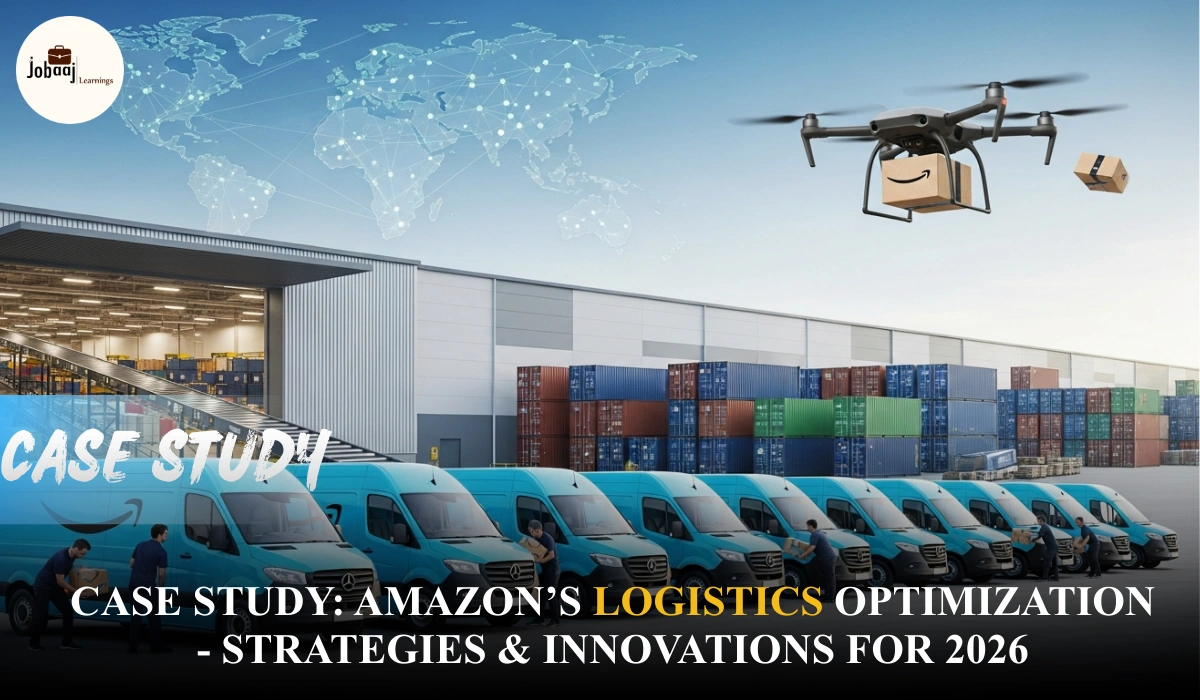
Amazon is renowned for its e-commerce dominance, but behind the scenes, its logistics operations are equally impressive. The company has revolutionized the logistics and supply chain industry, building one of the most efficient, agile, and data-driven systems in the world. With its vast network of fulfillment centers, transportation hubs, and last-mile delivery options, Amazon has been able to deliver products to customers in record time.
In this case study, we’ll explore how Amazon has optimized its logistics operations to meet growing consumer demands, the innovative strategies it employs, the challenges it faces, and the outcomes of its logistics optimization efforts.
Background
Amazon started as an online bookstore in 1994, but over the years, it expanded to become the world’s largest online retailer, offering a vast array of products from electronics to household items. As its product catalog and customer base grew, Amazon faced the challenge of delivering products quickly and efficiently.
The key to Amazon’s success has been its logistics and supply chain innovations. By continuously optimizing these operations, Amazon has been able to scale its business and deliver exceptional customer experiences. The company’s logistics optimization efforts focus on reducing delivery times, improving inventory management, and enhancing operational efficiency.
Problem / Challenge
As Amazon expanded, it encountered several challenges related to logistics optimization:
-
Customer Expectations for Fast Delivery: In the age of next-day and same-day delivery, Amazon had to meet increasingly high expectations for fast shipping, even for products with low margins.
-
Complex Global Supply Chain: Managing a vast global supply chain with thousands of suppliers, fulfillment centers, and third-party partners proved to be a logistical challenge. Coordinating this complex network was essential to maintaining efficiency and meeting customer demand.
-
Cost Efficiency: As the company grew, so did the costs associated with transportation, warehousing, and inventory management. Amazon had to find ways to optimize these costs while maintaining its low-price promise to customers.
-
Capacity Management: The rapid growth of e-commerce meant that Amazon had to continuously manage and scale its fulfillment network to handle increasing volumes of orders, especially during peak seasons.
Strategy / Approach
To address these challenges, Amazon adopted a multi-faceted approach to logistics optimization:
-
Investing in Technology: Amazon embraced cutting-edge technology, including robotics, machine learning, and artificial intelligence, to optimize its fulfillment centers and streamline operations. These technologies help Amazon predict demand, automate processes, and ensure efficient inventory management.
-
Building a Vast Fulfillment Network: Amazon built an extensive network of fulfillment centers strategically located across the globe. By placing warehouses closer to customers, Amazon has reduced delivery times and costs. This network includes a mix of large regional hubs and smaller, more localized fulfillment centers to meet the growing demand for fast shipping.
-
Last-Mile Delivery Innovation: Amazon has invested heavily in last-mile delivery solutions, including its own fleet of delivery trucks, Amazon Flex (crowdsourced delivery drivers), and partnerships with third-party logistics providers. This flexibility enables Amazon to meet customer demands for faster delivery while managing costs effectively.
-
Data-Driven Decision Making: Amazon’s logistics decisions are guided by massive amounts of data. The company uses data analytics to forecast demand, optimize inventory levels, and manage transportation routes. This data-driven approach helps Amazon make real-time decisions and predict customer preferences.
-
Prime Membership Program: The Amazon Prime membership program incentivizes customers to place more orders by offering free shipping and other benefits. This program has allowed Amazon to gain more predictable shipping volumes and optimize its logistics network to handle the increased demand.
-
Automation and Robotics: Amazon uses robotics in its fulfillment centers to automate processes like picking, packing, and sorting products. This has dramatically increased efficiency and reduced labor costs. Robots work alongside human employees, creating a highly efficient, collaborative environment.
-
Drone Deliveries and Future Innovations: Amazon has begun testing drone deliveries as part of its future logistics strategy. By exploring new technologies like drones and autonomous vehicles, Amazon aims to further reduce delivery times and enhance the customer experience.
Innovations Deployed
Amazon’s logistics innovations are diverse and groundbreaking:
-
Robotic Process Automation (RPA): In Amazon’s fulfillment centers, robots are used to retrieve inventory, move items around the warehouse, and even package products. This automation speeds up the process, reduces human error, and increases the number of orders fulfilled each day.
-
Amazon Prime Delivery: By offering one-day or two-day delivery through its Prime membership, Amazon not only retains customers but also strengthens its logistics network. The company leverages its huge customer base to scale its delivery capabilities more efficiently.
-
Predictive Analytics for Inventory Management: Amazon uses predictive analytics to forecast demand and optimize inventory levels across its fulfillment centers. By predicting what products will be in demand, Amazon can restock and distribute products more efficiently, reducing excess inventory and minimizing stockouts.
-
Amazon Flex: Amazon Flex is a crowdsourced delivery program that allows individuals to deliver packages using their own vehicles. This enables Amazon to scale its last-mile delivery network without having to invest heavily in its own fleet, offering flexibility in handling fluctuating demand.
-
Prime Air Drones: Amazon has been testing drone deliveries through its Prime Air program. These drones are capable of delivering small packages within 30 minutes of the order being placed, promising to further reduce delivery times.
Findings / Insights
Amazon’s logistics optimization has provided the following insights:
-
Speed and Flexibility are Key: Amazon’s ability to quickly adapt to market demands and offer fast shipping has been central to its success. The company’s logistics network must remain flexible to meet changing customer needs.
-
Technology and Automation Drive Efficiency: The integration of advanced technology, robotics, and data analytics has streamlined Amazon’s logistics operations, improving efficiency and reducing costs.
-
Customer-Centric Approach: Amazon’s logistics strategy focuses heavily on the customer experience. By offering faster delivery and greater product availability, Amazon ensures that it remains a trusted retailer.
-
Continuous Innovation: Amazon’s willingness to invest in and experiment with new delivery methods, like drones, shows its commitment to constantly improving its logistics operations and staying ahead of competitors.
Results
The results of Amazon’s logistics optimization efforts have been nothing short of impressive:
-
Reduced Delivery Times: Amazon’s one-day and two-day delivery options, available to Prime members, have significantly reduced delivery times, giving the company a competitive edge.
-
Cost Efficiency: Through automation and better inventory management, Amazon has been able to reduce logistics costs while maintaining fast delivery speeds.
-
Increased Market Share: Amazon’s logistics optimization has contributed to its market dominance in e-commerce. The company’s ability to provide fast and reliable delivery has strengthened its position as the go-to online retailer for consumers.
-
Customer Loyalty: The Prime membership program has not only boosted Amazon’s revenue but also increased customer retention by offering perks like fast shipping and exclusive content.
Lessons Learned
From Amazon’s logistics optimization, several key lessons can be drawn:
-
Invest in Technology and Automation: Automation and technology have been critical to Amazon’s ability to scale its logistics operations while maintaining speed and efficiency.
-
Focus on the Customer Experience: Providing fast, reliable delivery is crucial to customer satisfaction. Businesses must optimize their logistics to meet customer expectations.
-
Continuous Innovation is Essential: Amazon’s commitment to exploring new technologies, such as drones and AI, has helped it stay ahead of the competition and maintain its position as a leader in logistics.
-
Data-Driven Decision Making: Leveraging data allows companies to make informed decisions, forecast demand, and optimize their logistics operations for greater efficiency.
Conclusion
Amazon’s logistics optimization strategies have revolutionized e-commerce logistics, enabling the company to offer fast, efficient delivery and maintain its competitive edge. By investing in technology, automation, and data analytics, Amazon has created a logistics network that supports its global operations and enhances the customer experience. As the e-commerce industry continues to evolve, Amazon’s logistics optimization will remain a key driver of its success and a model for other companies in the retail sector to follow.
The company’s ability to continuously innovate, stay ahead of customer demands, and improve its supply chain operations sets a new standard in logistics excellence.
Was that difficult?
Think being a Management Consultant is too hard?? Fear not.
Click on the link here to join our program where Shubham Agarwal, a professional management consultant, will teach you all about the exciting field of Management Consultancy and make sure simple case studies like these never scare you!
Join our latest cohort NOW!!
[Disclaimer: This case study is entirely hypothetical and unrelated to real-world situations. It's designed for educational purposes to illustrate theoretical concepts and potential scenarios within a given context. Any similarities to actual events or individuals are purely coincidental.]





