

 Categories











































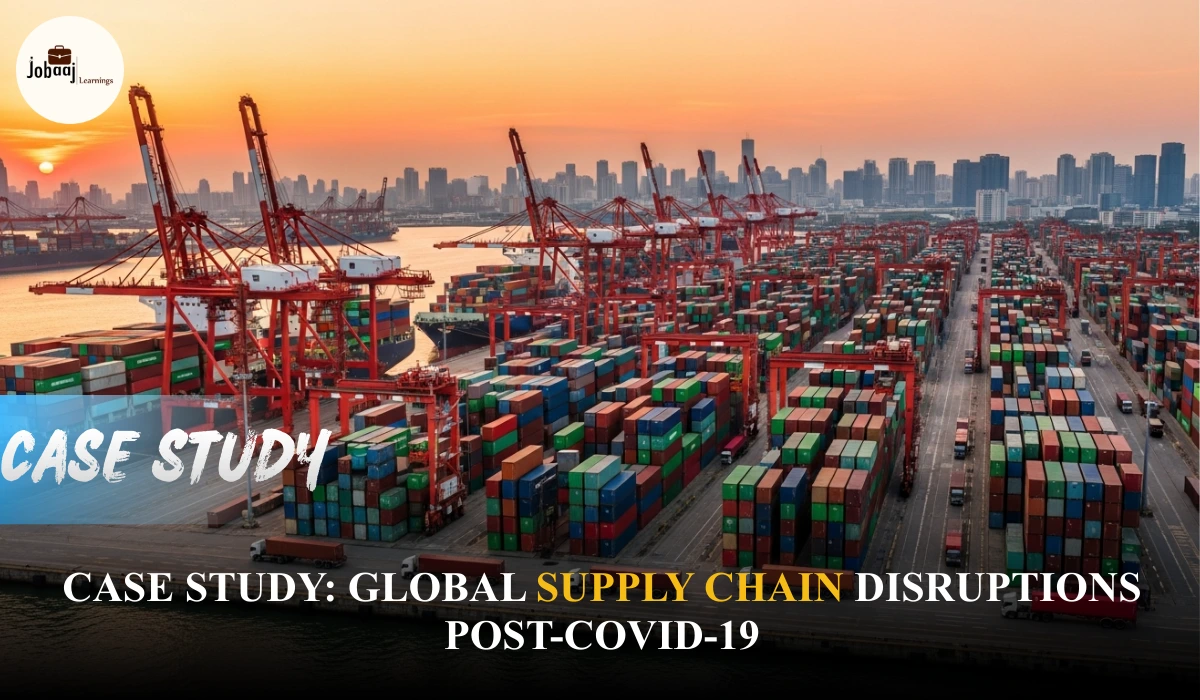
The COVID-19 pandemic has caused unprecedented disruptions to global supply chains, forcing companies and governments worldwide to rethink their strategies for production, logistics, and distribution. The virus, along with lockdowns, border closures, and widespread workforce shortages, has exposed vulnerabilities in global trade systems that were previously overlooked.
This case study will explore the impact of COVID-19 on global supply chains, the strategies businesses adopted to overcome the disruptions, and the lessons learned that could shape supply chain strategies for the future.
Background
Before the pandemic, global supply chains were primarily designed for efficiency, focusing on reducing costs and maximizing output. Companies relied heavily on complex networks of suppliers from different countries, just-in-time inventory strategies, and centralized manufacturing hubs.
However, the pandemic introduced shocks to this finely tuned system. Ports were closed, factories halted production, and labor shortages left many industries in disarray. With e-commerce booming and traditional brick-and-mortar stores temporarily closing, the dynamics of supply chain management shifted drastically.
Problem / Challenge
1.Supply Shortages: A key problem was the widespread shortage of goods, from essential medical supplies to raw materials and consumer goods.
2.Logistical Delays: Shipping and transportation networks were severely impacted due to restrictions, causing delays in both supply and demand fulfillment.
3.Labor Shortages: Many workers were either unavailable due to illness, government restrictions, or labor market shifts, disrupting manufacturing and distribution.
4.Supplier Inconsistencies: Businesses heavily reliant on suppliers from affected regions struggled to maintain production schedules, exposing their dependence on global supply chains.
Strategy / Approach
1.Diversifying Supply Sources: Many companies began to diversify their suppliers to reduce dependence on any single region. This not only helped in mitigating risks during lockdowns but also ensured the availability of essential materials when certain sources became unavailable.
2.Investing in Technology: Many companies turned to data analytics and machine learning to improve forecasting accuracy and supply chain visibility. Technologies such as IoT (Internet of Things), AI-powered demand forecasting, and blockchain for traceability became key areas of focus.
3.Re-shoring and Nearshoring: Companies re-evaluated their global supply chain strategies and began moving some of their manufacturing operations closer to their target markets. This shift to regional supply chains helped reduce dependencies on far-flung suppliers and improve operational agility.
4.Strengthening Resilience: In response to these disruptions, businesses started implementing more resilient supply chain strategies, such as increased stockpiles of essential goods and building flexible logistics networks to quickly adapt to changing conditions.
Innovations
1.Automation: Automation was key to overcoming labor shortages. Many businesses introduced robotics in their warehouses and factories to keep operations running while limiting human involvement.
2.Data-Driven Decision Making: Companies turned to data for more accurate demand forecasting and to mitigate supply risks. Real-time tracking systems and digital twins allowed companies to get instant visibility into their supply chain and quickly adjust to any disruptions.
3.Blockchain for Transparency: Blockchain technology was adopted by some companies to ensure transparency in their supply chains, helping to track the movement of goods and validate information in real-time, reducing the risk of fraud and errors.
4.Sustainability Focus: The pandemic highlighted the vulnerability of global supply chains, leading to a renewed emphasis on sustainability. Businesses invested in more sustainable practices and eco-friendly packaging to align with consumer values, and to improve the long-term resilience of their supply chains.
Findings / Insights
1.Supply Chain Vulnerability: The pandemic revealed the fragility of global supply chains that relied on single-source suppliers and centralized manufacturing.
2.The Need for Agility: Businesses that were able to quickly pivot and adapt their supply chains fared better than those that were too rigid in their approach. The ability to quickly source from multiple suppliers or adjust inventory strategies was a key differentiator.
3.Increased Reliance on Technology: Companies that had already adopted digital supply chain solutions were able to react faster to disruptions. Technologies like AI, blockchain, and IoT proved invaluable in helping organizations maintain visibility and control over their supply chains.
4.Consumer Behavior Shifts: The pandemic changed consumer behavior, with a shift towards e-commerce, home delivery, and essential goods. Supply chains had to adjust to these changes quickly, often leading to new models of last-mile delivery.
Results
1.Faster Recovery: Companies that diversified their suppliers and invested in technology recovered faster from the disruptions. Automation and predictive analytics helped reduce downtime, while technology-driven solutions ensured the supply of essential goods.
2.Improved Agility: Businesses that implemented more flexible supply chain models found it easier to adapt to the ever-changing conditions during the pandemic. Re-shoring and nearshoring allowed companies to maintain some level of control over their production and reduce risks.
3.Cost Increases: While diversifying suppliers and nearshoring were effective strategies, they also increased costs. In the long term, these changes may lead to more resilient supply chains, but they also required upfront investments that not all companies were prepared for.
4.Sustainability Gains: The pandemic led to an increased focus on sustainable supply chains. Many companies improved their environmental practices and were able to build more resilient, eco-friendly supply chains that aligned with changing consumer demands.
Lessons Learned
- Diversify Your Supply Chain: Relying on a single region or supplier is risky. Diversification and establishing multiple suppliers across various regions can help protect against global disruptions.
- Invest in Technology: The future of supply chain management lies in technology. Investing in AI, machine learning, blockchain, and real-time data analytics is crucial for improving resilience and efficiency.
- Adaptability Is Key: The pandemic proved that supply chains need to be flexible. The ability to quickly shift to new suppliers, transportation methods, or inventory strategies can make all the difference during a crisis.
- Sustainability Should Be Prioritized: Building a sustainable supply chain is not just beneficial for the environment; it can also reduce risks in the long term and increase brand loyalty among eco-conscious consumers.
Conclusion
The COVID-19 pandemic served as a wake-up call for businesses worldwide, highlighting the vulnerabilities and limitations of global supply chains. However, it also prompted innovation and change, leading to more resilient and agile supply chain models. As we move forward, businesses that embrace technology, diversification, and sustainability will be better prepared for future disruptions, ensuring long-term success and growth.
Was that difficult?
Think being a Management Consultant is too hard?? Fear not.
Click on the link here to join our program where Shubham Agarwal, a professional management consultant, will teach you all about the exciting field of Management Consultancy and make sure simple case studies like these never scare you!
Join our latest cohort NOW!!
[Disclaimer: This case study is entirely hypothetical and unrelated to real-world situations. It's designed for educational purposes to illustrate theoretical concepts and potential scenarios within a given context. Any similarities to actual events or individuals are purely coincidental.]





